
Opinion|Videos|January 7, 2026
Sequencing and Place of Cabozantinib in NETS Treatment Algorithm
Experts discuss the challenges of sequencing treatments like cabozantinib and managing side effects in patients with metastatic disease.
Advertisement
Episodes in this series
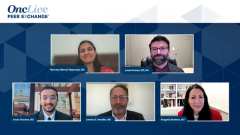
The specialists discussed sequencing and side effect management of cabozantinib in neuroendocrine tumors (NETs), particularly in pancreatic, small bowel, and lung NETs. Dr. Shaheen highlighted that sequencing remains challenging, as most patients with SSTR-positive, grade 1–2 NETs receive PRRT upfront for convenience and efficacy. Cabozantinib is generally considered after PRRT, especially for pancreatic NETs, and may be sequenced earlier than other targeted agents due to its superior response rates. The panel emphasized that, despite multiple available therapies—including everolimus, sunitinib, and chemotherapy—patients eventually receive most treatments over their disease course, making sequencing flexible. Dr. Arshad discussed side effect management with cabozantinib, noting class-specific VEGF-related eOects such as hypertension, hand-foot syndrome, and rash. Strategies include early intervention with primary care or dermatology, dose reductions per FDA guidance, and individualized titration to balance efficacy with tolerability. Overall, careful monitoring and patient-centered management are key to optimizing outcomes with cabozantinib.
Advertisement
Related to this article

Aglatimagene besadenovec plus EBRT was linked to a 41% lower risk of prostate cancer recurrence or death, alongside durable immune activity.

In case you missed any, read a recap of the episodes of OncLive On Air that aired in September 2026.

Japan approved Optune Pax plus gemcitabine and nab-paclitaxel for unresectable locally advanced pancreatic cancer.
A pilot study represents a milestone toward testing a faster, more powerful, and potentially less-toxic form of radiation therapy for cancer treatment.
Oral azacitidine and cedazuridine met the end point of total cycle azacitidine exposure vs subcutaneous azacitidine in MDS or CMML.

UTRxMYCN M1-14 received orphan drug status for soft tissue sarcoma and RPDD for rhabdomyosarcoma.

Interim data showed that the BCMA-directed CAR T-cell therapy NXC-201 generated complete responses in relapsed/refractory AL amyloidosis.

Estelamari Rodriguez, MD, MPH, discusses the rationale, design, and practice implications of the phase 3 RELATIVITY-1093 trial in nonsquamous NSCLC.
Advertisement
Advertisement
Trending on OncLive
1
FDA Grants Fast Track Designation to Plinabulin Plus Docetaxel in Post-ICI Non-Squamous NSCLC
2
Oral Azacitidine and Cedazuridine Meets Primary Pharmacokinetic End Point in MDS and CMML
3
Optune Pax Is Approved in Japan for Unresectable Locally Advanced Pancreatic Cancer
4
UTRxMYCN M1-14 Nets FDA Dual Designations in Soft Tissue Sarcoma
5