
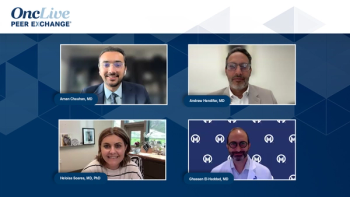
Dr. El-Haddad identifies transparency as the most important long-term impact of establishing RLE terminology and expanding the 505(b)(2) pathway.
Dr. El-Haddad identifies transparency as the most important long-term impact of establishing RLE terminology and expanding the 505(b)(2) pathway.
Dr. Soares frames patient education conversations around reassurance and clarity.
Dr. Soares identifies the most clinically important benefit of having multiple RLE options: immediate availability for patients who are clinically ready for radioligand therapy but face delays due to drug supply or shipping constraints.
Dr. El-Haddad recommends a 2-level approach to promoting RLE terminology adoption.
Dr. Hendifar describes how RLE terminology will evolve in tumor board discussions.
Dr. Hendifar explains the rationale for proposing the term radioligand equivalent (RLE).
Dr. Hendifar explains the specific advantages the 505(b)(2) pathway offers for radiopharmaceutical development.
Dr. Soares addresses how understanding regulatory pathways benefits the multidisciplinary teams managing patients with NETs. A shared understanding of pathway terminology, particularly what a 505(b)(2) product represents, creates a common language among nuclear medicine physicians, medical oncologists, pharmacists, and radiation oncologists. This clarity reduces confusion about whether a therapy is truly novel, generic, or something in between, and directly improves the efficiency of tumor board discussions, formulary committee reviews, and patient counseling. Without this shared vocabulary, discussions stall on terminology rather than advancing to the clinically important questions of patient selection, access, and operational implementation.
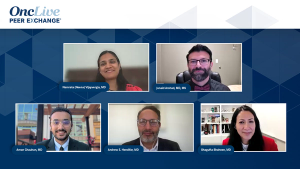
Dr. Aman Chauhan introduces the program on radioligand equivalents and the 505(b)(2) pathway in neuroendocrine tumor (NET) treatment, joined by Dr. Andrew Hendifar, Dr. Heloisa Soares (medical director of the theranostics program at University of Utah), and Dr. Ghassan El-Haddad (vice chair for radiopharmaceutical and nuclear oncology at Moffitt Cancer Center, nuclear medicine physician and interventional radiologist).
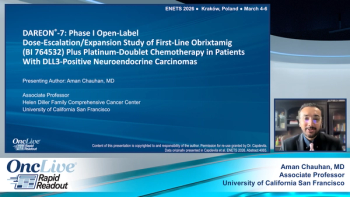
Obrixtamig in combination with platinum-based chemotherapy demonstrated encouraging clinical activity in patients with DLL3-positive neuroendocrine carcinomas, with high response rates and durable disease control. The regimen showed a manageable safety profile, with adverse events consistent with its mechanism and no unexpected toxicities. These findings support further development of this combination as a potential first-line treatment option.
Discover the future of cancer treatment with innovative therapies and groundbreaking research in radiopharmaceuticals and theranostics.
Experts discuss the promising future of CAR-T therapy and radioligand treatments for neuroendocrine tumors, highlighting new trials and potential breakthroughs.
Experts discuss the challenges of sequencing treatments like cabozantinib and managing side effects in patients with metastatic disease.
Dr. Chauhan discusses the groundbreaking CABINET trial, revealing its impact on treating neuroendocrine tumors and the future of oncology research.
Experts discuss treatment options for a young patient with pancreatic neuroendocrine tumor and liver metastases, focusing on targeted therapies.
Doctor Hendifer discusses the diverse therapies for neuroendocrine neoplasms, emphasizing individualized treatment based on patient needs and disease characteristics.
Experts discuss advanced treatment options for neuroendocrine tumors, highlighting PRRT, mTOR inhibitors, and emerging therapies for improved patient outcomes.
Oncology treatment decisions hinge on tumor biology and patient factors, emphasizing a multidisciplinary approach for optimal care.
Experts discuss treatment strategies for neuroendocrine tumors, emphasizing personalized approaches based on tumor grade, symptoms, and patient health.
Explore the complexities of treating neuroendocrine tumors, focusing on patient-specific strategies and the role of somatostatin analogs.
Experts discuss key factors influencing disease prognosis, emphasizing differentiation, growth pace, and disease burden in treatment decisions.
Experts discuss the evolution of neuroendocrine tumor classification, highlighting its clinical implications and the importance of standardized treatment approaches.
Experts discuss the evolution of neuroendocrine tumor classification, highlighting its impact on diagnosis, treatment, and clinical implications.
Imaging Modalities for Neuroendocrine Tumors
Classification of Neuroendocrine Tumors
Aman Chauhan, MD, discusses future directions with Lutathera in gastroenteropancreatic neuroendocrine tumors.
Aman Chauhan, MD, a medical oncologist at the University of Kentucky, discusses key recent advances in therapeutics for patients with neuroendocrine tumors, and points to the future with ongoing combination studies.
Aman Chauhan, MD, a medical oncologist at the University of Kentucky, discusses the role of Lutathera in neuroendocrine tumors.
Aman Chauhan, MD, discusses sequencing decisions when treating patients with gastroenteropancreatic neuroendocrine tumors.
Aman Chauhan, MD, discusses the role of somatostatin analogs in treating patients with gastroenteropancreatic neuroendocrine tumors.
November 21st 2025
January 8th 2021
October 3rd 2020
November 21st 2025
October 3rd 2020
