
Opinion|Videos|July 13, 2026
Education Strategies and Evidence Interpretation Surrounding RLE Terminology
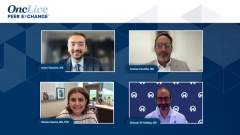
Dr. El-Haddad recommends a 2-level approach to promoting RLE terminology adoption.
Advertisement
Episodes in this series
Dr. El-Haddad recommends a 2-level approach to promoting RLE terminology adoption. Internally, multidisciplinary tumor boards are the optimal venue for establishing shared vocabulary across specialties including medical oncology, nuclear medicine, radiation oncology, surgery, pharmacy, and advanced practice providers. Although single tumor board sessions will not achieve immediate adoption, consistent use of the terminology over time creates institutional familiarity. At the broader level, professional societies, including the Society of Nuclear Medicine and Molecular Imaging (SNMMI), the North American Neuroendocrine Tumor Society (NANETS), the European Association of Nuclear Medicine (EANM), and oncology societies such as ASCO, should incorporate RLE terminology into educational programs, guidelines, and scientific discussions at annual meetings and symposia to reach the widest possible audience.
Dr. Hendifar addresses how clinicians should approach evidence interpretation for RLEs compared to reference products. The data package supporting an RLE will not resemble a new drug application; it will consist of bridging studies and pharmacokinetic and biodistribution data rather than direct clinical efficacy trials. Clinicians will need to develop comfort with inferring class-wide efficacy while evaluating the bridging evidence that demonstrates comparable tumor uptake and pharmacokinetics. Nuclear medicine physicians, already experienced in dosimetry and biodistribution analysis, will likely lead this evidence interpretation for their multidisciplinary teams. The key principle is that reliance on published literature and bridging data, rather than head-to-head clinical trials, is the defining feature of this evidence model.
Advertisement
Related to this article

In TASKIN, the 12-month OS rate was 61.3% with vilamakitug vs 55.7% with placebo plus trifluridine/tipiracil.

The 510(k) clearance covers an MRI-derived AI risk score for stage I to IIIA disease; the high-risk category carried an HR of 2.81 for recurrence.
The FDA has approved dostarlimab for MSI-H or dMMR locally advanced rectal cancer.

The FDA accepted an NDA for UGN-103 for recurrent low-grade intermediate-risk NMIBC, with a target action date of June 14, 2027.

Ulrich Steidl, MD, PhD, has finalized his Montefiore Einstein Comprehensive Cancer Center senior leadership team.

The CirCLIQ Injector approval for subcutaneous isatuximab in multiple myeloma is the first anticancer treatment delivered via an on-body injector in Japan.

The top 5 OncLive TV videos of the week cover insights in multiple myeloma, HR+ breast cancer, CAR T-cell therapy, CLL, and oral SERDs.

Moh’d Khushman, MD, discusses INCA33890’s mechanism of action, phase 1 safety and efficacy data, and the design of NEXERA-303 in MSS colorectal cancer.
Advertisement
Advertisement
Trending on OncLive
1
FDA Clears TumorSight Risk, an MRI-Derived AI Recurrence Tool for HR+, HER2– Breast Cancer
2
Weigh Benefit Against Burden: Defining Lurbinectedin’s Role in a Shifting Small Cell Lung Cancer Landscape
3
Vilamakitug Meets OS Threshold in Phase 1/2 Refractory mCRC Trial
4
Dr Cercek on the FDA Approval of Dostarlimab for dMMR/MSI-H Locally Advanced Rectal Cancer
5