Dr. El-Haddad identifies transparency as the most important long-term impact of establishing RLE terminology and expanding the 505(b)(2) pathway.
Dr. El-Haddad identifies transparency as the most important long-term impact of establishing RLE terminology and expanding the 505(b)(2) pathway.
Dr. Soares frames patient education conversations around reassurance and clarity.
Dr. Soares identifies the most clinically important benefit of having multiple RLE options: immediate availability for patients who are clinically ready for radioligand therapy but face delays due to drug supply or shipping constraints.
Dr. El-Haddad recommends a 2-level approach to promoting RLE terminology adoption.
Dr. Hendifar describes how RLE terminology will evolve in tumor board discussions.
Dr. Hendifar explains the rationale for proposing the term radioligand equivalent (RLE).
Dr. Hendifar explains the specific advantages the 505(b)(2) pathway offers for radiopharmaceutical development.
Dr. Soares addresses how understanding regulatory pathways benefits the multidisciplinary teams managing patients with NETs. A shared understanding of pathway terminology, particularly what a 505(b)(2) product represents, creates a common language among nuclear medicine physicians, medical oncologists, pharmacists, and radiation oncologists. This clarity reduces confusion about whether a therapy is truly novel, generic, or something in between, and directly improves the efficiency of tumor board discussions, formulary committee reviews, and patient counseling. Without this shared vocabulary, discussions stall on terminology rather than advancing to the clinically important questions of patient selection, access, and operational implementation.
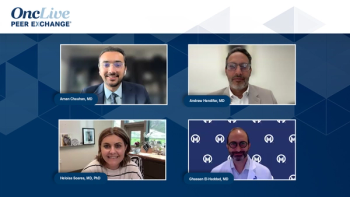
Dr. Aman Chauhan introduces the program on radioligand equivalents and the 505(b)(2) pathway in neuroendocrine tumor (NET) treatment, joined by Dr. Andrew Hendifar, Dr. Heloisa Soares (medical director of the theranostics program at University of Utah), and Dr. Ghassan El-Haddad (vice chair for radiopharmaceutical and nuclear oncology at Moffitt Cancer Center, nuclear medicine physician and interventional radiologist).
Andrew Hendifar, MD, MPH, Assistant Professor of Medicine at Cedars Sinai Medical Center and the David Geffen School of Medicine, discusses the use of a PEGylated form of rHuPH20 (PEGPH20) added to nab-paclitaxel/gemcitabine for pancreatic cancer patients with high levels of hyaluronan (HA).