
Opinion|Videos|July 20, 2026
Patient Education, Trial Design, Post-Market Surveillance, and Adoption Barriers
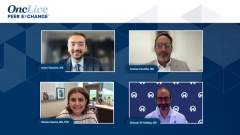
Dr. Soares frames patient education conversations around reassurance and clarity.
Advertisement
Episodes in this series
Dr. Soares frames patient education conversations around reassurance and clarity. The core message for patients familiar with a reference radioligand therapy is that the RLE is designed to perform comparably in terms of efficacy and safety. Any differences that do exist are most likely operational, related to institutional logistics rather than clinical experience. The term generic should be explicitly avoided, as it introduces inaccurate expectations about product identity. Scientifically accurate but accessible language, focusing on what matters to the patient, is the goal of informed consent discussions.
Dr. Hendifar adds that for approved therapies outside clinical trials, the approval pathway itself rarely needs to enter patient conversations in detail. The clinical discussion centers on what the patient will experience, such as treatment schedule, expected effects, potential toxicities, and not regulatory pathway specifics. The RLE term helps the clinical team speak accurately to each other, which then supports clearer patient communication downstream.
Dr. El-Haddad addresses future trial design implications, framing the availability of RLEs as an accelerant of innovation. The 505(b)(2) pathway allows development of new indications and combination strategies without complete duplication of existing data packages, making clinical programs faster and more efficient. Post-market surveillance and real-world data collection will be important for both RLEs and reference products to capture long-term safety signals, including bone marrow and renal toxicities, that are impractical to characterize fully in pivotal trials.
Dr. Soares identifies the key adoption barrier as unfamiliarity: clinicians are comfortable with brand name, generic, and biosimilar categories, and RLEs don't fit neatly into any of them. Additional practical barriers include formulary review processes, payer questions, staff education requirements, and institution-specific procedural differences for handling. The most effective adoption strategy combines education, multidisciplinary communication, and early institutional real-world experience. Early adopters who share their operational experiences will be critical to accelerating broader acceptance across the nuclear medicine community.
Advertisement
Related to this article

In TASKIN, the 12-month OS rate was 61.3% with vilamakitug vs 55.7% with placebo plus trifluridine/tipiracil.

The 510(k) clearance covers an MRI-derived AI risk score for stage I to IIIA disease; the high-risk category carried an HR of 2.81 for recurrence.
The FDA has approved dostarlimab for MSI-H or dMMR locally advanced rectal cancer.

The FDA accepted an NDA for UGN-103 for recurrent low-grade intermediate-risk NMIBC, with a target action date of June 14, 2027.

Ulrich Steidl, MD, PhD, has finalized his Montefiore Einstein Comprehensive Cancer Center senior leadership team.

The CirCLIQ Injector approval for subcutaneous isatuximab in multiple myeloma is the first anticancer treatment delivered via an on-body injector in Japan.

The top 5 OncLive TV videos of the week cover insights in multiple myeloma, HR+ breast cancer, CAR T-cell therapy, CLL, and oral SERDs.

Moh’d Khushman, MD, discusses INCA33890’s mechanism of action, phase 1 safety and efficacy data, and the design of NEXERA-303 in MSS colorectal cancer.
Advertisement
Advertisement
Trending on OncLive
1
FDA Clears TumorSight Risk, an MRI-Derived AI Recurrence Tool for HR+, HER2– Breast Cancer
2
Weigh Benefit Against Burden: Defining Lurbinectedin’s Role in a Shifting Small Cell Lung Cancer Landscape
3
Vilamakitug Meets OS Threshold in Phase 1/2 Refractory mCRC Trial
4
Dr Cercek on the FDA Approval of Dostarlimab for dMMR/MSI-H Locally Advanced Rectal Cancer
5