
Opinion|Videos|July 20, 2026
Clinical Implementation: RLE Supply Chain, Institutional Readiness, and Access
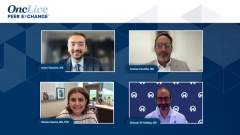
Dr. Soares identifies the most clinically important benefit of having multiple RLE options: immediate availability for patients who are clinically ready for radioligand therapy but face delays due to drug supply or shipping constraints.
Advertisement
Episodes in this series
Dr. Soares identifies the most clinically important benefit of having multiple RLE options: immediate availability for patients who are clinically ready for radioligand therapy but face delays due to drug supply or shipping constraints. Having equivalent products from multiple sources reduces the likelihood of treatment delays at both the individual patient level and the high-volume center level. She emphasizes that access can be as clinically important as drug innovation. Even the most effective therapy provides no benefit if it cannot be delivered to the patient who needs it.
Dr. El-Haddad addresses supply chain stability in detail. Radioisotope production is inherently vulnerable to disruptions: manufacturing constraints, shipping logistics, and production facility issues have all caused shortages in the past. The 505(b)(2) pathway enables multiple companies to develop equivalent products from different production sources, reducing dependence on a single supply chain. Multiple sources of clinically equivalent products improve healthcare system resilience and translate directly into fewer treatment delays and broader patient access. He frames this as a patient safety issue: treatment continuity depends on supply continuity.
He also outlines the infrastructure modifications nuclear medicine departments need when introducing RLEs. Radiation safety officers and medical physicists should be engaged early to review product-specific regulatory requirements, as rules vary by state and institution. Waste handling procedures, storage specifications, and disposal protocols must be reviewed against each product's specific FDA label rather than assumed from experience with the reference product. Animal research applications may have particularly complex waste management requirements. Clear staff communication protocols for any operational differences between the RLE and the reference product are essential, and this review process mirrors what institutions already do when onboarding any new radiopharmaceutical for trials or post-approval clinical use.
Advertisement
Related to this article

In TASKIN, the 12-month OS rate was 61.3% with vilamakitug vs 55.7% with placebo plus trifluridine/tipiracil.

The 510(k) clearance covers an MRI-derived AI risk score for stage I to IIIA disease; the high-risk category carried an HR of 2.81 for recurrence.
The FDA has approved dostarlimab for MSI-H or dMMR locally advanced rectal cancer.

The FDA accepted an NDA for UGN-103 for recurrent low-grade intermediate-risk NMIBC, with a target action date of June 14, 2027.

Ulrich Steidl, MD, PhD, has finalized his Montefiore Einstein Comprehensive Cancer Center senior leadership team.

The CirCLIQ Injector approval for subcutaneous isatuximab in multiple myeloma is the first anticancer treatment delivered via an on-body injector in Japan.

The top 5 OncLive TV videos of the week cover insights in multiple myeloma, HR+ breast cancer, CAR T-cell therapy, CLL, and oral SERDs.

Moh’d Khushman, MD, discusses INCA33890’s mechanism of action, phase 1 safety and efficacy data, and the design of NEXERA-303 in MSS colorectal cancer.
Advertisement
Advertisement
Trending on OncLive
1
FDA Clears TumorSight Risk, an MRI-Derived AI Recurrence Tool for HR+, HER2– Breast Cancer
2
Weigh Benefit Against Burden: Defining Lurbinectedin’s Role in a Shifting Small Cell Lung Cancer Landscape
3
Vilamakitug Meets OS Threshold in Phase 1/2 Refractory mCRC Trial
4
Dr Cercek on the FDA Approval of Dostarlimab for dMMR/MSI-H Locally Advanced Rectal Cancer
5