
Opinion|Videos|June 30, 2026 (Updated: June 30, 2026)
Multidisciplinary Communication and FDA Approval Pathway Fundamentals
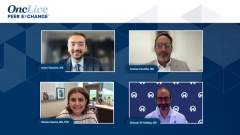
Dr. Soares addresses how understanding regulatory pathways benefits the multidisciplinary teams managing patients with NETs. A shared understanding of pathway terminology, particularly what a 505(b)(2) product represents, creates a common language among nuclear medicine physicians, medical oncologists, pharmacists, and radiation oncologists. This clarity reduces confusion about whether a therapy is truly novel, generic, or something in between, and directly improves the efficiency of tumor board discussions, formulary committee reviews, and patient counseling. Without this shared vocabulary, discussions stall on terminology rather than advancing to the clinically important questions of patient selection, access, and operational implementation.
Advertisement
Episodes in this series
Dr. Soares addresses how understanding regulatory pathways benefits the multidisciplinary teams managing patients with NETs. A shared understanding of pathway terminology, particularly what a 505(b)(2) product represents, creates a common language among nuclear medicine physicians, medical oncologists, pharmacists, and radiation oncologists. This clarity reduces confusion about whether a therapy is truly novel, generic, or something in between, and directly improves the efficiency of tumor board discussions, formulary committee reviews, and patient counseling. Without this shared vocabulary, discussions stall on terminology rather than advancing to the clinically important questions of patient selection, access, and operational implementation.
Dr. El-Haddad adds that clarity around regulatory pathways also benefits drug development teams at institutions with early-phase trial infrastructure, helping guide which approval pathway to pursue for new products.
Dr. El-Haddad then outlines the 3 main FDA approval pathways. The 505(b)(1) new drug application (NDA) is the traditional pathway for novel drugs, requiring complete safety and efficacy data generated by or for the sponsor. The abbreviated new drug application (ANDA), or 505(j) pathway, is for generics, which are products that are essentially duplicates of an approved reference drug and rely entirely on the FDA's prior safety and efficacy findings. The 505(b)(2) NDA occupies the middle ground: it remains a full NDA requiring rigorous demonstration of safety and efficacy but allows the sponsor to rely in part on published literature and prior FDA findings, supplemented by bridging data demonstrating the scientific relevance of that existing evidence to the new product.
Dr. Chauhan emphasizes that unlike generics, which are essentially identical copies of the reference drug, 505(b)(2) products may differ in manufacturing process, labeling, dosage, or administration frequency, making it essential for clinicians to consult the individual product's package insert. For this reason, 505(b)(2) products may carry their own brand names, unlike generics.
Advertisement
Related to this article
Aglatimagene besadenovec plus EBRT was linked to a 41% lower risk of prostate cancer recurrence or death, alongside durable immune activity.

In case you missed any, read a recap of the episodes of OncLive On Air that aired in September 2026.
Japan approved Optune Pax plus gemcitabine and nab-paclitaxel for unresectable locally advanced pancreatic cancer.
A pilot study represents a milestone toward testing a faster, more powerful, and potentially less-toxic form of radiation therapy for cancer treatment.
Oral azacitidine and cedazuridine met the end point of total cycle azacitidine exposure vs subcutaneous azacitidine in MDS or CMML.
UTRxMYCN M1-14 received orphan drug status for soft tissue sarcoma and RPDD for rhabdomyosarcoma.
Interim data showed that the BCMA-directed CAR T-cell therapy NXC-201 generated complete responses in relapsed/refractory AL amyloidosis.

Estelamari Rodriguez, MD, MPH, discusses the rationale, design, and practice implications of the phase 3 RELATIVITY-1093 trial in nonsquamous NSCLC.
Advertisement
Advertisement
Trending on OncLive
1
FDA Grants Fast Track Designation to Plinabulin Plus Docetaxel in Post-ICI Non-Squamous NSCLC
2
Oral Azacitidine and Cedazuridine Meets Primary Pharmacokinetic End Point in MDS and CMML
3
Optune Pax Is Approved in Japan for Unresectable Locally Advanced Pancreatic Cancer
4
UTRxMYCN M1-14 Nets FDA Dual Designations in Soft Tissue Sarcoma
5