
Opinion|Videos|December 23, 2025
CABINET Study and Cabozantinib for Treatment of NETS
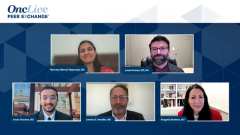
Dr. Chauhan discusses the groundbreaking CABINET trial, revealing its impact on treating neuroendocrine tumors and the future of oncology research.
Advertisement
Episodes in this series
The specialists discussed emerging therapies for neuroendocrine tumors (NETs), focusing on the recent CABINET trial of cabozantinib, a VEGFR-targeted multi-kinase inhibitor. This phase III, randomized, double-blind, placebo-controlled study included both pancreatic and extra-pancreatic NETs, covering all well-differentiated grades (1–3) and including rare thoracic NETs. The trial demonstrated a significant progression-free survival (PFS) benefit across all subgroups, with cytoreductive activity (17–19% response rate) in pancreatic NETs, providing a new option for patients needing tumor reduction. The study was notable as a cooperative group effort, developed with community and patient advocacy input, emphasizing rigorous, ethical trial design and a crossover option from placebo. Thoracic NETs, often excluded from studies, also showed substantial benefit (median PFS 8.2 vs. 2.7 months). The panel highlighted that PFS remains a meaningful endpoint in NETs, particularly for patients in diverse practice settings. They also noted ongoing trials, such as with zanzalintinib, exploring additional VEGFR-targeted therapies for broader NET populations.
Advertisement
Related to this article
Aglatimagene besadenovec plus EBRT was linked to a 41% lower risk of prostate cancer recurrence or death, alongside durable immune activity.

In case you missed any, read a recap of the episodes of OncLive On Air that aired in September 2026.
Japan approved Optune Pax plus gemcitabine and nab-paclitaxel for unresectable locally advanced pancreatic cancer.
A pilot study represents a milestone toward testing a faster, more powerful, and potentially less-toxic form of radiation therapy for cancer treatment.
Oral azacitidine and cedazuridine met the end point of total cycle azacitidine exposure vs subcutaneous azacitidine in MDS or CMML.

UTRxMYCN M1-14 received orphan drug status for soft tissue sarcoma and RPDD for rhabdomyosarcoma.

Interim data showed that the BCMA-directed CAR T-cell therapy NXC-201 generated complete responses in relapsed/refractory AL amyloidosis.

Estelamari Rodriguez, MD, MPH, discusses the rationale, design, and practice implications of the phase 3 RELATIVITY-1093 trial in nonsquamous NSCLC.
Advertisement
Advertisement
Trending on OncLive
1
FDA Grants Fast Track Designation to Plinabulin Plus Docetaxel in Post-ICI Non-Squamous NSCLC
2
Oral Azacitidine and Cedazuridine Meets Primary Pharmacokinetic End Point in MDS and CMML
3
Optune Pax Is Approved in Japan for Unresectable Locally Advanced Pancreatic Cancer
4
UTRxMYCN M1-14 Nets FDA Dual Designations in Soft Tissue Sarcoma
5