

New treatments are emerging for patients with relapsed/refractory diffuse large B-cell lymphoma in addition to chimeric antigen receptor T-cell therapy, which has moved up into the second line.

Managing Editor, OncLive®
Caroline Seymour is your initial point of contact for the OncLive® podcast, OncLive On Air™. She joined the company in 2018 as an assistant editor, with expertise in video production and print/digital publication. Email: cseymour@onclive.com
New treatments are emerging for patients with relapsed/refractory diffuse large B-cell lymphoma in addition to chimeric antigen receptor T-cell therapy, which has moved up into the second line.

Chung-Han Lee, MD, PhD, outlines common clinical trial end points in renal cell carcinoma and those that may provide a more complete picture of a drug’s activity, particularly as the standard of care evolves.
Regorafenib plus ipilimumab and nivolumab led to encouraging survival and responses in approximately half of patients with microsatellite stable, non–liver metastatic colorectal cancer who progressed on prior chemotherapy.
The combination of nivolumab and ipilimumab led to significant improvements in survival vs sunitinib in patients with intermediate- and poor-risk renal cell carcinoma with sarcomatoid features.

The FDA has granted a breakthrough therapy designation to elranatamab for the treatment of patients with relapsed/refractory multiple myeloma.
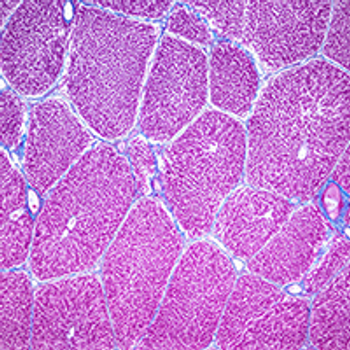
The FDA has granted an orphan drug designation to OTX-2002 for the treatment of patients with hepatocellular carcinoma.

The first patient in the chronic lymphocytic leukemia cohort has been dosed in the phase 1 COVALENT-101 trial, which is evaluating the first-in-class covalent menin inhibitor BMF-219.

In a special OncLive video program, The Board, D. Ross Camidge, MD, PhD, led a discussion regarding key abstracts that were presented during the 2022 ESMO Congress in non–small cell lung cancer.
Reduced-intensity conditioning treatment plus Iomab-B prior to bone marrow transplant led to a durable and statistically significant 6-month complete remission rate vs conventional care in older patients with active, relapsed/refractory acute myeloid leukemia.

Camizestrant led to a statistically significant improvement in progression-free survival compared with fulvestrant in postmenopausal patients with estrogen receptor–positive, locally advanced, or metastatic breast cancer who were previously treated with endocrine therapy for advanced disease.
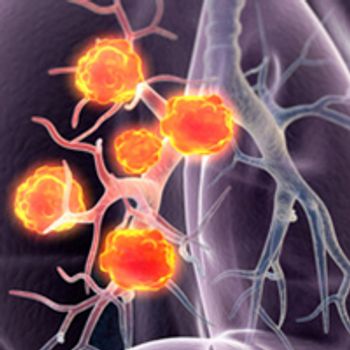
Sintilimab plus pemetrexed and cisplatin significantly improved progression-free survival vs pemetrexed and cisplatin alone in patients with advanced, EGFR-mutant non–small cell lung cancer who progressed on prior EGFR TKI therapy.

Xevinapant plus chemoradiotherapy more than halved the risk of death vs placebo plus chemoradiotherapy without increasing toxicity in patients with unresectable, locally advanced head and neck squamous cell carcinoma.

The FDA has granted a fast track designation to TTI-101 for the treatment of patients with relapsed/refractory locally advanced, unresectable, or metastatic hepatocellular carcinoma.

The European Commission has approved axicabtagene ciloleucel for the treatment of adult patients with diffuse large B-cell lymphoma or high-grade B-cell lymphoma who relapse within 12 months from completion of, or are refractory to, first-line chemoimmunotherapy.
The FDA has granted an orphan drug designation to ET140203 for the treatment of patients with hepatoblastoma.

The European Medicines Agency’s Committee for Medicinal Products for Human Use has adopted a positive opinion for cemiplimab monotherapy for the treatment of adult patients with recurrent or metastatic cervical cancer with disease progression on or after platinum-based chemotherapy.
Treatment with ibrutinib for at least 5 years showed favorable complete response rates and tolerability in patients with chronic lymphocytic leukemia/small lymphocytic lymphoma who were randomized to receive the BTK inhibitor in the phase 3 RESONATE-2 trial.
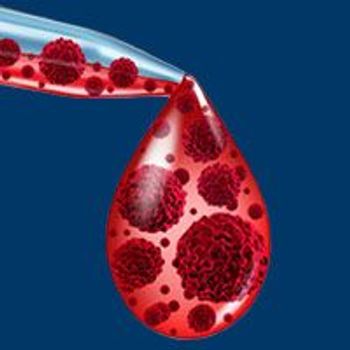
Fixed-duration treatment with ibrutinib and venetoclax led to deeper and prolonged undetectable minimal residual disease responses vs chlorambucil and obinutuzumab in the frontline treatment of elderly or unfit patients with chronic lymphocytic leukemia, translating to fewer relapses in the first year following treatment cessation.

The combination of avelumab and axitinib demonstrated promising response rates and progression-free survival and an expected safety profile in pretreated patients with advanced type B3 thymoma and thymic carcinoma, according to findings from an ongoing phase 2 study.

Bendamustine plus rituximab followed by autologous stem cell transplant and maintenance rituximab led to comparable outcomes defined by progression-free survival and objective response rate compared with R-CHOP/R-DHAP and ASCT as induction therapy in patients with mantle cell lymphoma.
Tivozanib demonstrated an improvement in overall survival compared with sorafenib in pretreated patients with advanced clear cell renal cell carcinoma, particularly in those who remained progression-free at 1 year and beyond.
Toni K. Choueiri, MD, provides perspective on key research in renal cell carcinoma, including the first demonstration of benefit with triplet therapy in metastatic clear cell disease, the expansion of HIF-2α inhibition into the first line, and success with VEGF/immune-oncology approaches in the non–clear cell population.
The addition of dostarlimab to chemotherapy led to an improvement in objective response rate vs pembrolizumab plus chemotherapy in patients with newly diagnosed metastatic nonsquamous non–small cell lung cancer.

The addition of SCO-101 to FOLFIRI chemotherapy was safe and tolerable but failed to elicit a greater than 30% reduction in tumor volume in patients with metastatic colorectal cancer, though study of the combination will continue.

Treatment with pacritinib led to an improvement in transfusion independence and hemoglobin in patients with myelofibrosis according to findings from a retrospective analysis of the phase 3 PERSIST-2 trial.
Treatment with GB2064 monotherapy for at least 6 months led to a reduction in collagen fibrosis of the bone marrow of at least 1 grade in 4 of 5 evaluable patients with myelofibrosis, according to topline findings from a planned intermediate assessment of the phase 2a MYLOX-1 trial.
The FDA has accepted for review a new drug application for 18F-rhPSMA-7.3, an investigational radiohybrid PSMA-targeted PET imaging agent for diagnostic imaging of prostate cancer, according to an announcement from Blue Earth Diagnostics.

Gavocabtagene autoleucel demonstrated positive topline results from the phase 1 portion of a phase 1/2 trial in patients with mesothelin-expressing solid tumors.
The FDA has approved bevacizumab-adcd, a bevacizumab biosimilar, for the treatment of six types of cancer.

Vinorelbine plus cyclophosphamide and capecitabine led to a significant improvement in time to treatment failure compared with paclitaxel alone in patients with estrogen receptor–positive, HER2-negative locally advanced or metastatic breast cancer.