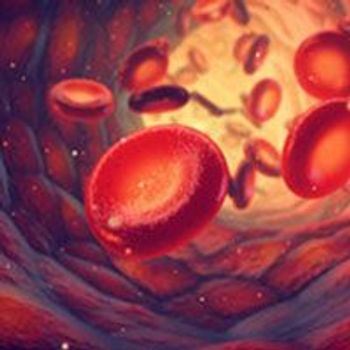

The FDA has granted a fast track designation to DB-1303 for the treatment of patients with advanced, recurrent or metastatic endometrial cancer with HER2 overexpression who have progressed on or after standard systemic therapy.

Your AI-Trained Oncology Knowledge Connection!


Managing Editor, OncLive®
Caroline Seymour is your initial point of contact for the OncLive® podcast, OncLive On Air™. She joined the company in 2018 as an assistant editor, with expertise in video production and print/digital publication. Email: cseymour@onclive.com

The FDA has granted a fast track designation to DB-1303 for the treatment of patients with advanced, recurrent or metastatic endometrial cancer with HER2 overexpression who have progressed on or after standard systemic therapy.

The addition of stereotactic body radiation therapy to sorafenib led to an improvement in overall survival, progression-free survival, and time to disease progression compared with sorafenib alone in patients with locally advanced, hepatocellular carcinoma.

The FDA has granted an orphan drug designation to LNS8801 for the treatment of patients with metastatic cutaneous melanoma.

The FDA has approved zanubrutinib for the treatment of patients with chronic lymphocytic leukemia or small lymphocytic lymphoma.

Olutasidenib has been added to the National Comprehensive Cancer Network Clinical Practice Guidelines in Oncology as a recommended targeted therapy for adult patients with relapsed/refractory acute myeloid leukemia with an IDH1 mutation.

The addition of daratumumab to lenalidomide and dexamethasone led to a 27% reduction in the risk of death compared with Rd alone in patients with relapsed/refractory multiple myeloma.

The FDA has granted an orphan drug designation to JBI-802 for the treatment of patients with small cell lung cancer and acute myeloid leukemia.

ADXS-504, an investigational off-the-shelf neoantigen therapy, has been reported to be well tolerated and safe in patients with biochemically recurrent early prostate cancer.

The FDA has granted an orphan drug designation to QN-302 for the treatment of patients with pancreatic cancer.

Treatment with the folate receptor α–directed antibody-drug conjugate luveltamab tazevibulin led to a 37.5% overall response rate in Frα-selected patients with advanced ovarian cancer, defined by a tumor proportion score above 25%.

The FDA has granted an orphan drug designation to azeliragon for the treatment of patients with glioblastoma.

Neoadjuvant treatment with SHR-1701 with or without chemotherapy followed by surgery or radiotherapy induced responses in more than half of patients with stage III unresectable non–small cell lung cancer and increased resectability in those assigned to definitive surgery.

Japan’s Ministry of Health, Labor, and Welfare has approved acalabrutinib for the treatment of previously untreated patients with chronic lymphocytic leukemia and small lymphocytic lymphoma.

Adding mitazalimab to mFOLFIRINOX led to a 52% objective response rate as frontline therapy in 23 patients with metastatic pancreatic cancer.

Abiraterone acetate granules for oral suspension demonstrated therapeutic equivalence and comparable safety to the original formulation of abiraterone acetate in patients with metastatic castration-resistant prostate cancer and metastatic castration-sensitive prostate cancer.

A biologics license application has been submitted to the FDA seeking the approval of cosibelimab for the treatment of patients with metastatic cutaneous squamous cell carcinoma or locally advanced cutaneous squamous cell carcinoma who are not candidates for curative surgery or radiation.

The FDA has granted a breakthrough device designation to the OverC Multi-Cancer Detection Blood Test for the early detection of cancers including esophageal, liver, lung, ovarian, and pancreatic in adults aged to 50 to 75 years with average risk.

The European Committee for Medicinal Products for Human Use has announced that it does not support the marketing authorization of omburtamab for the treatment of patients with central nervous system/leptomeningeal metastasis from neuroblastoma.

Treatment with PDS0101 plus the tumor-targeting IL-12 fusion protein M9241 and bintrafusp alfa elicited encouraging overall survival data in patients with checkpoint inhibitor–naïve and –refractory advanced human papillomavirus–positive anal, cervical, head and neck, vaginal, and vulvar cancer.

Treatment with INV-1120 was well tolerated and demonstrated preliminary signals of stable disease as a single agent in patients with advanced solid tumors.

An unshakeable belief in the power of the immune system and a deep-seated desire to make the world a better place have guided Eric J. Small, MD, throughout his career.

LP-284 showed superior antitumor activity compared with LP-184 independent of PTGR1 expression levels in DNA damage repair–deficient mantle cell lymphoma cell lines.

Olverembatinib demonstrated sustained efficacy and reduced toxicity with longer follow-up in patients with TKI-resistant, T315I-mutant chronic myeloid leukemia in chronic phase and accelerated phase.

The FDA has approved the FoundationOne® Liquid CDx as a companion diagnostic to identify patients with non–small cell lung cancer whose tumors have EGFR exon 19 deletions or exon 21 L858R substitutions.

Durvalumab monotherapy failed to elicit a statistically significant improvement in overall survival vs platinum-based chemotherapy as frontline treatment in patients with stage IV non–small cell lung cancer with at least 25% positivity of PD-L1 on tumor cells, or in a subgroup of patients at low risk of early mortality.

COM701 plus nivolumab demonstrated modest antitumor activity but a favorable safety profile in patients with metastatic microsatellite stable colorectal cancer.

The European Commission has approved fam-trastuzumab deruxtecan-nxki as monotherapy for the treatment of patients with advanced HER2-positive gastric or gastroesophageal junction adenocarcinoma who have received a prior trastuzumab-based regimen.

The FDA has approved a new indication for pafolacianine to aid surgeons in detecting lung cancer lesions in adult patients with known or suspected lung cancer.

The use of an individualized starting dose of niraparib led to a trend toward improved overall survival as maintenance therapy vs placebo in Chinese patients with platinum-sensitive, recurrent ovarian cancer regardless of germline BRCA mutation status, according to data from the phase 3 NORA trial.

Daiichi Sankyo has filed a supplemental new drug application with Japan’s Ministry of Health, Labor, and Welfare for the use of fam-trastuzumab deruxtecan-nxki in adults with previously treated HER2-mutant unresectable advanced or recurrent non–small cell lung cancer.