
Richard R. Furman, MD, discusses the findings from the analysis and highlights the differences between first- and second-generation BTK inhibitors in CLL.

Managing Editor, OncLive®
Caroline Seymour is your initial point of contact for the OncLive® podcast, OncLive On Air™. She joined the company in 2018 as an assistant editor, with expertise in video production and print/digital publication. Email: [email protected]
Richard R. Furman, MD, discusses the findings from the analysis and highlights the differences between first- and second-generation BTK inhibitors in CLL.
Denise Yardley, MD, sheds light on individualized treatment approaches and other key developments in HER2-positive breast cancer.
Courtney DiNardo, MD, MSCE, discusses the results of the analysis evaluating the timing of response to venetoclax-based combinations, and related disease features, in older patients with AML.
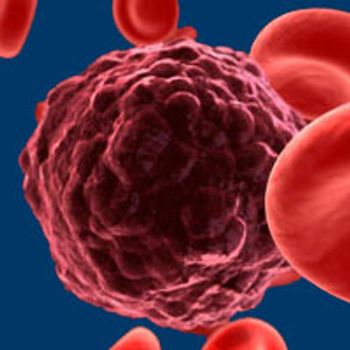
The combination of pevonedistat and azacitidine led to a trend toward improved event-free survival and a numerical improvement in overall survival versus azacitidine alone in patients with higher-risk myelodysplastic syndrome/chronic myelomonocytic leukemia, and low-blast acute myelogenous leukemia.

The CD71-directed probody-drug conjugate of monomethyl auristatin E CX-2029 showed tolerability and antitumor activity in patients with advanced cancer.

Jia Ruan, MD, PhD, discusses the current risk-stratification parameters and the evolution of treatment from high-intensity chemoimmunotherapy to novel therapy in mantle cell lymphoma.

The oral, highly selective MET inhibitor tepotinib demonstrated durable clinical activity in patients with locally advanced or metastatic non–small cell lung cancer who harbor a MET exon 14 skipping mutation identified through liquid or tissue biopsy.
Baseline and posttreatment circulating tumor DNA positivity was associated with worse radiologic progression-free survival in patients with metastatic castration-resistant prostate cancer.
Pembrolizumab doubled progression-free survival compared with chemotherapy in patients with newly diagnosed microsatellite instability–high/mismatch repair deficient metastatic colorectal cancer, according to findings from an interim analysis of the phase 3 KEYNOTE-177 trial.

The rate of global molecular testing is low and is limited by a number of factors, including cost, quality, turn-around time, access, and lack of awareness of testing.

Tisagenlecleucel led to clinically meaningful and durable improvements in health-related quality of life in patients with relapsed/refractory diffuse large B-cell lymphoma who achieved a complete or partial response to the CD19-directed CAR T-cell therapy in the phase 2 JULIET trial.
Concurrent frontline therapy with cladribine and rituximab led to a significant improvement in minimal residual disease–free complete responses versus cladribine followed by delayed rituximab in patients with hairy cell leukemia.
Alan H. Bryce, MD, discusses the recent regulatory approval of rucaparib in metastatic castration-resistant prostate cancer and explains how the approval has underscored the importance of genetic testing in the field.

Alan H. Bryce, MD, discusses the recent regulatory approval of rucaparib in metastatic castration-resistant prostate cancer and explains how the approval has underscored the importance of genetic testing in the field.

Preetesh Jain, MD, PhD, evaluates mechanisms of resistance to venetoclax in patients with heavily pretreated mantle cell lymphoma and the next phase of this research.
Preetesh Jain, MD, PhD, evaluated mechanisms of resistance to venetoclax in patients with heavily pretreated mantle cell lymphoma and the next phase of this research.
David D. Thiel, MD, discussed the results of a CCGA study and the next steps with this research.
Michael Wang, MD, discusses paradigm shifts in lymphomas and the research efforts driving precision medicine in mantle cell lymphoma.
Michael Wang, MD, discusses paradigm shifts in lymphomas and the research efforts driving precision medicine in mantle cell lymphoma.
The combination of gemcitabine and ribociclib led to a radiographic and histologic response in a woman with chemotherapy-resistant metastatic CDK6-amplified osteosarcoma
Joyce A. O'Shaughnessy, MD, sheds light on the current paradigm of HER2-positive breast cancer and the optimal role of neratinib in the early-stage and advanced settings.
Joyce A. O'Shaughnessy, MD, sheds light on the current paradigm of HER2-positive breast cancer and the optimal role of neratinib in the early-stage and advanced settings.

Prithviraj Bose, MD, discusses the role of ruxolitinib in myelofibrosis, the potential advantages of next-generation JAK inhibitors, and other novel agents under exploration.
Prithviraj Bose, MD, discusses the current role of ruxolitinib in myelofibrosis, the potential advantages of next-generation JAK inhibitors, and the novel agents that are being explored as single agents and in combination with ruxolitinib.

Allyson Ocean, MD, discusses some of the key initiatives that she has helped spearhead to raise awareness on COVID-19 and provide PPE to those who need it.
David S. Hong, MD, discusses the results of these analyses with larotrectinib in patients with NTRK alterations.

Shai Friedland, MD, discusses the importance of screening for colorectal cancer, the advantages of the noninvasive FirstSightCRC blood test, and the results from the ZENITH trial.

Paul M. Barr, MD, discusses the findings from a phase 1/2 trial and the evolution toward triplet therapies in chronic lymphocytic leukemia.

R. Wendel Naumann, MD, discusses the FDA approval of niraparib in ovarian cancer and the impact on the current treatment paradigm.

Edward B. Garon, MD, MS, discusses the importance of the GEOMETRY mono-1 study in patients with advanced NSCLC who harbor MET exon 14 skipping mutations.