
Edward B. Garon, MD, MS, discusses the importance of the GEOMETRY mono-1 study in patients with advanced NSCLC who harbor MET exon 14 skipping mutations.

Managing Editor, OncLive®
Caroline Seymour is your initial point of contact for the OncLive® podcast, OncLive On Air™. She joined the company in 2018 as an assistant editor, with expertise in video production and print/digital publication. Email: cseymour@onclive.com
Edward B. Garon, MD, MS, discusses the importance of the GEOMETRY mono-1 study in patients with advanced NSCLC who harbor MET exon 14 skipping mutations.
Allyson Ocean, MD, discusses the emotional toll COVID-19 has had on patients and practitioners and the importance of self-care and social distancing.
Nizar M. Tannir, MD, FACP, discusses the 42-month follow-up results from the CheckMate-214 trial in advanced renal cell carcinoma and provides perspective on other approved combinations in the frontline setting.
Quantitative microelastography demonstrated increased sensitivity, specificity, and accuracy in detecting positive surgical margins in combination with optimal coherence tomography versus optimal coherence tomography alone in women who received breast-conserving surgery.
Gina Z. D'Amato, MD, discusses the evolution of treatment in sarcoma, the use of next-generation sequencing, and predictive and prognostic biomarkers under investigation in the space.
R. Lor Randall, MD, FACS, discusses current approaches in the surgical management of patients with osteosarcoma that has metastasized to the lungs.
John N. Allan, MD, discusses the study results of a phase 1b/2 dose-escalation trial with vecabrutinib in patients with B-cell malignancies.
Christopher E. Dandoy, MD, MSc, discusses the clinical features of TA-TMA and the importance of close monitoring and intervention for patients at risk of developing the disorder.
Rana R. McKay, MD, discusses the results of the real-world analysis with radium-223 and other exciting research in the mCRPC field.
Allyson Ocean, MD, explains how the outbreak has impacted treatment plans for patients, and sheds light on the work being done to develop a treatment and/or vaccine for the virus.
Rajat Bannerji, MD, PhD, discusses the clinical activity of the bispecific antibody REGN1979 in patients with non-Hodgkin lymphoma.
Robert J. Kreitman, MD, discusses the long-term findings from the pivotal phase III trial with moxetumomab pasudotox in relapsed/refractory hairy cell leukemia.
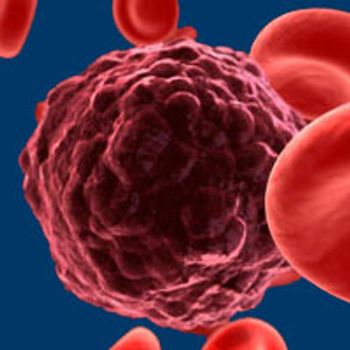
Alvin H. Schmaier, MD, discusses the primary and secondary management of cancer-related thrombosis.
Comprehensive genomic profiling can be successfully performed in the majority of patients with sarcoma, depending on the tumor location and tissue subtype, which can impact treatment decisions and patient outcomes.
Joyce A. O'Shaughnessy, MD, discusses the design and findings of the plasmaMATCH trial and ongoing research with targeted therapy in breast cancer.
Obese men with nonmetastatic prostate cancer have higher cardiovascular disease–related mortality and all-cause mortality, and potentially increased prostate cancer–specific mortality.

Ragini Kudchadkar, MD, discusses the prognosis of patients with metastatic ocular melanoma and the work being done to define novel approaches in melanoma.
Scott T. Tagawa, MD, MS, discusses the results of the phase I dose-escalation trial, the advantages of using an alpha emitter and a monoclonal antibody, and the possibility of combining the modality with other classes of agents in prostate cancer.
The addition of acalabrutinib (Calquence) to venetoclax (Venclexta) and obinutuzumab (Gazyva) was shown to be highly active in patients with newly diagnosed chronic lymphocytic leukemia, eliciting deep and durable responses.
David P. Steensma, MD, discusses some new data in myelodysplastic syndromes and ongoing research in the space.
A subset of patients with metastatic castration-resistant prostate cancer who have low tumor mutational burden may benefit from checkpoint inhibition with ipilimumab if the tumor has a high density of CD8-positive T cells and increased interferon-interferon gamma signaling.
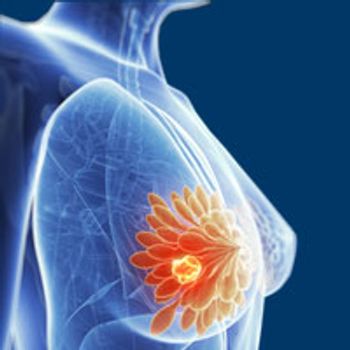
Circulating tumor DNA can be used as a predictive measure of response to neoadjuvant chemotherapy and inform overall prognosis in patients with early-stage breast cancer, providing information that can be used to tailor treatment.
John L. Marshall, MD, reflects on recent advances in the field of metastatic colorectal cancer and discusses ongoing research efforts in the space.
Nonmetastatic castration-resistant prostate cancer is a more recently defined clinical state of prostate cancer, for which several approved drugs are now available.
Ajai Chari, MD, discusses the impact of the COVID-19 outbreak on hospital protocols and the measures that are being taken to reduce the spread of the virus.
The role of immunotherapy in metastatic renal cell carcinoma has grown tremendously with dual immune checkpoint inhibition and combinations of anti–PD-1/VEGF inhibitors.
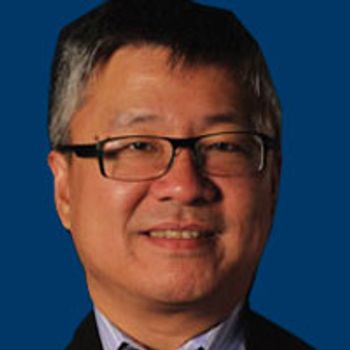
The use of PARP inhibitors against DNA damage repair alterations in prostate cancer is the first display of the potential for widespread precision medicine in the field.
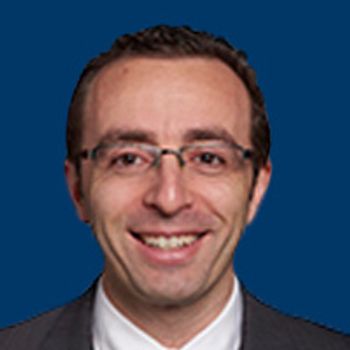
Joshua Brody, MD, discusses research with in-situ vaccination in non-Hodgkin lymphoma and strategies being developed to overcome acquired resistance.
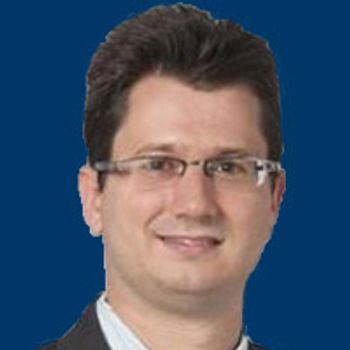
Petros Grivas, MD, discusses the repercussions of the COVID-19 pandemic on oncology practice patterns and the importance of contributing to the COVID-19 and Cancer Consortium Registry.
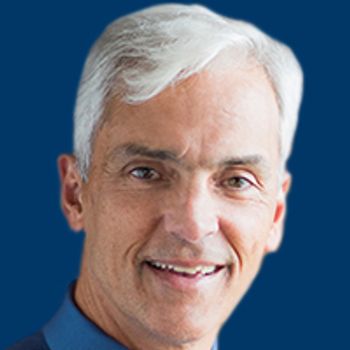
Thomas G. Martin, MD, discusses the risk of COVID-19 to patients with cancer and precautionary measures implemented by the the University of California San Francisco Helen Diller Family Comprehensive Cancer Center.