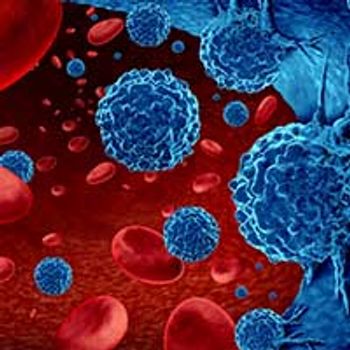
The FDA has granted an orphan drug designation to SIRPant-M™ as a potential therapeutic option for patients with T-cell lymphoma.

Editor, OncLive
Courtney Flaherty started working for OncLive in 2022. Leveraging an educational background in the life sciences and prior experience conducting interviews in a university setting, she plays a key role in shaping social media and email strategy, covering live conferences, and producing multimedia content for both print and digital platforms. Email: [email protected]

The FDA has granted an orphan drug designation to SIRPant-M™ as a potential therapeutic option for patients with T-cell lymphoma.

Administration of the hypoxia-inducible factor–2α inhibitor belzutifan (Welireg) at the recommended phase 2 dose of 120 mg daily produced comparable toxicities and efficacy outcomes to that of a daily 200-mg dose of the agent in patients with advanced clear cell renal cell carcinoma.

Andrew T. Kuykendall, MD, discusses the importance of the approval of momelotinib in the treatment of patients with anemic symptomatic myelofibrosis, key efficacy and safety data from the MOMENTUM trial that supported the decision, and unanswered questions regarding the agent’s potential role in other subsets within this population.

The European Medicines Agency’s Committee for Medicinal Products for Human Use has recommended the approval of elranatamab-bcmm for the treatment of adult patients with relapsed/refractory multiple myeloma who were previously treated with 3 or more lines of therapy, including an immunomodulatory agent, a proteasome inhibitor, and an anti-CD38 monoclonal antibody, and who experienced disease progression on their last therapy.

Combining sacituzumab govitecan-hziy and enfortumab vedotin-ejfv was safe, feasible, and produced high and early response rates in patients with treatment-resistant metastatic urothelial cancer.

Postoperative circulating tumor DNA (ctDNA)–based minimal residual disease status demonstrated prognostic value for patients with stage I to IV resected colorectal cancer, showing that those with positive ctDNA after surgery have significantly lower disease-free survival outcomes at 24 months vs those who were ctDNA negative.

Marisol Miranda-Galvis, DDS, MS, PhD, highlights the importance of understanding which social determinants of health have the greatest influence on treatment-related outcomes in patients with hematologic malignancies, expands on key variables identified in a systematic review of these disparities, and emphasizes the importance of continuing to implement new strategies to increase access to quality treatments.

Ricardo D. Parrondo, MD, highlights the current use of covalent BTK inhibitors in chronic lymphocytic leukemia, potential roles for the non-covalent BTK inhibitor pirtobrutinib, and the importance of future research on time-limited treatment options for patients with newly diagnosed chronic lymphocytic leukemia.

Danielle K. DePalo, MD, explains the lack of research directly comparing first-line treatment options for patients with unresectable melanoma in-transit metastases, expands on the safety and efficacy of 3 treatment modalities for these patients, and underscores the need for more data to inform the management of these patients.

Uwe Platzbecker, MD, discusses how to navigate decisions for the first-line treatment of anemia in patients with lower-risk MDS in light of luspatercept’s approval, expands on key data from the COMMANDS trial, and addresses potential concerns from clinicians who are uncertain about when to utilize this agent in the frontline setting in clinical practice.

Vivek K. Narayan, MD, MS, spotlights 3 case studies of patients with metastatic prostate cancer, delving into the influence of their unique mutational status on treatment decisions, scenarios in which to utilize PARP inhibitor monotherapy vs combination regimens, and key trials that support the use of each approach.

Joachim G. J. V. Aerts, MD, PhD, discusses how dendritic cell vaccines could bolster historically poor responses to immunotherapy in patients with mesothelioma, reports and provides potential explanations for negative results from the DENIM trial, and details a potential role for this therapy in earlier lines of mesothelioma treatment.

Administration of acalabrutinib to patients with chronic lymphocytic leukemia with or without cardiovascular disorders at baseline results in a numerically decreased incidence of overall treatment-related cardiac toxicities and a comparable safety profile vs comparator CLL therapies such as ibrutinib.

Patients with chronic lymphocytic leukemia who experience disease progression during treatment with either covalent or noncovalent BTK inhibitors displayed a higher frequency of BTK mutations in L528W as well as RAS/RAF/MAPK pathway alterations, indicating that these alterations may play a role in the development of BTK inhibitor resistance.

Shortages of cisplatin and carboplatin have continued at the majority of National Cancer Center Network (NCCN) institutions, according to data from a follow-up survey conducted by NCCN.

Patients with multiple myeloma exhibiting poor prognostic features, such as high-risk cytogenetics, soft-tissue plasmacytoma, ISS stage III disease, and triple-class exposure, experienced significant progression-free survival benefit with ciltacabtagene autoleucel.

Amy W. Zhou, MD, highlights the unique mechanism of action of the JAK1/2 and ACVR1 inhibitor momelotinib and the importance of ongoing investigations of JAK inhibitor combination therapies in myelofibrosis.

Ezra Rosen, MD, PhD, highlights the early-phase investigation of zotatifin in estrogen receptor-positive metastatic breast cancer, explains the agent’s unique mechanism of action as well as its efficacy and safety in a heavily pretreated population, and underscores the need for improved sequencing of the myriad of treatment options in the post–CDK4/6 inhibitor space.

Melissa L. Johnson, MD, spotlights the early-phase investigation of ifinatamab deruxtecan in advanced solid tumors, discusses the efficacy and safety of the agent in patients with small cell lung cancer, and emphasizes how results from a subgroup analysis support its continued investigation.

Uwe Platzbecker, MD, discusses the efficacy and safety data from the COMMANDS trial that supported the approval, and the next steps planned for luspatercept’s investigation in patients with lower-risk MDS who are transfusion independent.

The addition of toripalimab to standard-of-care sorafenib in the frontline setting demonstrated preliminary efficacy and tolerability in patients with unresectable hepatocellular carcinoma.

The use of an immuno-oncology regimen as systemic therapy was found to be an independent prognostic factor and was associated with improved long-term survival for patients with hepatocellular carcinoma, regardless of IO’s sequencing in the first and later lines of treatment.

Daneng Li, MD, highlights the importance of biomarker testing in gastroesophageal and biliary tract cancers, the potential role for targeted therapy in first-line CRC treatment, and when to choose neoadjuvant therapy over upfront surgery and adjuvant therapy in pancreatic cancer.

R. Lor Randall, MD, FACS, discusses the process of organizing the symposium, key surgical and non-surgical advancements as well as socioeconomic disparities identified in these papers, and the importance of this information for both surgical and medical oncologists.

The addition of atezolizumab to bevacizumab, carboplatin, and pemetrexed or paclitaxel (ABCP) did not result in a statistically significant improvement in progression-free survival vs BCP for patients with metastatic nonsquamous non–small cell lung cancer in the first line, missing the primary end point of the phase 3 IMpower151 study.

Heather R. Williams, MD, expands on updated data from the the phase 3 PRIMA trial initially supporting the use of frontline PARP inhibitor maintenance in ovarian cancer, as well as changing indications for niraparib based on data from the NOVA trial.

Administration of the anti–PD-1 antibody prolgolimab in combination with bevacizumab and platinum-doublet chemotherapy resulted in high response rates and a favorable safety profile in patients with recurrent or metastatic cervical cancer.

The efficacy of maintenance mirvetuximab soravtansine plus bevacizumab is being compared with bevacizumab alone in patients with folate receptor alpha–positive recurrent platinum-sensitive epithelial ovarian, fallopian tube, or peritoneal cancers that did not progress on second-line triplet therapy in the phase 3 GLORIOSA study.

Bernard Doger de Spéville, MD, PhD, discusses the investigation of eftilagimod alpha plus pembrolizumab in the TACTI-002 trial, including prior evidence supporting this approach, the trial’s design and primary objective, and the combination’s efficacy and safety in both the head and neck squamous cell carcinoma and non–small cell lung cancer cohorts.

Thierry André, MD, discusses the investigation of trifluridine/tipiracil plus bevacizumab in patients with metastatic colorectal cancer, including how its use as a standard of care in the third line supported its investigation in the first-line setting, the regimen’s efficacy and safety in the SOLSTICE trial, and the importance of this combination for patients in this space despite negative trial results.