

Peter H. O’Donnell, MD, provides insights on key developments in bladder cancer management and how they have generated optimism within the field.

Editor, OncLive
Courtney Flaherty started working for OncLive in 2022. Leveraging an educational background in the life sciences and prior experience conducting interviews in a university setting, she plays a key role in shaping social media and email strategy, covering live conferences, and producing multimedia content for both print and digital platforms. Email: [email protected]
Peter H. O’Donnell, MD, provides insights on key developments in bladder cancer management and how they have generated optimism within the field.
WU-CART-007 has received RMAT and PRIME designations in relapsed/refractory T-cell acute lymphoblastic leukemia and T-cell lymphoblastic lymphoma.

Dose reductions of ribociclib plus an NSAI did not decrease the regimen’s efficacy in patients with HR-positive, HER2-negative early breast cancer.
NVL-655 has received FDA breakthrough therapy designation for patients with pretreated ALK-positive non-small cell lung cancer.

Trastuzumab deruxtecan demonstrated superior long-term survival and response rates vs treatment of physician’s choice in HER2-positive breast cancer.

Olaparib, durvalumab, and fulvestrant produced a 66.7% 24-week PFS rate in patients with endocrine-resistant, ER-positive, HER2-negative breast cancer.

Petros Grivas, MD, PhD, discusses the significance of the phase 3 JAVELIN Bladder 100, EV-302, and CheckMate 901 trials in urothelial cancer.
The FDA has granted breakthrough therapy designation to petosemtamab in recurrent or metastatic head and neck squamous cell carcinoma.

Joaquim Bellmunt, MD, PhD, discusses the impact of enfortumab vedotin plus pembrolizumab on the treatment paradigm in first-line urothelial cancer.

SNB-101 has received FDA fast track designation for potential use in patients with small cell lung cancer.

Prolonged administration of imatinib maintenance therapy for 6 years improved disease-free survival in patients with gastrointestinal stromal tumors.

Emil Lou, MD, PhD, FACP, discusses the predictive and prognostic use of tumor stroma proportion for outcomes and chemoresistance in ovarian cancer.

R. Wendel Naumann, MD, discusses 2 case studies in platinum-resistant ovarian cancer and the optimal treatment approaches for each patient.

Amandeep Salhotra, MD, discusses the feasibility and safety of Orca-T graft in patients undergoing allogeneic transplant for hematologic malignancies.
The CAR T-cell therapy NXC-201 has received orphan drug designation from the European Commission for patients with multiple myeloma.
Karim Chamie, MD, discusses the significance of the FDA approval of N-803 plus BCG in BCG-unresponsive non–muscle invasive bladder cancer.

Chidamide plus R-CHOP has received approval from China’s NMPA for the management of diffuse large B-cell lymphoma.
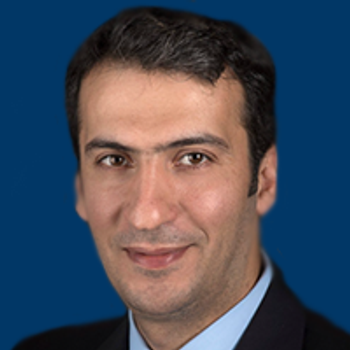
Samer A. Srour, MB ChB, MS, explains the significance of early safety and efficacy data with CTX130 in CD70-expressing clear cell renal cell carcinoma.

Rohan Garje, MD, highlights advances made in precision medicine approaches for the management of metastatic prostate cancer.
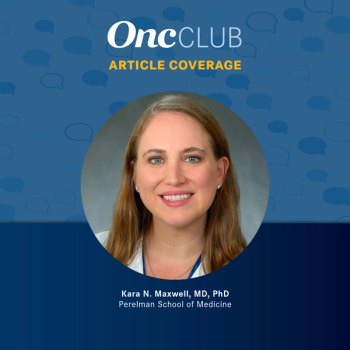
Kara N. Maxwell, MD, PhD, discusses the prevalence of germline mutations in racially diverse cohorts of patients with metastatic prostate cancer.

Topline findings with the next-generation ColoAlert® test demonstrated 92% sensitivity and 90% specificity rates for colorectal cancer detection.

Vebreltinib has received approval from China’s NMPA in pretreated IDH-mutant, PTPRZ1-MET fusion–positive astrocytoma or glioblastoma.
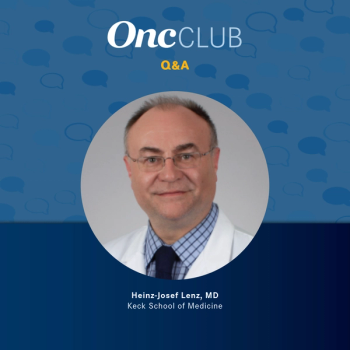
Heinz-Josef Lenz, MD, FACP, discusses the prognostic and predictive value of HER2 expression levels in select patients with colorectal cancer.

Tislelizumab has been approved in Europe across 3 indications in the first and second line for select patients with non–small cell lung cancer.
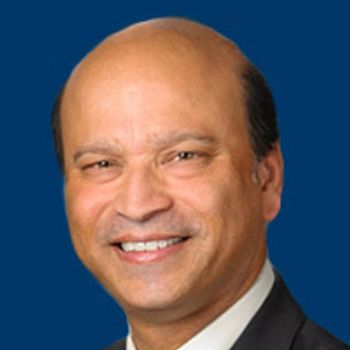
Debu Tripathy, MD, highlights the potential role and significance of vepdegestrant in pretreated ER-positive/HER2-negative breast cancer.

Saad Z. Usmani, MD, MBA, FACP, FASCO, discusses the significance of the FDA approval of cilta-cel in relapsed/refractory multiple myeloma.

Eric S. Christenson, MD, discusses the potential benefit of copanlisib plus nivolumab in PIK3CA-mutant microsatellite stable colorectal cancer.
Abdulrahman Sinno, MD, highlights key trials that have impacted the treatment paradigm in endometrial and ovarian cancer throughout 2023.

Itacitinib prophylaxis showed signals for reducing CRS and ICANS following treatment with axicabtagene ciloleucel in patients with B-cell lymphoma.

Durvalumab plus chemotherapy produced superior 3-year survival outcomes vs chemotherapy alone in advanced biliary tract cancer.