
Christos Kyriakopoulos, MD, discusses key phase 1 results from the ongoing evaluation of masofaniten and enzalutamide in patients with mCRPC.

Editor, OncLive
Courtney Flaherty started working for OncLive in 2022. Leveraging an educational background in the life sciences and prior experience conducting interviews in a university setting, she plays a key role in shaping social media and email strategy, covering live conferences, and producing multimedia content for both print and digital platforms. Email: [email protected]
Christos Kyriakopoulos, MD, discusses key phase 1 results from the ongoing evaluation of masofaniten and enzalutamide in patients with mCRPC.

Jonathon B. Cohen, MD, MS, expands on updated data from the BRUIN trial of pirtobrutinib in patients with relapsed BTK-exposed mantle cell lymphoma.
Kohei Shitara, MD, discusses 4-year survival data of chemotherapy plus nivolumab in advanced gastric/GEJ cancer or esophageal adenocarcinoma.
Benjamin Garmezy, MD, provides an overview of recent data on immuno-oncology/TKI combination data in variant renal cell carcinoma.
Seth A. Wander, MD, PhD, discusses key findings with lasofoxifene from ELAINE-1 and ELAINE-2 that supported the initiation of the ELAINE-3 trial.

Gabriela Hobbs, MD, discusses the significance of key research across myeloproliferative neoplasms from the 2023 ASH Annual Meeting.
The type II variation application for enfortumab vedotin plus pembrolizumab in untreated metastatic urothelial cancer has been validated by the EMA.
Ranee Mehra, MD, and colleagues detail treatment updates across lung cancer subtypes, including navigating the array of available ALK inhibitors in NSCLC.
Gabriella Smith, MD, discusses the potential impact of CA-125 KELIM score for patients with epithelial ovarian cancer undergoing HIPEC during surgery.
Olaparib plus abiraterone acetate delayed disease progression and improved outcomes in patients with BRCA-, ATM- and CDK12-mutated mCRPC.
Benjamin Garmezy, MD, discusses challenges associated with navigating the current frontline armamentarium in both clear cell and variant RCC, the impact of frontline IO doublets and IO/TKI regimens on patient outcomes, and the importance of ongoing combination studies for patients with variant RCC.
Sarah Crafton, MD, discusses the ongoing development of agents targeting key biomarkers in ovarian cancer, such as FRα and HER2; expands on the integration of mirvetuximab soravtansine into clinical practice and its investigation in earlier lines; and emphasizes the importance of continued patient enrollment onto ongoing or planned ADC trials in ovarian cancer.
The phase 3 EVOKE-01 trial did not meet its primary end point of significantly improved OS with sacituzumab govitecan vs docetaxel in pretreated NSCLC.

Petros Grivas, MD, PhD, spotlights key advancements and research in urothelial cancer reported at the 2023 ESMO Congress, detailing findings from the phase 3 CheckMate 901, EV-302/KEYNOTE-A39, and THOR trials.
Michael Choi, MD, expands on significant advancements and treatment considerations in hematologic malignancies.
Clinicians discuss data on the ROS1 TKI taletrectinib in patients with locally advanced or metastatic ROS1-positive non–small cell lung cancer.
Michael Choi, MD, discusses several key considerations for the treatment of chronic lymphocytic leukemia.
The FDA has granted fast-track status to NX-5948 for use in relapsed or refractory chronic lymphocytic leukemia or small lymphocytic lymphoma.
Petros Grivas, MD, PhD, discusses the role of PARP inhibitor regimens in prostate cancer, the importance of genetic testing in this setting, and more.
R. Lor Randall, MD, FACS, discusses the early efficacy seen with vimseltinib monotherapy and pexidartinib plus surgery in tenosynovial giant cell tumors.
Jeffrey S. Weber, MD, PhD, expands on the potential utility of longitudinal ctDNA dynamics as a kinetic marker for clinical outcomes in melanoma.
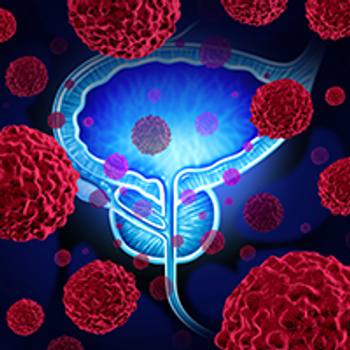
Joshua Hurwitz, MD, shares how multifocal MRI-directed SIB plus SBRT was not linked with added toxicity vs unifocal SIB in patients with prostate cancer.
Neal Shore, MD, FACS, discusses attempts to expand the current prostate cancer armamentarium through the development of novel, targeted therapies.
Neal Shore, MD, FACS, highlights the significance of the FDA approval of enzalutamide in nonmetastatic castration-sensitive prostate cancer.
Camidanlumab tesirine was well tolerated as a monotherapy and elicited responses when given with pembrolizumab in patients with advanced solid tumors.
The FDA has granted fast track designation to rinatabart sesutecan for the treatment of patients with FRα-expressing high-grade serous or endometrioid platinum-resistant ovarian cancer.
Vivek Subbiah, MD, emphasizes the need for improved guidance on practical toxicity management for various FGFR-altered malignancies, highlights best practices for monitoring and managing the most common on-target toxicities associated with FGFR inhibitors, and discusses the key implications of this review for those utilizing FGFR inhibitors.

Pooja Advani, MBBS, MD, details the encouraging activity of antibody-drug conjugates in triple-negative breast cancer, the importance of utilizing next-generation sequencing to inform treatment selection after progression on CDK4/6 inhibitors in this disease setting, and more.

Lifileucel demonstrated clinically meaningful antitumor activity alongside early, durable responses in patients with advanced melanoma following progression on checkpoint inhibitors.
Lenvatinib plus pembrolizumab did not provide a survival advantage vs standard-of-care docetaxel in patients with advanced-stage non–small cell lung cancer who experienced disease progression following prior exposure to a PD-L1 inhibitor and platinum-based chemotherapy.