

Pooja Advani, MBBS, MD, details key advancements and the significance of pivotal trials that were presented by her colleagues at a recent OncLive® State of the Science Summit™ on breast cancer, which she chaired.

Editor, OncLive
Courtney Flaherty started working for OncLive in 2022. Leveraging an educational background in the life sciences and prior experience conducting interviews in a university setting, she plays a key role in shaping social media and email strategy, covering live conferences, and producing multimedia content for both print and digital platforms. Email: [email protected]
Pooja Advani, MBBS, MD, details key advancements and the significance of pivotal trials that were presented by her colleagues at a recent OncLive® State of the Science Summit™ on breast cancer, which she chaired.

Lori A. Leslie, MD, discusses the significance of the FDA approval of pirtobrutinib for this population alongside the unmet needs it may address, highlights the efficacy and notable toxicities seen with the agent in the BRUIN study, and expands on the continued investigation of pirtobrutinib vs other standard-of-care regimens in various CLL subtypes.

Sara M. Tolaney, MD, MPH, discusses the significance of the FDA approval of capivasertib and fulvestrant in this patient population, highlights the efficacy and notable toxicities seen in the CAPItello-291 trial, and touches on key considerations when selecting between this and other standard regimens following CDK4/6 inhibitor progression.

Utilizing obinutuzumab to enhance B-cell depletion significantly reduced the need for corticosteroids and increased relapse-free survival in patients with steroid-requiring chronic graft-vs-host disease undergoing well-matched hematopoietic stem cell transplant.

The National Comprehensive Cancer Network has updated its Clinical Practice Guidelines for Non–Small Cell Lung Cancer for 2024 to include 2 new category 1 recommendations for amivantamab alongside chemotherapy in patients with treatment-naive, EGFR-mutated advanced NSCLC.

Jaime R. Merchán, MD, spotlights case studies of patients with rare non-ccRCC histologies, discussing their clinical presentation, recent data on immunotherapy and targeted treatment options for the management of these disease subtypes, and patient outcomes on these therapies.

Maria Hafez, MD, spotlights the KATHERINE trial in HER2-positive breast cancer, expanding on the respective toxicity profiles of T-DM1 and trastuzumab that were identified in an exploratory safety analysis of the trial; updated outcomes with T-DM1 in those with residual invasive disease after neoadjuvant treatment and surgery; and more.

Alexander Drilon, MD, highlights how the approval of repotrectinib addresses the need for improved therapies for patients who have progressed on a previous TKI and delves into notable neurologic toxicities seen with the agent.

Rui-Hua Xu, MD, PhD, and Kohei Shitara, MD, expand on the advantages of targeting CLDN18.2 with zolbetuximab in gastric/GEJ adenocarcinoma and key efficacy data from the GLOW and SPOTLIGHT trials in support of zolbetuximab’s potential FDA approval.

Paul G. Richardson, MD, shares clinical findings and several case studies showcasing the encouraging activity and safety of mezigdomide in patients with relapsed/refractory multiple myeloma.

The majority of patients with relapsed CLL treated with zanubrutinib or ibrutinib in the phase 3 ALPINE study did not acquire a BTK or PLCG2 mutation at the time of disease progression, indicating that these mutations may not be the primary drivers of resistance and relapse in this population.
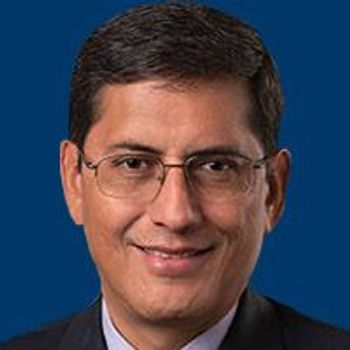
Jaime R. Merchán, MD, discusses the evolution and current role of IO/TKI regimens in advanced RCC; highlights data from the phase 3 CLEAR and KEYNOTE-426 trials supporting the use of pembrolizumab-based regimens in untreated ccRCC; and speculates on how future biomarker-driven research could improve the benefit seen with these combinations in this disease.
Responses on the non-covalent BTK inhibitor pirtobrutinib remained high in patients with relapsed chronic lymphocytic leukemia who expressed frequent baseline BTK mutations, according to a genomic analysis of the phase 1/2 BRUIN trial.

Maria Hafez, MD, discusses factors such as HER2 status, lymph node negativity, and risk stratification that influence the selection of adjuvant treatment approaches for patients with early-stage HER2-positive breast cancer and expands on pivotal data that have changed the paradigm.

Javier Cortés, MD, PhD, expands on the importance of investigating the central nervous system activity of trastuzumab deruxtecan in patients with HER2-positive breast cancer and brain metastases; key efficacy data from the pooled analysis of the agent in the DESTINY-Breast01, -02 and -03 trials; and more.

Lance C. Pagliaro, MD, highlights updated data from the JAVELIN Bladder 100 and EV-103 trials in metastatic urothelial carcinoma, discusses their relevance for navigating the expanding treatment armamentarium for this disease, and outlines several future avenues for research.

The novel BTK degrader BGB-16673 was well tolerated; produced meaningful and rapid clinical responses; and demonstrated on-target effects in patients with relapsed/refractory B-cell malignancies.

Although the use of bridging therapy prior to treatment with axicabtagene ciloleucel did not improve efficacy or safety outcomes for patients with relapsed/refractory large B-cell lymphoma, responses to bridging therapy may be prognostic of favorable outcomes after axi-cel administration.

Precise stratification of hormone receptor–positive, HER2-negative breast cancer using BluePrint and MammaPrint assays revealed comparable 3-year recurrence-free survival rates between Black and White patients despite observed racial differences in the distribution of molecular subtypes.
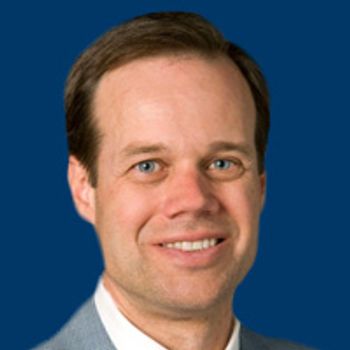
David Harpole, MD, discusses key data from the first interim analysis of the AEGEAN trial, changes to the adjuvant treatment landscape that inspired the subgroup analysis of patients with EGFR mutations excluded from the intention-to-treat population, and more.

The addition of serplulimab to carboplatin and nab-paclitaxel significantly prolonged survival vs chemotherapy alone when used in the first-line treatment of patients with previously untreated locally advanced or metastatic squamous non–small cell lung cancer.

The FDA has granted a fast track designation to BI 764532 for use as a therapeutic option in patients with advanced or metastatic DLL3-expressing large-cell neuroendocrine carcinoma of the lung who experienced disease progression after treatment with 1 or more lines of therapy, including platinum-based chemotherapy.

Bradley A. McGregor, MD, expands on the feasibility and safety considerations addressed through the design and methodology of the DAD study; highlights dose-limiting toxicities and early responses seen with sacituzumab govitecan plus enfortumab vedotin in treatment-resistant mUC; and explains how these results support further investigation of other ADC doublets.

Mrinal M. Gounder, MD, discusses the rationale for investigating nirogacestat in the DeFi trial, highlights patient-reported outcomes with the agent in this study, and discusses potential next steps for better utilizing T2-weighted magnetic resonance imaging in addition to RECIST criteria when assessing tumor volume and dimensions in desmoid tumors.

Lyudmila A. Bazhenova, MD, expanded on key considerations when navigating the use of perioperative immunotherapy for patients with or without oncogenically-driven lung cancers, the importance of multidisciplinary collaboration when deciding on a treatment plan, and the need for increased and earlier implementation of biomarker testing in all patients with lung cancer.
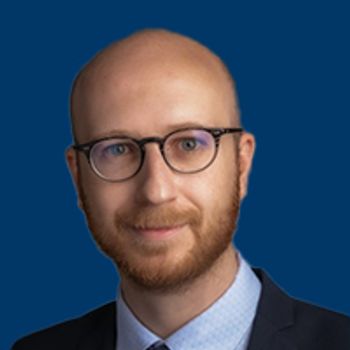
Biagio Ricciuti, MD, discusses the need to improve the identification of patients with advanced non–small cell lung cancer that benefit most from immune checkpoint inhibition.

Reena J. Salgia, MD, discusses the advantages of utilizing an atezolizumab plus bevacizumab backbone as standard frontline therapy in unresectable HCC; how factors such as Child-Pugh B score, bleeding, and other high-risk features impact treatment selection; and the unmet needs that still need to be addressed for this patient population.

The Center for Drug Evaluation of China’s National Medical Products Administration has accepted and granted priority review to the new drug application for IBI351 in the treatment of patients with advanced, KRAS G12C–mutant NSCLC who have received at least 1 prior systemic therapy.
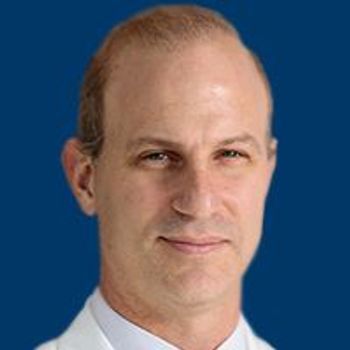
Benjamin Philip Levy, MD, discusses the current landscape of emerging antibody-drug conjugates (ADCs) and their early activity in advanced lung cancer, the potential utility of oncogene-directed ADCs for patients with driver mutations, and more.

Aumolertinib plus anlotinib resulted in intracranial efficacy when used in the first-line treatment of patients with EGFR-mutant non–small cell lung cancer who have brain metastases.