Articles by Gina Battaglia, PhD
Detection of circulating tumor cells, which are released from primary or metastatic lesions into the bloodstream and are the “seeds” for distant metastatic lesions, has been of interest in cancer research and treatment because these cells can potentially provide information on cancer detection, prognosis, and likelihood of treatment response with minimally invasive methods.

CLDN18.2 has become a promising target for the treatment of patients with digestive malignancies, such as gastric cancer, gastroesophageal junction cancer, esophageal cancer, and pancreatic cancer, because of its limited expression in healthy tissues and abnormal overexpression in a range of malignancies.
An understanding of BET protein dysregulation, which leads to abnormal expression of oncogenes, has prompted investigators to explore the idea of these proteins as a therapeutic target for cancer.

Research into the mechanisms that promote resistance to immune checkpoint blockade therapies suggests the need for new strategies for patients with immunorefractory disease.
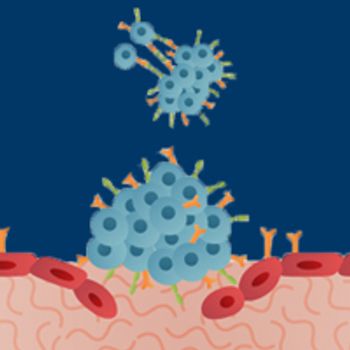
Mesothelin, a protein found on cell surfaces and in serum, has emerged as a promising target for immunotherapy-based treatment approaches for several malignancies with poor prognoses and limited treatment options. Investigating novel approaches to optimize delivery and identifying combinations of agents to synergistically improve therapeutic response will be the next steps in bringing mesothelin-targeted therapies into the clinical setting.

Since they were discovered nearly 30 years ago, microRNAs have emerged as novel targets for cancer diagnostics and therapeutics.
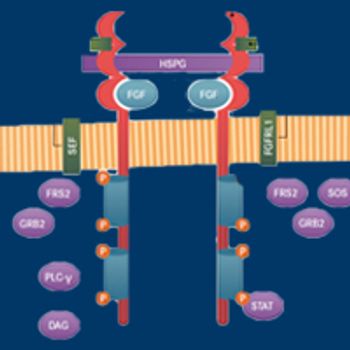
Aberrations in fibroblast growth factor receptor (FGFR) signaling are an emerging focus for targeted therapy across multiple types of cancer, particularly urothelial carcinoma, gastric cancer, and intrahepatic cholangiocarcinoma.

Edward B. Garon, MD, discusses the landscape of EGFR-targeted therapy in non–small cell lung cancer.
Treatment strategies moving forward will likely involve development of new targeted TKIs with greater potency and specificity against resistance mutations and different kinase selectivity, sequencing of targeted therapies based on the resistance mutations that develop from prior therapy, and development of combination regimens to target bypass signaling tracks.

Novel agents are showing impressive ability to cross the blood–brain barrier and impair tumor development in several malignancies, raising the prospect of achieving a long-elusive goal of anticancer therapy.

Alice T. Shaw, MD, PhD, and D. Ross Camidge, MD, PhD, discuss the evolution of ALK-targeting therapies, the impact on the drug development paradigm, and the prospects for future advancements.

The incidence of emergency department visits and subsequent hospitalizations among patients with cancer is relatively common. Cancer-specific urgent care, pathways for symptom management, and more education for patients and healthcare providers are among the approaches that are being implemented to address patients’ needs and manage costs.

Research suggests that many cases of DCIS have a low risk for progression and may not require surgical excision and radiation therapy.

Sara Hurvitz, MD, and Sunil Verma, MD, share their expert insight on the latest groundbreaking developments in HER2-positive breast cancer.

Amid the rapid expansion of immunotherapy for a wide range of tumor types, oncolytic virus therapies are generating growing attention from researchers and pharmaceutical developers, raising the potential for a new class of immune-enhancing drugs.

Novel systemic therapies in the neoadjuvant and adjuvant settings have shown promising outcomes for locally advanced melanoma and may reduce the proportion of patients who need complete lymphadenectomy.

Layering of therapies and advances in next-generation imaging and sequencing are key reasons that outcomes are improving in advanced prostate cancer.

Although gene fusions between the TMPRSS2 gene and ETS family of transcription factors in prostate cancer have been recognized for more than a decade, the clinical relevance of this fusion event continues to be debated among experts.

Immunotherapy has shown promise for treatment of glioblastoma multiforme (GBM), the most common primary brain tumor in adults with historically poor prognosis, but experts agree that combination regimens have the greatest potential to achieve durable response.

Recent approval of immunotherapy in the first-line setting for treatment of patients with locally advanced and metastatic non–small cell lung cancer without driver mutations represents changes in care.

The introduction of targeted therapies has transformed HER2-positive breast cancer from an aggressive disease with poor outcomes to a highly manageable disease with potential for long-term survival.

Recent developments in the treatment of metastatic pancreatic cancer have modestly improved outcomes, but reducing morbidities associated with current therapies and developing novel therapeutics will be essential for achieving durable responses and long-term survival.

Although the prognosis for patients with pancreatic cancer is often grim, there have been noteworthy improvements in outcomes through the use of current chemotherapies.

Targeted therapies have improved outcomes for HER2-positive breast cancer, which is characterized by an aggressive tumor phenotype and lower overall survival. However, questions remain on how to predict which patients will benefit from neoadjuvant or extended HER2-targeted therapies and how to treat patients with triple-positive breast cancer.
In an OncLive Peer Exchange® panel, experts discussed novel cytotoxic and targeted agents in the pipeline that are likely to provide new options for treating certain individuals with acute myeloid leukemia.

Approaches to reducing and preventing graft-versus-host-disease are being explored, including the development of ruxolitinib (Jakafi) and ibrutinib (Imbruvica) under breakthrough therapy designations.

Biomarker-driven trials that include multiple substudies represent a new approach for investigating which patients with lung cancer are more likely to respond to different targeted therapies and are helping to set the pace throughout the oncology field.

The wide variability in clinical outcomes among patients undergoing anti–PD-1/PD-L1 immunotherapy has increased interest in finding biomarkers that predict response.

Cancer drugs in the United States have increased 5- to 10-fold since 2000, but several analyses indicate that this increase in cost does not match improvements in health and overall survival.

Outcomes for patients with HER2-positive metastatic breast cancer are improving as a result of blockade strategies, and more novel agents are in the pipeline.