

Results from the phase III ENDEAVOR trial showed that carfilzomib (Kyprolis) reduced the risk of death by 21% compared with bortezomib (Velcade) in patients with relapsed/refractory multiple myeloma

Senior Editor, OncLive®
Jason Harris has worked in journalism for more than 20 years, including stints at daily newspapers and niche publications for oncology and cardiology. He is a senior editor for OncologyLive® and managing editor for Oncology Fellows and the annual Giants of Cancer Care® album. He also contributes to the OncLive On Air and OncFellows podcasts. Email: jharris@onclive.com
Results from the phase III ENDEAVOR trial showed that carfilzomib (Kyprolis) reduced the risk of death by 21% compared with bortezomib (Velcade) in patients with relapsed/refractory multiple myeloma
The combination of frontline atezolizumab and bevacizumab demonstrated superior efficacy compared with sunitinib or atezolizumab monotherapy in patients with advanced renal cell carcinoma.

Hospice enrollment is low and use of aggressive treatment is high for elderly patients with acute myeloid leukemia, a situation investigators called “suboptimal” in results from a retrospective study.

Arsenic trioxide consolidation was effective and safe in newly diagnosed pediatric patients with acute promyelocytic leukemia, allowing a significant reduction in cumulative anthracycline doses
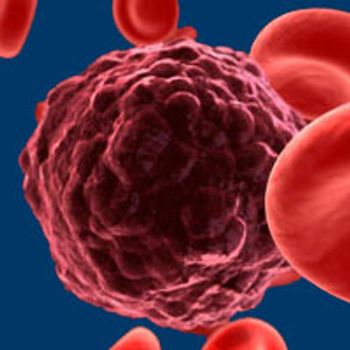
In a small study of pediatric patients with relapsed/refractory ALK-positive anaplastic large cell lymphoma, treatment with 165 mg/m2 of crizotinib (Xalkori) was associated with an overall response rate of 83%
Gilteritinib, a selective TKI against FLT3, demonstrated a favorable safety profile and consistent FLT3 inhibition in adults with relapsed/refractory acute myeloid leukemia.
Researchers have determined that CD30-specific CAR T cells could be used safely and induce durable complete responses in patients with Hodgkin lymphoma and anaplastic large cell lymphoma.

The FDA has granted a priority review to a supplemental biologics license application for brentuximab vedotin (Adcetris) for the treatment of patients with cutaneous T-cell lymphoma.
The combination of nivolumab (Opdivo) and ipilimumab (Yervoy) improved the objective response rate and duration of response compared with sunitinib (Sutent) in patients with treatment-naïve metastatic renal cell carcinoma, according to CheckMate-214.

ASCO has updated its guidelines for first- and second-line treatment of patients with stage IV non–small cell lung cancer.

Hong Kong researchers were able to detect nasopharyngeal carcinoma significantly earlier by screening for circulating cell-free Epstein-Barr virus DNA.
Twelve weeks of neoadjuvant T-DM1 with or without endocrine therapy induced superior pathologic complete response compared with trastuzumab (Herceptin) plus endocrine therapy in patients with HER2-positive/HR-positive early breast cancer.

Patients with high-volume, castration-naïve metastatic prostate cancer may have superior progression-free survival outcomes when treated with early docetaxel.
Patients with newly diagnosed mantle cell lymphoma assigned to frontline chemotherapy had a survival advantage when they were able to receiver higher dose intensities of bortezomib (Velcade).
Adding bevacizumab (Avastin) to chemotherapy improved overall survival for women with cervical cancer, according to final results from the phase III GOG 240 trial.
Researchers in China have concluded that mutation of the SF3B1 gene is “significantly associated” with poorer progression-free survival and overall survival in patients with chronic lymphocytic leukemia.
Long-term results from the Nordic MCL2 and MCL3 trials showed patients with mantle cell lymphoma who are positive for minimal residual disease following allogenic stem cell transplant had significantly shorter survival.

The FDA has granted a priority review to a supplemental new drug application for alectinib (Alecensa) for the frontline treatment of patients with ALK-positive locally advanced or metastatic non–small cell lung cancer.
The FDA has granted a priority review to a new drug application for acalabrutinib for patients with previously-treated mantle cell lymphoma.

The FDA has granted acalabrutinib a breakthrough therapy designation for patients with previously-treated mantle cell lymphoma.

The FDA granted a priority review in March to a new drug application for maintenance olaparib, and is scheduled to make its final decision on the PARP inhibitor before the end of the year.
Kite Pharma has submitted a Marketing Authorization Application to the European Medicines Agency for axicabtagene ciloleucel (axi-cel) to treat 3 forms of non-Hodgkin lymphoma.

Treatment with CD19 chimeric antigen receptor-modified T-cell therapy induced a high response rate in patients with high-risk, ibrutinib-refractory chronic lymphocytic leukemia.

The FDA has granted durvalumab a breakthrough therapy designation to treat patients with locally-advanced, unresectable non-small cell lung cancer whose disease has not progressed following platinum-based chemoradiation.

Results showed that adding erlotinib to cisplatin and docetaxel was superior to chemotherapy alone for both overall survival and progression-free survival in head and neck squamous cell carcinoma.

The European Commission has approved the use of fulvestrant (Faslodex) to treat estrogen receptor-positive, locally-advanced or metastatic breast cancer in postmenopausal women not previously treated with endocrine therapy.
Frontline osimertinib (Tagrisso) significantly improved progression-free survival versus standard of care in patients with locally-advanced or metastatic EGFR-positive non–small cell lung cancer.
Frontline durvalumab (Imfinzi) did not improve progression-free survival in patients with stage IV metastatic non–small cell lung cancer compared with standard platinum-based chemotherapy.
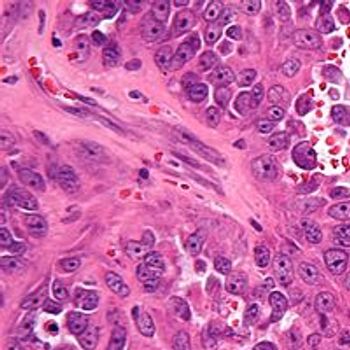
Long-term follow-up showed that trabectedin (Yondelis) was associated with high rates of survival and clinical benefit rate for patients with advanced high grade soft tissue sarcomas.
The FDA has accepted supplemental Biologics License Applications seeking to add a second dosing schedule for nivolumab (Opdivo) across all of the PD-1 inhibitor’s monotherapy indications.