

The UK’s National Institute for Health and Care Excellence has issued guidelines recommending against nivolumab (Opdivo), lenvatinib (Lenvima), and sorafenib (Nexavar).

Senior Editor, OncLive®
Jason Harris has worked in journalism for more than 20 years, including stints at daily newspapers and niche publications for oncology and cardiology. He is a senior editor for OncologyLive® and managing editor for Oncology Fellows and the annual Giants of Cancer Care® album. He also contributes to the OncLive On Air and OncFellows podcasts. Email: jharris@onclive.com
The UK’s National Institute for Health and Care Excellence has issued guidelines recommending against nivolumab (Opdivo), lenvatinib (Lenvima), and sorafenib (Nexavar).

Adding the immune stimulator ImmunoPulse IL-12 to pembrolizumab (Keytruda) produced promising activity among patients with melanoma identified as unlikely responders to anti–PD-1 therapies.

Maintenance rituximab (Rituxan) following autologous stem-cell transplantation improved survival in younger patients with mantle cell lymphoma, according to the LyMa trial.

Two-year results showed that frontline pembrolizumab (Keytruda) more than doubled median overall survival compared with standard chemotherapy in patients with high PD-L1 expressing non–small cell lung cancer

The FDA has granted a priority review to a supplemental New Drug Application for olaparib (Lynparza) for the treatment of patients with germline BRCA-positive, HER2-negative metastatic breast cancer.

The FDA has granted a priority review to a supplemental biologics license application for nivolumab (Opdivo) to treat patients with melanoma who are at high risk of disease recurrence following complete surgical resection.

The FDA has granted a priority review to a supplemental biologics license application for durvalumab (Imfinzi) for the treatment of patients with stage III, unresectable NSCLC.
Ramucirumab (Cyramza) plus docetaxel demonstrated an overall survival benefit versus placebo plus docetaxel in patients with advanced NSCLC whose disease rapidly progressed on first-line therapy,
Cabozantinib (Cabometyx) improved overall survival versus placebo in patients with advanced hepatocellular carcinoma who have previously received sorafenib (Nexavar), meeting the primary endpoint of the phase III CELESTIAL trial.

The combination of nivolumab (Opdivo) and ipilimumab (Yervoy) induced an objective response rate of 46% in patients with recurrent small cell lung cancer with high tumor mutation burden, according to an exploratory analysis from the phase I/II CheckMate-032 study.

The European Medicines Agency's Committee for Medicinal Products for Human Use has recommended expanding the existing marketing authorization for abiraterone acetate (Zytiga) in men with newly diagnosed, high-risk metastatic hormone-sensitive prostate cancer.

The European Medicines Agency’s Committee for Medicinal Products for Human Use has recommended approval of alectinib for the first-line treatment of adults with ALK-positive, advanced non–small cell lung cancer.

Adding IV hydrocortisone to standard dexamethasone prophylaxis reduced the incidence of hypersensitivity reactions in women undergoing paclitaxel-based treatment for gynecologic cancers

Maintenance therapy with lenalidomide following autologous stem-cell transplantation conferred a survival benefit for patients with newly diagnosed multiple myeloma.

Induction therapy with bortezomib, cyclophosphamide, and dexamethasone induced strong response rates in treatment-naïve patients with multiple myeloma.

A new drug application has been submitted to the FDA for apalutamide (ARN-509) for the treatment of non-metastatic castration-resistant prostate cancer (CRPC).

Treatment with copanlisib led to a median progression-free survival of 11.2 months and objective response rate of 59.2% in patients with relapsed/refractory indolent lymphoma.

The FDA has granted Fast Track designation to gilteritinib for adult patients with FLT3 mutation-positive relapsed/refractory acute myeloid leukemia (AML).

The FDA has granted a priority review to a supplemental new drug application for afatinib for the frontline treatment of patients with metastatic non-small cell lung cancer whose tumors harbor EGFR exon 21 (L861Q), G719X, or S768I substitution mutations.
Biocon has announced that the FDA has issued a complete response letter for Mylan’s biologics License Application for MYL-1401H, a proposed biosimilar for Amgen’s pegfilgrastim (Neulasta).

In topline results from the phase III JUNIPER trial, abemaciclib failed to meet its primary endpoint of improving overall survival versus erlotinib in patients with KRAS-mutated, advanced non–small cell lung cancer (NSCLC) who progressed after platinum-based chemotherapy.

Multivariate analysis of the Nordic MCL2 and MCL3 trials showed that the presence of TP53 mutations predicted worse overall survival in younger patients with mantle cell lymphoma.

The FDA has awarded Breakthrough Therapy Designation to osimertinib for first-line treatment of patients with metastatic EGFR mutation-positive non-small cell lung cancer (NSCLC).
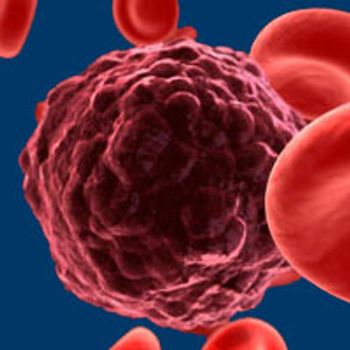
In the CALL-0603 study of 44 patients with first marrow-relapsed childhood acute lymphoblastic leukemia, the second complete remission rate was 72.7% for a chemotherapy regimen that included a reduced dose of idarubicin.

The Japanese Ministry of Health, Labor and Welfare has approved the use of daratumumab (Darzalex) for the treatment of adults with relapsed/refractory multiple myeloma.

The FDA has awarded brentuximab vedotin (Adcetris) a breakthrough therapy designation for the first-line treatment of patients with classical Hodgkin lymphoma.

The Japanese Ministry of Health, Labor and Welfare has approved avelumab (Bavencio) for use in patients with metastatic Merkel cell carcinoma, according to Merck KGaA.
The European Commission has granted regulatory approval to atezolizumab monotherapy for the treatment of patients with previously-treated locally advanced or metastatic non-small cell lung cancer and previously-treated locally advanced or metastatic urothelial carcinoma.

Women with node-positive stage IIIC endometrial cancer assigned to adjuvant chemoradiation therapy had better survival than those assigned to chemotherapy or radiation therapy alone.

Dose-dense chemotherapy could be a superior option for adjuvant treatment of endometrial cancer compared with standard chemotherapy.