

TAC01-HER2 demonstrated early signals of clinical activity with a tolerable safety profile in patients with HER2-overexpressed solid tumors.

Ryan Scott joined MJH Life Sciences in 2021. In addition to writing and editing timely news and article coverage, she has managed OncLive's social media accounts; check us out @onclive across platforms such as LinkedIn, Facebook, X, and Instagram! She attends conferences live and virtually to conduct video interviews and produce written coverage. Email: [email protected]
TAC01-HER2 demonstrated early signals of clinical activity with a tolerable safety profile in patients with HER2-overexpressed solid tumors.

Immunotherapy-based combinations elicited higher complete response rates compared with VEGF-targeted therapy when used as first-line treatment in patients with metastatic renal cell carcinoma.
Pembrolizumab plus axitinib produced promising responses in patients with papillary or chromophobe metastatic renal cell carcinoma.
Srdan Verstovsek, MD, PhD, discusses the clinical implications of the FDA approval of pemigatinib, the results of the FIGHT-203 trial, and the need to conduct chromosomal analysis for patients with myeloid/lymphoid neoplasms.

R. Lor Randall, MD, FACS, discusses the findings from a subset analysis of the PARITY trial on the timing of neoadjuvant chemotherapy in patients with lower-extremity sarcomas.
Fixed-duration bendamustine plus rituximab was effective in patients with previously untreated Waldenström macroglobulinemia, regardless of MYD88L265P mutation status, but the presence of the CXCR4WHIM mutation may be associated with resistance to the combination.

Adana A.M. Llanos, PhD, MPH, discusses key research on the social and biological factors that influence disparities in breast cancer, how these factors work in tandem to affect patient outcomes, and how this knowledge can be deployed in the real world.
Michael Dickinson, MBBS, expands on data from a phase 2 dose-expansion study of glofitamab in heavily pretreated, highly refractory large B-cell lymphoma, explains the effect bispecific antibodies could have on treatment, and highlights other research efforts surrounding glofitamab-based therapies.

The first-in-class dual PIM/FLT3 kinase inhibitor, SEL24/MEN1703, showcased encouraging efficacy and a tolerable safety profile in patients with acute myeloid leukemia whose tumors harbor a IDH1/2 mutation.
Belantamab mafodotin monotherapy demonstrated anticancer activity with a tolerable safety profile in heavily pretreated patients with relapsed or refractory multiple myeloma.

Several inroads have been made in the realm of gastrointestinal cancers, with novel immunotherapy combinations representing a significant advance spanning several tumor types.

Cevostamab generated responses and was well tolerated in younger and older patients with relapsed/refractory multiple myeloma.

Although the efficacy of targeted agents and outcomes for patients with genetic mutations can vary, the availability of these treatments adds to the need for genetic testing across all patients with non–small cell lung cancer.

Jeff P. Sharman, MD, discusses the meaning of the long-term follow-up data from ELEVATE-TN, the efficacy of acalabrutinib regimens in patients with treatment-naïve chronic lymphocytic leukemia with deletion 17p or TP53 mutations, and factors to consider when adding obinutuzumab to acalabrutinib.
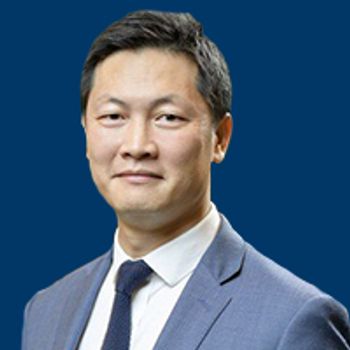
Wungki Park, MD, discussed the rationale of targeting CLDN18.2 in patients with pancreatic cancer, preclinical data supporting the use of zolbetuximab in this patient population, and the key objectives of the ongoing phase 2 trial
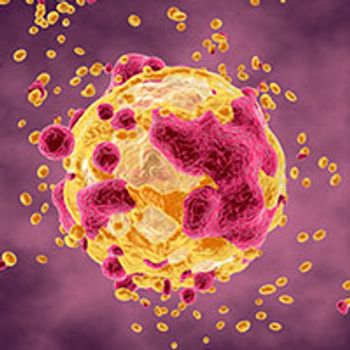
Relmacabtagene autoleucel elicited durable responses and a high overall survival rate in Chinese patients with relapsed/refractory large B-cell lymphoma, according to 2-year follow-up data from the phase 2 RELIANCE trial.
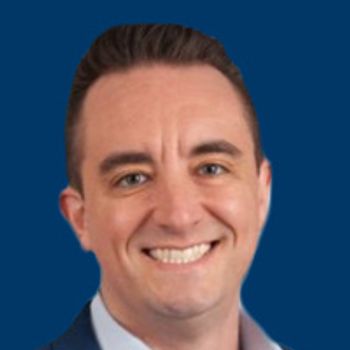
Matthew J. Frigault, MD, discusses the findings from a phase 1 trial investigating the safety and efficacy of CART-ddBCMA in patients with multiple myeloma in whom all previous lines of treatment had failed and shares additional research opportunities for the CAR T-cell therapy.

Julian Schink, MD, discusses a study evaluating racial differences in the mutational landscape of serous endometrial cancer, underscores the need for appropriate genomic testing and treatment for Black women with the disease, and explains the importance of racial representation across clinical trials.

Katherine Tkaczuk, MD, discusses practice-changing data across breast cancer subtypes that were discussed at the 2022 ASCO Annual Meeting, including data from DESTINY-Breast04 and the phase 3 PALOMA-2 trial, plus the utilization of CDK4/6 inhibitors and PARP inhibitors for select patients with breast cancer.

Raul Cordoba, MD, PhD, discussed the efficacy and safety findings from cohort 4 of the EPCORE NHL-2 trial, the benefits observed with epcoritamab monotherapy in patients who did not proceed to transplant, and what the addition of epcoritamab to R-DHAX/C could mean for patients with relapsed/refractory DLBCL.
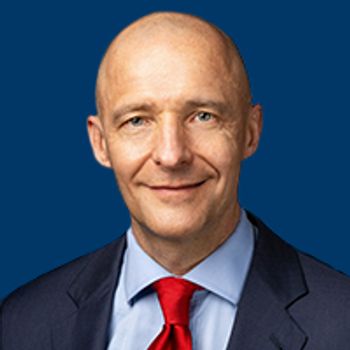
Eric Jonasch, MD, discusses the efficacy and safety of belzutifan observed in the LITESPARK-001 trial for patients with advanced clear cell RCC and the next steps for investigating belzutifan in this patient population.

After HER2 was established as an actionable target in gastric cancer, its amplification has become a key biomarker of interest for other gastrointestinal cancers.
Andrew H. Ko, MD, discusses the multitude of treatment options for patients with gastroesophageal cancer, emerging combinations in hepatocellular carcinoma, and how HER2 expression can drive therapy decisions in colorectal cancer.

The antibody-drug conjugate sacituzumab govitecan will be evaluated vs single-agent docetaxel during the phase 3 EVOKE-01 trial in patients with metastatic non–small cell lung cancer.

Amrita Krishnan, MD, discusses emerging data on bispecific antibodies, the exploration of the antibody-drug conjugate belantamab mafodotin, and the challenges of delivering CAR T-cell therapy in the right setting to the appropriate patients with multiple myeloma.
The combination of azacitidine and quizartinib produced preliminary responses in patients with myelodysplastic syndrome and myelodysplastic syndrome/myeloproliferative neoplasms whose tumors harbored FLT3 or CBL mutations, according to data from a phase 1/2 trial (NCT04493138).

Ropeginterferon alfa-2b produced durable complete hematologic responses without phlebotomy and showcased a consistent safety profile in Japanese patients with polycythemia vera, according to findings from a phase 2 study (NCT04182100) presented during the 2022 EHA Congress.

Daniel Morgensztern, MD, discusses updates on the investigation of bispecific antibodies and bispecific T-cell engagers in non–small cell lung cancer and small cell lung cancer.
Jonathan Wesley Riess, MD, MS, discusses a phase 1 trial examining the combination of sapanisertib and telaglenastat, and explains why glutaminase inhibition is being investigated as a novel way to treat select patients with non–small cell lung cancer.

Nicholas P. McAndrew, MD, MSCE, discusses considerations to take when examining the relationship between chemotherapy, ovarian function suppression, and treatment benefits experienced by patients with hormone receptor–positive, HER2-negative breast cancer.