
The FDA has approved CPX-351 for adult patients with newly diagnosed therapy-related acute myeloid leukemia or AML with myelodysplasia-related changes.

Silas is the Chief Brand Officer at MJH Life Sciences. He began his career at MJH in 2011 as a Web Editor on OncLive. From this role, he moved into managing the social media across the organization and then into broader roles across the content department, first taking on management of HCPLive.
Throughout his tenure at MJH, Silas has been accountable for several organic launches of highly successful brands, including Targeted Oncology and NeurologyLive, and for quickly transforming acquisitions into high-functioning business units. Follow him on X @SilasInman, LinkedIn, [email protected].
The FDA has approved CPX-351 for adult patients with newly diagnosed therapy-related acute myeloid leukemia or AML with myelodysplasia-related changes.

Targeted therapies are beginning to carve out a growing number of indications in non–small cell lung cancer, emphasizing the importance of precision medicine.
The FDA has approved enasidenib along with a companion diagnostic as a treatment for patients with relapsed or refractory IDH2-mutated acute myeloid leukemia.
The therapeutic paradigm continues to evolve in advanced non-small cell lung cancer, with increased emphasis being placed on rational combinations and biomarkers in the next few years.
Checkpoint inhibitors against PD-1 and PD-L1 have shown promise, both as monotherapies and in combination with chemotherapy for patients with triple-negative breast cancer.
The combination of carfilzomib (Kyprolis), lenalidomide (Revlimid), and dexamethasone reduced the risk of death by 21% compared with lenalidomide and dexamethasone alone for patients with relapsed multiple myeloma.
The FDA has granted a full approval to blinatumomab (Blincyto) as a treatment for adults and children with relapsed/refractory B-cell precursor acute lymphoblastic leukemia, regardless of Philadelphia chromosome status.

The FDA has approved panitumumab in combination with FOLFOX as a frontline treatment for patients with RAS wild-type metastatic colorectal cancer.
The FDA has approved ClearLLab multicolor reagents (T1, T2, B1, B2, M) for the detection of chronic leukemia, acute leukemia, non-Hodgkin lymphoma, multiple myeloma, myelodysplastic syndrome, and myeloproliferative neoplasms.
Treatment with rituximab (Rituxan) plus lenalidomide (Revlimid) followed by maintenance therapy demonstrated promising clinical activity for patients with relapsed/refractory indolent non-Hodgkin's lymphoma, according to findings from the phase IIIb MAGNIFY study.
Treatment with JCAR017 demonstrated a complete response rate of 59% and an objective response rate of 86% for patients with relapsed or refractory diffuse large B-cell lymphoma.

The combination of the IDO inhibitor epacadostat and nivolumab demonstrated promising signs of activity for patients with squamous cell carcinoma of the head and neck and those with melanoma.
Frontline treatment with nintedanib plus pemetrexed and cisplatin improved progression-free survival by 3.7 months for chemotherapy-naive patients with malignant pleural mesothelioma, according to data reported at the 2017 ASCO Annual Meeting.
Pembrolizumab continued to show promising signs of clinical activity as a treatment for patients with advanced gastric or gastroesophageal junction cancer in updated findings from the KEYNOTE-059 study.
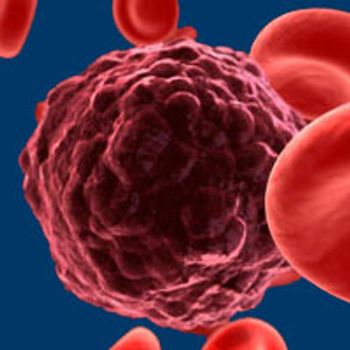
Induction therapy with fludarabine and rituximab followed by lenalidomide consolidation therapy (FR-L) demonstrated a distinct plateau in overall survivalbeyond that seen with FR or FR plus cyclophosphamide (FCR) alone for patients with symptomatic, untreated non-del(11q) chronic lymphocytic leukemia.

First-line treatment with lenvatinib (Lenvima) improved progression-free survival by 3.7 months and was noninferior for overall survival compared with sorafenib for patients with unresectable hepatocellular carcinoma.

The combination of ublituximab and ibrutinib demonstrated an objective response rate of 78% for patients with previously treated high-risk chronic lymphocytic leukemia.

The frontline combination of pembrolizumab, pemetrexed, and carboplatin reduced the risk of progression or death by 50% and nearly doubled objective response rates compared with chemotherapy alone for patients with advanced non-squamous NSCLC.
Frontline treatment with ribociclib plus letrozole improved progression-free survival by 9.3 months compared with letrozole plus placebo for patients with postmenopausal HR-positive, HER2-negative advanced breast cancer.
The FDA has granted a priority review to axicabtagene ciloleucel for transplant-ineligible patients with relapsed or refractory non-Hodgkin lymphoma.

Treatment with adjuvant capecitabine improved overall survival by 15 months compared with observation alone for patients with macroscopically resected biliary tract cancer, according to findings from the phase III BILCAP study released in advance of the 2017 ASCO Annual Meeting.

A novel target, B-cell maturation antigen, has been identified for future therapeutic development as chimeric antigen receptor T-cell therapy for patients with multiple myeloma.
The FDA has eliminated the need for risk evaluation and mitigation strategy certification prior to the administration of erythropoiesis-stimulating agents for anemia due to myelosuppressive chemotherapy.
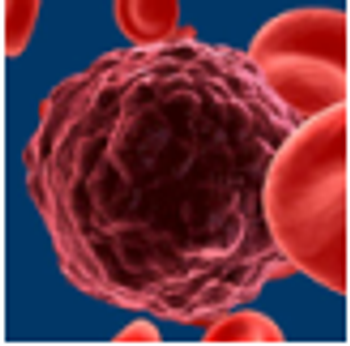
The flexibility of CAR T cells to perform multiple functions was associated with the level of clinical activity elicited for patients with advanced non-Hodgkin’s lymphoma, according to a retrospective analysis presented at the 2017 AACR Annual Meeting.

The IDO1 inhibitor BMS-986205 had "best-in-class" activity as demonstrated by kynurenine reductions and IDO1 inhibition for patients with advanced malignancies in a phase I/IIa study, according to lead investigator Lillian L. Siu, MD, at the 2017 AACR Annual Meeting.
The irreversible pan-HER tyrosine kinase inhibitor neratinib showed single-agent activity across cohorts of patients with HER2-mutant advanced cancers.
A biologics license application has been submitted for axicabtagene ciloleucel as a potential treatment for transplant ineligible patients with relapsed or refractory aggressive non-Hodgkin lymphoma.
The FDA has granted a regular approval to osimertinib as a treatment for patients with metastatic EGFR T790M mutation-positive non–small cell lung cancer following prior treatment with an EGFR TKI, based on progression-free survival findings from the phase III AURA3 trial.

The FDA has granted a priority review designation to tisagenlecleucel-T as a treamtnet for pediatric and young adult patients with relapsed and refractory B-cell acute lymphoblastic leukemia, making it the first CAR T-cell therapy to enter regulatory review.
Array BioPharma has withdrawn its new drug application for binimetinib as a treatment for patients with NRAS-mutant advanced melanoma, based on feedback from the FDA during a preplanned review meeting.