
Panelists review key clinical trial data demonstrating the efficacy and safety of chemo-immunotherapy regimens in extensive-stage small cell lung cancer.

Ticiana A. Leal, MD, is an associate professor and director of the Thoracic Medical Oncology Program in the Department of Hematology and Medical Oncology at Emory University School of Medicine in Atlanta, Georgia; as well as medical director of the Clinical Trials Office and leader of the Lung Cancer Disease Team at the Winship Cancer Institute of Emory University
Panelists review key clinical trial data demonstrating the efficacy and safety of chemo-immunotherapy regimens in extensive-stage small cell lung cancer.
Panelists discuss the diagnostic evaluation and staging process for extensive-stage small cell lung cancer, emphasizing comprehensive imaging and laboratory workup to guide initial treatment planning.
Panelists discuss how patient and disease factors, such as performance status, comorbidities, and extent of metastases, influence first-line treatment selection in small cell lung cancer.
Experts shared that while amivantamab combined with chemotherapy in MARIPOSA- 2 can cause challenging toxicities, careful dose adjustments, premedication, and vigilant monitoring help manage adverse effects and support continued treatment.
Experts highlight evolving evidence that continuing EGFR tyrosine kinase inhibitors (TKIs) with chemotherapy after progression may improve outcomes, but emphasize that treatment sequencing decisions must be personalized based on emerging data, patient factors, and drug availability.
Panelists discuss how emerging therapies including DLL3-targeted ADCs, trispecific T-cell engagers, CAR T cells, and radioligand therapies represent promising approaches that may offer single-dose treatments or enhanced efficacy, though more data on durability and optimal sequencing are needed.
Panelists discuss how antibody-drug conjugates targeting B7-H3 show impressive response rates compared to historical controls, while T-cell engagers remain the priority for second-line therapy due to their demonstrated durability, though patient preferences and contraindications may influence individual treatment decisions.
Experts discuss the promise of subcutaneous (SubQ) amivantamab in improving logistical efficiency and reducing infusion-related reactions in the MARIPOSA regimen, while emphasizing that chronic toxicities persist regardless of administration route, underscoring the ongoing need for proactive monitoring, supportive care, and close clinical oversight.
Experts discuss the cumulative toxicities of pemetrexed in the FLAURA2 regimen, emphasizing the need for personalized, flexible approaches to maintenance therapy duration that balance ongoing efficacy with tolerability, guided by patient-specific factors and real-world clinical experience.
Panelists discuss how tarlatamab implementation requires careful infrastructure planning, including 24-hour monitoring capabilities, staff education about cytokine release syndrome management, patient counseling, and coordination with community partners to ensure all eligible patients have access to this standard-of-care therapy.
Panelists discuss how neutropenia management varies widely across institutions, with some using primary prophylaxis with G-CSF or trilaciclib, while others tailor supportive care based on individual patient risk factors including age, comorbidities, and prior treatment tolerance.
Experts discuss the critical role of toxicity management in deciding whether to use amivantamab/lazertinib up-front or in later lines, highlighting the need for intensive supportive care, coordinated care teams, and structured patient education to navigate the regimen’s unique and often burdensome adverse effect profile.
Experts discuss the comparative merits of FLAURA2 and MARIPOSA frontline regimens for EGFR-mutant non–small cell lung cancer, noting similar survival benefits but highlighting key differences in toxicity profiles, supportive care demands, and real-world practicality that make individualized patient counseling essential to treatment selection.
Panelists discuss how monitoring for long-term immunotherapy toxicities requires regular imaging and symptom assessment, with early recognition and treatment of pneumonitis, hypothyroidism, and adrenal insufficiency being critical for maintaining patients on therapy and preventing chronic complications.
Panelists discuss how managing toxicities during chemoradiation requires proactive counseling about esophagitis and fatigue, while immunotherapy consolidation typically doesn’t enhance these acute toxicities, making it feasible to start within the recommended timeframe after completion of chemoradiation.
Experts discuss the vital role of shared decision-making in lung cancer treatment, emphasizing personalized, ongoing conversations that align therapy choices with patients’ values, quality-of-life considerations, and life circumstances to support informed and compassionate care.
Experts discuss a key finding from FLAURA2 showing that many patients never reach second-line therapy, reinforcing the importance of delivering the most effective treatment—such as combination therapy—up-front, particularly when patients are fit, as real-world barriers and rapid progression may limit later opportunities for intervention.
Panelists discuss how preliminary neoadjuvant chemoimmunotherapy data showing high response rates and pathologic complete responses in limited-stage SCLC appears promising but requires larger studies and careful patient selection given the complexity of staging and surgical candidacy.
Panelists discuss how while emerging biomarkers like inflamed subtypes and MHC class I expression show promise for predicting immunotherapy benefit, current clinical practice treats all patients with immunotherapy since the potential for exceptional responses cannot be reliably predicted.
Experts discuss the slow but growing real-world adoption of combination therapy for EGFR-mutant non–small cell lung cancer (NSCLC) despite strong FLAURA2 survival data, citing factors such as clinical inertia, comfort with monotherapy, and regional practice variations, while anticipating broader uptake as confidence, education, and infrastructure catch up with the evolving standard of care.
Experts discuss the gap between current clinical guidelines and emerging trial data in EGFR-mutant lung cancer, highlighting calls to elevate combination therapies in treatment recommendations following robust survival benefits, while underscoring the continued importance of individualized care and patient-centered flexibility in frontline decision-making.
Panelists discuss how the concerning underutilization of first-line chemoimmunotherapy in extensive-stage SCLC may stem from clinical nihilism, lack of urgency in treatment initiation, and inadequate education about the substantial benefits these therapies provide to patients.
Panelists discuss how pneumonitis risk management requires intensive patient education about symptoms, close monitoring for several months post radiation, and multidisciplinary coordination with pulmonology and radiation oncology teams to distinguish between radiation-induced and immunotherapy-related pneumonitis.
Experts discuss the evolving role of combination therapy in frontline treatment for EGFR-mutated metastatic lung cancer, emphasizing that while survival data from FLAURA2 support broader use beyond traditionally defined high-risk groups, real-world factors and patient preferences continue to necessitate individualized, shared decision-making.
Experts discuss emerging consensus around the value of combination therapy in EGFR-mutated metastatic NSCLC, highlighting practice-changing overall survival data from FLAURA2 and emphasizing how intensified upfront treatment may now redefine the standard of care despite added complexity and toxicity.
Panelists discuss how patient selection for durvalumab consolidation requires careful consideration of autoimmune diseases, baseline lung function, and neurologic paraneoplastic syndromes, while emphasizing that most patients should receive immunotherapy unless they have severely active contraindications.
Panelists discuss how durvalumab consolidation after chemoradiation has become the standard of care for limited-stage SCLC based on the ADRIATIC trial, with most patients being considered candidates for the 2-year treatment course.
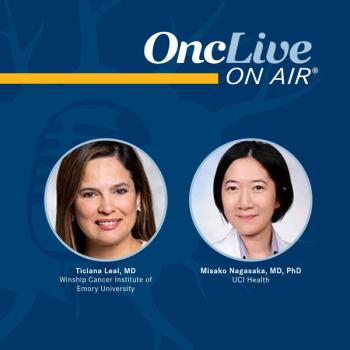
Leal and Nagasaka discussed the significance of the FDA approval of zongertinib for previously treated patients with HER2 TKD–mutant advanced NSCLC.
Panelists discuss how emerging targeted and biomarker-directed therapies are poised to transform the treatment landscape for both limited-stage and extensive-stage small cell lung cancer, highlighting the potential for improved patient outcomes through personalized approaches.
Panelists discuss how preliminary results from the pPhase 3 ARTEMIS-001 study indicate that iIfinatamab dDeruxtecan, a B7-H3 antibody-drug conjugate, demonstrates promising antitumor activity in relapsed small cell lung cancer, with a notable partial response rate and manageable safety profile among treated patients.