



Breast Cancer
Latest News
Advertisement
Latest Videos


































































Advertisement
More News

During a recent OncLive Peer Exchange®, a panel of experts sought to answer several key questions regarding the management of advanced, hormone receptor–positive breast cancer, particularly with CDK4/6 inhibitors.

Experts from Virginia Cancer Specialists, Georgetown University, Dana-Farber Cancer Institute, and Johns Hopkins Medicine to provide insight on some of the pivotal research being conducted at their respective institutions.
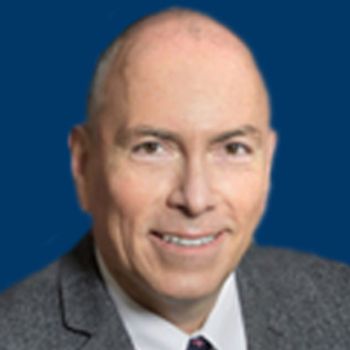
Hernan Vargas, MD, FACS, discusses the criteria that are used to determine the appropriate surgical intervention for patients with node-positive breast cancer and shared questions that still need to be addressed in the space.
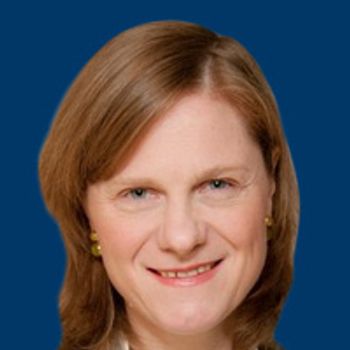
Jean Wright, MD, discusses the evolution of radiation oncology in early-stage breast cancer and how novel radiation modalities are poised to transform the field.
Erika P. Hamilton, MD, discusses the superiority of ado-trastuzumab emtansine (T-DM1; Kadcyla) in the phase III KATHERINE study.

The frontline combination of pembrolizumab and chemotherapy significantly improved progression-free survival compared with chemotherapy alone in patients with metastatic triple-negative breast cancer whose tumors expressed PD-L1.
Filipa Lynce, MD, discusses the FDA approval of atezolizumab plus nab-paclitaxel for the frontline treatment of patients with unresectable locally advanced or metastatic PD-L1
Faculty from NewYork-Presbyterian Hospital/Columbia University Irving Medical Center share their resolutions for the new year and the efforts being made to improve patient outcomes in practice.
Jasmeet C. Singh, MD, discusses results from a retrospective analysis looking at the effectiveness of dose dense doxorubicin and cyclophosphamide followed by paclitaxel, trastuzumab, and pertuzumab in patients with HER2-positive breast cancer.
Patrick Neven, MD, outlines the design of the phase III MONALEESA-3 trial in hormone receptor–positive, HER2-negative advanced breast cancer.

Rita Nanda, MD, discusses ongoing advances with immunotherapy in triple-negative breast cancer, as well as develops in the HER2-negative breast cancer paradigm.
Melissa K. Accordino, MD, MS, discusses the utility of CDK4/6 inhibitors in hormone receptor–positive, HER2-negative breast cancer.

Eileen Connolly, MD, PhD, reflects on novel radiation techniques, as well as ongoing research and challenges with radiation therapy in breast cancer.
Howard A. "Skip" Burris, III, MD, FASCO, FACP, chief medical officer and president, Clinical Operations, Sarah Cannon Research Institute, 2019-2020 ASCO president-elect, and a 2014 Giant of Cancer Care® in Drug Development, discusses investigational immunotherapy approaches in triple-negative breast cancer (TNBC).

Melissa K. Accordino, MD, MS, discusses the treatment options for patients with hormone receptor-positive, HER2-negative breast cancer.
Dawn L. Hershman, MD, MS, discusses current treatment considerations in premenopausal women with early-stage, hormone receptor-positive breast cancer.
Dawn Hershman, MD, MS, professor of medicine and epidemiology, leader of the Breast Cancer Program of the Herbert Irving Comprehensive Cancer Center at Columbia University, discusses the use of endocrine therapy in premenopausal women with early-stage hormone receptor (HR)–positive, HER2-negative breast cancer.
Kevin Kalinsky, MD, MS, highlights recent developments in triple-negative breast cancer, including the potential role of immunotherapy in the neoadjuvant setting.

Although most breast tumors are not immunogenic, evidence indicates that triple-negative breast cancer expressing PD-L1 is a strong candidate for immunotherapy, explained Leisha A. Emens, MD, PhD, in a presentation on recent trials of immunotherapy alone and in combination with anti–PD-1 therapy.
Naoto Ueno, MD, PhD, FACP, discusses residual cancer burden and immunotherapy in inflammatory breast cancer.
OncLive interviewed experts at the State of the Science Summits™ in January 2020 on what they are going to work on improving in clinical practice this year.
Kevin Kalinsky, MD, MS, discusses the clinical impact of the combination of atezolizumab and nab-paclitaxel in triple-negative breast cancer.

He James Zhu, MD, PhD, discusses potential strategies to mitigate the toxicities of elective nodal irradiation in breast cancer.

Peter Schmid, MD, PhD, discusses the benefit of pembrolizumab when added to neoadjuvant chemotherapy in patients with triple-negative breast cancer.
Therapeutic developments in cancer were rewarded with a wave of approvals in 2019.
Advertisement
Advertisement
Trending on OncLive
1
FDA Approves Tucatinib Plus Trastuzumab/Pertuzumab as First-Line Maintenance in Advanced HER2+ Breast Cancer
2
GI Cancer Monthly Rewind: Key News and Expert Insights You May Have Missed in September 2026
3
FDA Grants Breakthrough Device Designation to Natera’s Multi-Cancer Early Detection Assay
4
Five Under 5: Top Oncology Videos for the Week of 10/5/2026
5