



Breast Cancer
Latest News
Advertisement
Latest Videos


































































Advertisement
More News
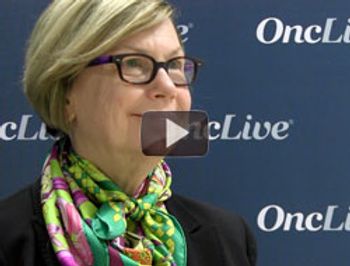
Sandra M. Swain, MD, Medical Director of the Washington Cancer Institute at MedStar Washington Hospital Center, discusses a taxane's impact on outcomes in patients with HER2-positive metastatic breast cancer.
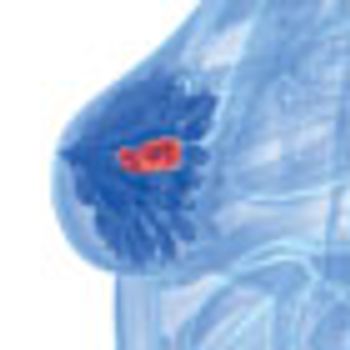
The FDA has expanded the approval of Lymphoseek (technetium Tc 99m tilmanocept) injection to include lymphatic mapping in solid tumors and sentinel lymph node (SLN) detection for breast cancer and melanoma
Clifford A. Hudis, MD, chief, Breast Cancer Medicine Service, Memorial Sloan Kettering Cancer Center, professor of medicine, Weill Cornell Medical College, discusses obesity and its relation to breast cancer.
The FDA has assigned a priority review designation to palbociclib in combination with letrozole as a frontline treatment for postmenopausal patients with ER-positive, HER2-negative advanced breast cancer.

Recent research has shown that adding targeted agents to trastuzumab-based chemotherapy regimens in the adjuvant setting may not significantly improve outcomes in patients with early-stage HER2-positive breast cancer.

New therapeutic strategies utilizing triplet regimens for the treatment of patients with HER2-positive metastatic breast cancer (MBC) continue to emerge as an exciting area of development

Hope S. Rugo, MD, professor of medicine and director of breast oncology and clinical trials education at the University of California, San Francisco, Helen Diller Family Comprehensive Cancer Center, discusses a meta-analysis that examined how stomatitis impacts the efficacy of everolimus

Pertuzumab and trastuzumab plus chemotherapy for the treatment of HER2-positive metastatic breast cancer improved median overall survival (OS) by 15.7 months over standard first-line therapy
Cyclin-dependent kinase (CDK) 4/6 inhibitors are novel agents that have shown promising results in the treatment of breast cancer.

It is well known that healthcare spending in the United States is unsustainable. It is also well known that despite spending a record $2.8 trillion on healthcare annually (17.2% of GDP in 2012)-more than any other nation-our health outcomes lag behind.
A high level of tumor infiltrating lymphocytes (TILs) may be a marker of pathologic complete response (pCR) to neoadjuvant chemotherapy in breast cancer, especially in patients with triple-negative or HER2-positive disease

Dual HER2 blockade with pertuzumab and trastuzumab plus chemotherapy for the treatment of HER2-positive metastatic breast cancer improved median OS by almost 16 months over standard first-line therapy.
Sandra M. Swain, MD, discusses final overall survival analysis from the CLEOPATRA study of first-line pertuzumab, trastuzumab, and docetaxel for the treatment of patients with HER2-positive metastatic breast cancer.
The concept of targeting mitotic cell division to halt the progression of rapidly dividing cancer cells has long been a staple of oncology therapy, yet chemotherapy agents that are the prime examples of this approach are nonselective in their action and can kill normal and malignant cells alike.

Treatment with the combination of bevacizumab and chemotherapy improved PFS and OS in women with HER2-negative metastatic breast cancer.

Niraj Mehta, MD, Radiation Oncologist, 21st Century Oncology, discusses the reliability of automated segmentation for lung volumes in breast, lung, and esophageal cancers.
Advertisement
Advertisement
Trending on OncLive
1
FDA Approves Tucatinib Plus Trastuzumab/Pertuzumab as First-Line Maintenance in Advanced HER2+ Breast Cancer
2
Iberdomide Plus Daratumumab/Dexamethasone Yields Significant PFS Benefit in R/R Myeloma
3
FDA Approves Atezolizumab Plus Chemo for Stage III dMMR Colon Cancer
4
VIR-5500 Receives FDA Fast Track Designation in mCRPC
5