





Breast Cancer
Latest News
Advertisement
Latest Videos




































































Advertisement
More News

Incorporating the Breast Cancer Index test assay into practice affected clinicians’ decision to offer endocrine therapy in HR+ early-stage disease.

Laura Spring, MD, and Manali Bhave, MD, highlight promising new systemic treatment options on the horizon for patients with metastatic breast cancer, including T-DM1 for HER2-low disease, the AKT inhibitor capivasertib, and novel endocrine therapies.
Laura Spring, MD, and Manali Bhave, MD, discuss sequencing approved antibody-drug conjugates, T-DM1 and sacituzumab govitecan, for hormone receptor-positive, HER2-low metastatic breast cancer after progression on chemotherapy.

Capivasertib plus fulvestrant has been approved in Japan for pretreated, PIK3CA-, AKT1-, or PTEN-altered, HR-positive, HER2-negative breast cancer.

Hope Rugo, MD, FASCO, and Naomi Dempsey, MD, discuss the biological and pathological risk factors influencing breast cancer development, treatment, and risk stratification.
Don S. Dizon, MD, on the prevalence of sexual complications in patients with breast cancer.
Vijayakrishna Gadi, MD, PhD, and Megan Kruse, MD, discuss the clinical benefits reported with neratinib for the treatment of patients with HER2-positive early breast cancer.
Vijayakrishna Gadi, MD, PhD, and Megan Kruse, MD, discuss ongoing research efforts in HER2-positive early breast cancer.
Adjuvant atezolizumab did not provide a clinical benefit when added to chemotherapy in patients with triple-negative breast cancer.

Patrick I. Borgen, MD, discusses the ongoing debate of routine MRI testing in early-stage breast cancer.

Henry Kuerer, MD, PhD, FACS, CMQ, on significant advancements in neoadjuvant systemic therapies in breast cancer treatment

Ribociclib Plus Nonsteroidal Aromatase Inhibitor Extends iDFS in HR+/HER2– Early-Stage Breast Cancer
Ribociclib plus a nonsteroidal aromatase inhibitor bested nonsteroidal aromatase inhibitor therapy alone in terms of iDFS in early-stage breast cancer.

The FDA has approved safety label changes for fluorouracil products to include information regarding the agent’s use in patients with DPD.
Oncologists discuss considerations for systemic therapy selection beyond first-line endocrine-based regimens in recurrent hormone receptor-positive, HER2-low metastatic breast cancer, including use of additional endocrine therapy combinations, chemotherapy, and supportive care approaches.
Laura Spring, MD, and Manali Bhave, MD, discuss considerations for systemic therapy selection in a patient with recurrent hormone receptor-positive, HER2-low breast cancer, including use of plasma and tissue genomic testing and endocrine therapy sequencing based on factors like prior response and ESR1 mutation status.

Reshma L. Mahtani, DO, discusses unique challenges women may face when transitioning between different career roles within oncology.

Liquid nitrogen–based cryoablation elicited a 5-year local RFS rate of 96.39% in patients with low-risk, early-stage breast cancer.
In case you missed it, read a recap of every episode of OncLive On Air recorded in February 2024.
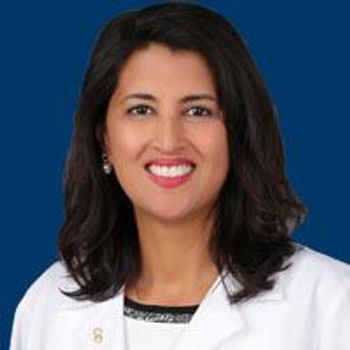
Mahtani Emphasizes Empowering Women in Oncology Through Sponsorship, Support Networks, and Self Care
Reshma Mahtani, DO, spotlights the challenges women in oncology may face throughout their careers and gives some advice to those just starting out.
Vijayakrishna Gadi, MD, PhD, and Megan Kruse, MD, discuss optimal management for adverse effects related to neratinib for patients with HER2-positive early breast cancer.
Vijayakrishna Gadi, MD, PhD, and Megan Kruse, MD, discuss unmet needs in the treatment of patients with HER2-positive early breast cancer.

Robert W. Mutter, MD, discusses the nuances of partial breast irradiation in early-stage breast cancer.

Charles B. Simone II, MD, FASTRO, FACRO, discusses advanced radiation techniques that could reduce cardiac toxicities.

Hope S. Rugo, MD, draws on her own journey as a woman in oncology to provide insights on navigating career transitions and building support networks.

Stephanie L. Graff, MD, shares her journey to becoming an oncologist, advice for work-life balance, and ways to confront gender bias in medicine.
Advertisement
Advertisement
Trending on OncLive
1
FDA Approves Tucatinib Plus Trastuzumab/Pertuzumab as First-Line Maintenance in Advanced HER2+ Breast Cancer
2
Iberdomide Plus Daratumumab/Dexamethasone Yields Significant PFS Benefit in R/R Myeloma
3
FDA Approves Atezolizumab Plus Chemo for Stage III dMMR Colon Cancer
4
VIR-5500 Receives FDA Fast Track Designation in mCRPC
5