



Breast Cancer
Latest News


Japanese Approval Sought for Datopotamab Deruxtecan in Pretreated HR+/HER2– Advanced Breast Cancer
By Chris Ryan
Advertisement
Latest Videos



































































Advertisement
More News
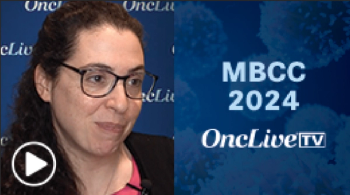
Rachel Jimenez, MD, discusses unmet needs in radiation treatment for patients with breast cancer.

Vijayakrishna Gadi, MD, PhD, and Megan Kruse, MD, discuss how standard-of-care treatment has evolved for patients with HER2-positive early breast cancer.

Kelly E. McCann, MD, PhD, discusses her experiences with mentorship and work-life balance as a woman in oncology.
Vijayakrishna Gadi, MD, PhD, and Megan Kruse, MD, discuss clinical updates to the management of patients with HER2-positive early breast cancer.

Stephanie L. Graff, MD, discusses the trajectory of her career growth in breast oncology and explains how different factors can play a role in an oncologist’s career path.

Hope S. Rugo, MD, discusses challenges that women face in the workplace in oncology care.
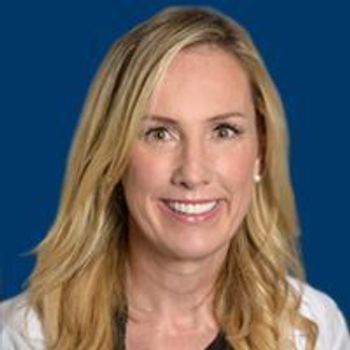
Heather McArthur, MD, MPH, discusses the prognostic benefits of circulating tumor DNA and limitations that prevent these results from being predictive.

Debu Tripathy, MD, discusses current considerations for the management of early-stage HER2-positive breast cancer.
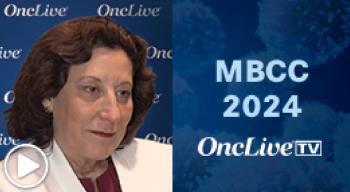
Hope Rugo, MD, discusses the evolution of antibody-drug conjugates in hormone receptor–positive, HER2-positive, and HER2-low breast cancer.

Erica Stringer-Reasor, MD, highlights the evolution of therapies for patients with hormone receptor–positive, HER2-negative metastatic breast cancer.

Ko Un “Clara” Park, MD, discusses the FDA's vote in support of Lumisight for patients with breast cancer undergoing breast conserving surgery.
The FDA's Medical Imaging Drugs Advisory Committee voted 16 to 2 in support of the benefit-risk profile of Lumisight.

Laura A. Huppert, MD, discusses data informing the sequence of immunotherapy and chemotherapy regimens in early-stage triple-negative breast cancer.

Terry P. Mamounas, MD, MPH, FACS, discusses treatment options after neoadjuvant chemotherapy and how neoadjuvant chemotherapy influences axillary surgery.

Hope S. Rugo, MD, FASCO, shares progress made with ADCs and the interest in moving these agents up in the HR-positive/HER2-negative breast cancer paradigm.

Racial and ethnic disparities for mortality are present in breast cancer, especially as it relates to radiation therapy toxicity and cardiac dose.

Jennifer K. Litton, MD, discusses challenges determining the optimal sequencing of PARP inhibitors in early-stage triple-negative breast cancer.
Kevin Kalinsky, MD, MS, discusses questions regarding the utility and implementation of genomic testing approaches in hormone receptor–positive breast cancer.

Suzanne B. Coopey, MD, FACS, discusses ways that women in oncology can feel further supported and advocated for in the cancer care space.
Suzanne B. Coopey, MD, FACS, discusses the importance of addressing gender disparities in cancer care.
Terry P. Mamounas, MD, discusses key advancements in the use of locoregional therapy for patients with breast cancer.

Michael D. Alvarado, MD, discusses the decision to undergo breast conservation surgery vs mastectomy following neoadjuvant breast cancer therapy.

Eftilagimod alpha in combination with chemotherapy displayed a manageable safety profile in HR+/HER2-low breast cancer.

Laura Spring, MD, and Manali Bhave, MD, discuss findings from the DESTINY-Breast03 trial and how these results have led them to adopt T-DM1 as the new standard of care over lapatinib/capecitabine for second-line treatment of HER2-positive metastatic breast cancer after progression on first-line trastuzumab and a taxane.
Oncologists discuss key learnings from clinical trials investigating the first-line treatment of patients with HER2-positive metastatic breast cancer, and how these findings help inform their clinical practice regarding selection of optimal systemic therapy regimens.
Advertisement
Advertisement
Trending on OncLive
1
FDA Approves Tucatinib Plus Trastuzumab/Pertuzumab as First-Line Maintenance in Advanced HER2+ Breast Cancer
2
Iberdomide Plus Daratumumab/Dexamethasone Yields Significant PFS Benefit in R/R Myeloma
3
FDA Approves Atezolizumab Plus Chemo for Stage III dMMR Colon Cancer
4
VIR-5500 Receives FDA Fast Track Designation in mCRPC
5