


Oncology Business Management
Latest News
Advertisement
Latest Videos





























































Advertisement
More News
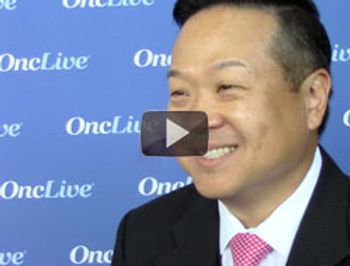
Edward S. Kim, MD, chairman, Solid Tumor Oncology and Investigational Therapeutics, Levine Cancer Institute, Carolinas HealthCare System, discusses the use of improved and complete enrichment co-amplification at lower denaturation temperature method for the detection of EGFR and KRAS mutations from cell-free plasma DNA of patients with non-small cell lung cancer (NSCLC).

Patients who receive genetic counseling before they undergo testing are educated about these tests and may have fewer unnecessary procedures

We have been asked on numerous occasions why would almost 100 oncologists "give up their independence and identity in their community" and become part of Regional Cancer Care Associates (RCCA), a new entity with a single tax identification number?

Bundled payments are no longer being relegated to pilot program status, according to a report from the Health Care Incentives Improvement Institute (HCI3). Instead, more and more public and private payers are committing to this model as a core payment and delivery reform strategy.

Peter B. Bach, MD, MAPP, discussed at a conference recently hosted by The American Journal of Managed Care how new payment models are challenging the current fee-for-service model for community care cancer centers.
A retrospective analysis of pharmacy and medical claims conducted by WellPoint shows that the costs to treat and care for cancer patients can be 3% to 14% less, depending on cancer type, when it is provided by oncologist-owned practices versus hospital-owned practices.

A new independently validated lab test is now available that takes advantage of the extensive database of gene mutations amassed by Memorial Sloan Kettering (MSK) Cancer Center.

Although we've known for decades that heredity is a major factor in cancer susceptibility and management, the insights gained in the past decade are still breathtaking.

A phone-based intervention that offers practical tools to help family caregivers support their loved one with advanced cancer-as well as emphasizing the importance of maintaining a healthy lifestyle themselves-resulted in less caregiver depression and better quality of life, according to the findings of a new study presented May 30 at the 50th Annual ASCO Meeting in Chicago.

Maha Hussain, MD, from the University of Michigan Comprehensive Cancer Center, discusses the possibility of ETS gene fusions acting as a predictive biomarker for prostate cancer.
For patients with less than a year to live, the discontinuation of statins may increase the median time-to-death and improve quality of life.

Although the deadline for ICD-10 implementation has been moved to October 1, 2015, the Centers for Medicare & Medicaid Services (CMS) has developed, in collaboration with physicians, a free tool that is specialty-specific and offers customizable, actionable advice and tips to ease physician practices through the transition to ICD-10.
Maurie Markman, MD, the editor-in-chief of OncologyLive magazine, has been named president of the Medicine & Science unit at Cancer Treatment Centers of America.
A new reimbursement program initiated by WellPoint, Inc., looks to pay oncologists an additional $350 a month for each patient who is enrolled in and follows one of the insurer's recommended cancer treatment regimens
Nearly 72% of office-based physician practices were using electronic health records (EHRs) in 2012, marking the slow and eventual decline of paper medical charts, according to a new report from the National Center for Health Statistics. From 2007 through 2012, use of any type of EHR system increased across all physician and practice categories, with the exception of HMO-owned practices.

Physician practices that provide care to patients who have enrolled in the Affordable Care Act's (ACA) health exchanges are finding it difficult to complete some basic administrative tasks.
For patients whose colorectal cancer has spread to the liver, and confirmed by computed tomography (CT), further imaging scans before surgery added little benefit when compared to patients who did not undergo further imaging.

Over the course of only a few days, two drugs that will be commercialized by Bristol-Myers Squibb (BMS), nivolumab and elotuzumab, have each been granted breakthrough therapy designations by the FDA for the treatment of two different types of blood cancers.

Testicular self-examination remains highly cost-effective despite a negative recommendation from the United States Preventive Services Task Force (USPSTF), a cost-utility analysis suggested.

Eugene Y. Rhee, MD, chief of urology, Kaiser Permanente, discusses workplace violence in urology practices.

Community oncology practices are at a crossroads despite the maturity of the marketplace. Running an efficient oncology practice is getting tougher and tougher.

Researchers at Thomas Jefferson University's Kimmel Cancer Center have developed a model for the establishment of a comprehensive multidisciplinary geriatric oncology center to help combat the over or under treatment that elderly oncology patients often face.
Collecting payments from patients is difficult, so practices need to adapt so that collecting revenue from patients comes just as easily as collecting reimbursement from insurers.

In urology, we are faced with very difficult and challenging times.

In December 2013, the US Preventive Services Task Force (USPSTF) recommended that asymptomatic, high-risk individuals receive annual screening for lung cancer with low-dose computed tomography (LDCT).
Advertisement
Advertisement
Trending on OncLive
1
FDA Approves Nogapendekin Alfa Inbakicept Plus BCG for High-Grade, Papillary-Only BCG-Unresponsive NMIBC
2
SurVaxM Cancer Vaccine Shows Clinically Meaningful OS Signal in Newly Diagnosed Glioblastoma
3
VS-7375 Elicits Responses in KRAS G12D–Mutated Pancreatic Cancer
4
FDA Receives NDA Resubmission for Rivoceranib Plus Camrelizumab in Frontline Unresectable or Metastatic HCC
5