




Precision Medicine in Oncology®
Latest News

Advertisement
Latest Videos






























































Advertisement
More News

Studies presented at the 2014 GI Cancers Symposium emphasized the need for full RAS mutational analyses in the management of metastatic colorectal cancer prior to initiating treatment with anti-EGFR monoclonal antibodies.

Sukumar Nagendran, MD, vice president, medical affairs, Quest Diagnostics, discusses a study looking at patients' family history, BRCA mutation status, and breast cancer risk.

Harnessing multiple components of the immune system to fight cancer is the focus of NewLink Genetics' clinical pipeline.

Mark G. Kris, MD, from the Memorial Sloan-Kettering Cancer Center, describes the new drugs and other emerging trends in lung cancer.
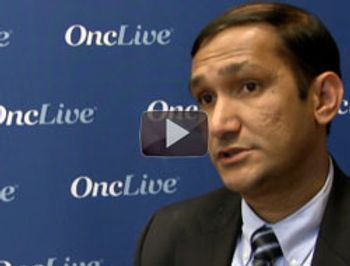
Bilal Piperdi, MD, Associate Professor of Clinical Medicine, Department of Medicine (Oncology), Albert Einstein College of Medicine, discusses the potential of immunotherapy for the treatment of patients with lung cancer.

An analysis of phase III, second-line data has shown that RAS mutations beyond KRAS exon 2 are negative predictive biomarkers for the EGFR-inhibitor panitumumab in metastatic colorectal cancer.
There has been considerable discussion within the oncology literature during the past several years regarding the level of evidence required to consider a new antineoplastic agent an acceptable "standard-of-care" in routine disease management.



Jerry Lanchbury, PhD, Chief Scientific Officer, Myriad Genetics, Inc., describes the HRD (homologous recombination deficiency) test.

Like you, I get up every day and look at the stack of journals I know I need to read but cannot imagine when I will find the time.

Owing to the high clinical failure rates, genetically variable tumor characteristics, and skyrocketing drug development costs, the era of traditional blockbuster oncology agents has come to an end.

Through a variety of research roles, Sara Hurvitz, MD, is exploring novel targeted therapies for the treatment of breast cancer, including developing and implementing clinical trials. Her interests include the phosphatidylinositol 3-kinase (PI3K) signaling pathway.
Advertisement
Advertisement
Trending on OncLive
1
Ifinatamab Deruxtecan BLA Voluntarily Withdrawn in Previously Treated Extensive-Stage SCLC
2
Etentamig Improves Response and PFS vs Standard Therapies in Triple-Class Exposed Relapsed/Refractory Myeloma
3
Dr Voorhees on Eligibility Criteria for the CERVINO Trial in Multiple Myeloma
4
Long-Term PERSEUS Data Confirm Durable PFS Benefit With D-VRd in Transplant-Eligible Newly Diagnosed Myeloma
5