

Precision Medicine in Oncology®
Latest News
Advertisement
Latest Videos






























































Advertisement
More News

While targeted and immunotherapy drugs have recently shown promise in non-small cell lung cancer (NSCLC), similar developments in small cell lung cancer (SCLC) have not materialized.
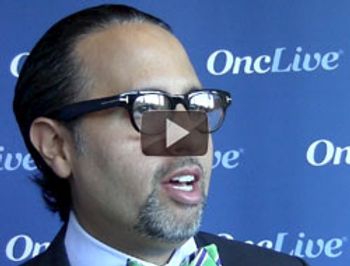
Omid Hamid, MD, chief, translational research and immunotherapy, director, cutaneous oncology and melanoma, The Angeles Clinic and Research Institute, discusses the treatment of melanoma.



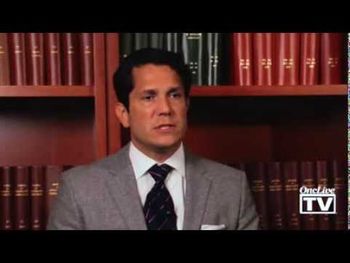





Josep Tabernero, MD, PhD, of Vall d'Hebron University Hospital, Barcelona, discusses new characterizations of colorectal cancer.

Five lung cancer experts discuss recent advances and current issues surrounding the treatment of non-small cell lung cancer

Amid rapid progress in the treatment of advanced lung cancer, several leading organizations have joined in developing new guidelines for the optimal use of molecular testing to help select patients for therapy with tyrosine kinase inhibitors

D. Ross Camidge, MD, PhD, director, Thoracic Oncology Clinical Program, University of Colorado Cancer Center, discusses the updated results of a first-in-human dose-finding study of the ALK/EGFR inhibitor AP26113 in patients with advanced malignancies.
David P. Carbone, MD, PhD, a professor in the Division of Medical Oncology at the Ohio State University Comprehensive Cancer Center, discusses potential biomarkers in lung cancer.
Clifford A. Hudis, MD, ASCO president, chief, Breast Cancer Medicine Service, attending physician, Memorial Sloan-Kettering Cancer Center, comments on exploratory biomarker observations from the BOLERO-3 trial.
Maurie Markman, MD, from the Cancer Treatment Centers of America, discusses the discovery of mutations and targets in ovarian cancer and the current progress being made in the development of a "breakthrough" agent for ovarian cancer.


Advertisement
Advertisement
Trending on OncLive
1
Ifinatamab Deruxtecan BLA Voluntarily Withdrawn in Previously Treated Extensive-Stage SCLC
2
Etentamig Improves Response and PFS vs Standard Therapies in Triple-Class Exposed Relapsed/Refractory Myeloma
3
Dr Voorhees on Eligibility Criteria for the CERVINO Trial in Multiple Myeloma
4
FDA Approves Lirafugratinib for Pretreated, Locally Advanced or Metastatic Cholangiocarcinoma
5