


Precision Medicine in Oncology®
Latest News
Advertisement
Latest Videos





























































Advertisement
More News

An interesting conversation with this year's AACR president, Frank McCormick, PhD, on the next big area of interest in cancer research, and what the future holds for cancer research progress.
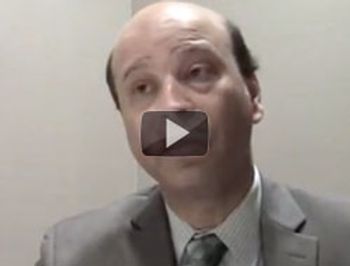
Debu Tripathy, MD, from the University of Southern California Norris Comprehensive Cancer Center, discusses the targeted therapies that are currently available for the treatment of patients with breast cancer.

An interview with Alice Tsang Shaw, MD, PhD, who has won broad recognition for her contributions to the treatment of NSCLC, including the use of crizotinib to target the ROS1 gene rearrangement and research into other emerging agents.
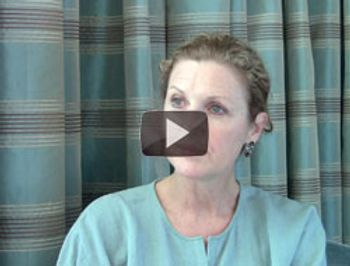
Lisa A. Carey, MD, Professor of Medicine, University of North Carolina at Chapel Hill, discusses the present and future state of clinical trial design.

A large, international study has yielded a wealth of new information about genetic alterations that can increase an individual's risk of breast, prostate, and ovarian cancer.
A study of patients newly initiated to erlotinib therapy for NSCLC found that there is no uniformity in the billing codes used for pharmacogenomic testing prior to starting the drug, making it difficult to analyze treatment patterns and cost impact.

Barbara J. Gitlitz, MD, Stephen V. Liu, MD, and Peter A. Jones, PhD, DSc, from the USC Norris Comprehensive Cancer Center, describe efforts to translate promising epigenetic research into clinical practice.
Jeanette H.W. Leusen, PhD, focuses on studying the working mechanisms of therapeutic antibodies and the biology of fragment crystallizable receptors, including the anti-CD20 monoclonal antibody rituximab in patients with non-Hodgkin lymphoma.
A large proportion of patients become rituximab-refractory, which has prompted the development of newer CD20 agents with altered structures that are designed to improve upon rituximab's performance.
Abigail S. Caudle, MD, Assistant Professor, Department of Surgical Oncology, Division of Surgery, The University of Texas MD Anderson Cancer Center, gives an overview of two trials in breast cancer.
Fabrice Andre, MD, PhD, from the Institut Gustave Roussy, Villejuif, France, gives an overview of methods for improving the effectiveness of genomic alteration testing in clinical trials that explore novel targeted agents in breast cancer.

Patients with epithelial ovarian cancer (EOC) and low levels of the BRCA1 protein had significantly improved overall survival (OS) when their platinum-based chemotherapy was delivered abdominally by injection
The Biotech Focus series provides updates on advances in the oncology treatment pipeline. In each entry, summaries of ongoing research, breaking news, and FDA decisions relating to a variety of cancers are presented.
The question of whether it should be legal to patent genes has reached the US Supreme Court, and the impending decision by the highest federal court in the country could significantly transform the current research landscape.

Clinical trials are under way that may change the way risk of recurrence is assessed for early-stage breast cancer patients, allowing for individualization of therapy.
Emanuel F. Petricoin III, PhD, Co-Director, Center for Applied Proteomics & Molecular Medicine, Professor of Life Sciences, George Mason University, discusses disease screening with biomarkers.
An interview with José Baselga, MD, PhD, who helped to develop new drugs and combination therapies for the treatment of breast cancer, including the early targeted therapy trastuzumab and the more recent pertuzumab.
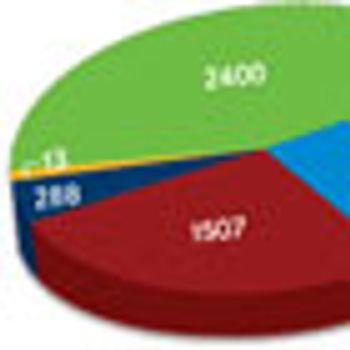
Oncology continues to lead all therapeutic areas in drug development research, with nearly 5500 of more than 17,000 projects in the works.
The drug palbociclib (formerly known as PD-0332991) has received has received a "breakthrough therapy designation" from the FDA for the treatment of patients with breast cancer.
José Baselga, MD, PhD, explores the dual inhibition of cell-signaling pathways in breast cancer on several fronts, including new therapies for patients with the HER2-positive subtype and novel ways to target mTOR and the PI3K/Akt/mTOR pathway.

Sign-toting scientists, students, patients, and caregivers gathered near the Carnegie Library in Washington, DC, to protest recent cuts to the budget of the National Institutes of Health, the largest funder of medical research in the world.
Dana-Farber Cancer Institute and Seattle Cancer Care Alliance Join OncLive's Strategic Alliance Partnership Program.

The oncology we all learned over the past three decades will soon be a thing of the past, making way for therapy decisions based on what molecular switches should be turned on and off, and of equal importance, in what sequence.
Fabrice Andre, MD, PhD, Research Director, Head of INSERM Unit U981, Institut National des Sciences et de la Recherche Médicale, Associate Professor, Department of Medical Oncology, Institut Gustave Roussy, Villejuif, France, discusses upcoming research in metastatic breast cancer.
Jennifer Brown, MD, PhD, Director, Chronic Lymphocytic Leukemia Center, Dana-Farber Cancer Institute, Assistant Professor of Medicine, Harvard Medical School, discusses targeted therapies and mutations in chronic lymphocytic leukemia.
Advertisement
Advertisement
Trending on OncLive
1
Ifinatamab Deruxtecan BLA Voluntarily Withdrawn in Previously Treated Extensive-Stage SCLC
2
Etentamig Improves Response and PFS vs Standard Therapies in Triple-Class Exposed Relapsed/Refractory Myeloma
3
Dr Voorhees on Eligibility Criteria for the CERVINO Trial in Multiple Myeloma
4
FDA Approves Lirafugratinib for Pretreated, Locally Advanced or Metastatic Cholangiocarcinoma
5