





Precision Medicine in Oncology®
Latest News
Advertisement
Latest Videos































































Advertisement
More News

Highlights of key findings from several phase I clinical trials that provide insight into new and emerging druggable targets and targeted therapies.

Cancer centers are beginning to establish oncology nurse navigator programs with integrated processes for assessment, identification, referral, education, care, and support for patients whose gynecologic cancers may be genetically-based.

Women with breast cancer who are carriers of BRCA1 mutations have increased mortality compared with noncarriers, according to a retrospective study carried out in the Netherlands.

Heinz-Josef Lenz, MD, from the USC Norris Comprehensive Cancer Center, discusses the potential predictive impact of KRAS and NRAS mutations in metastatic colorectal cancer.

The translation of scientific advances in nanotechnology into cancer therapies, in vitro assays, and imaging tools is poised for takeoff, amid fresh excitement among investors and a mushrooming of findings from leading research institutions.

A dual-action PARP inhibitor has shown sufficient clinical activity to continue its investigation in women with recurrent BRCA-mutant ovarian cancer.
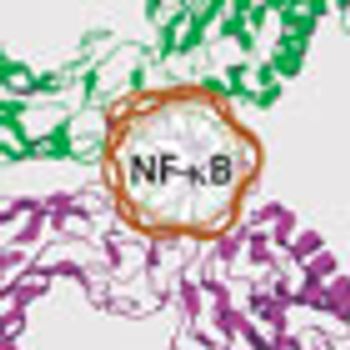
The complex regulation of NF-κB activation has presented significant challenges for the development of anticancer agents, but researchers are now beginning to better understand and embrace this complexity to drive development of a variety of novel NF-κB-targeting strategies.

Andrew D. Seidman, MD, from the Memorial Sloan-Kettering Cancer Center, describes his excitement over the genetic advances made in the treatment of patients with cancer.
Julian Adams, PhD, from Infinity Pharmaceuticals, describes the mechanism of action for the experimental PI3 kinase delta/gamma inhibitor IPI-145 in hematologic malignancies.

Squamous cell carcinomas of the head and neck have different patterns of genetic alterations, some of which may be actionable or druggable with available agents or drugs in development.

Ellen T. Matloff, MS, CGC, from the Yale School of Medicine/Yale Cancer Center, describes the impact of the US Supreme Court decision to restrict the patenting of segments of DNA in isolation.

In an interview with OncologyLive, Brian G.M. Durie, MD, provided details about the Black Swan initiative and how he expects the project to develop.
After years of varying decisions by lower courts regarding the patents held on a test for genetic mutations associated with breast cancer, the US Supreme Court has ruled that a segment of DNA in isolation is a natural product and not eligible for patent protection.

Yvonne M. Saenger, MD, Assistant Professor in Medicine and Dermatology, Hematology and Medical Oncology, Mount Sinai School of Medicine, discusses the idea of combining targeted and immune agents.

As one of the world's top multiple myeloma physicians and researchers, Brian G.M. Durie, MD, can boil his mission down to one simple goal: saving lives. But it was two people the doctor couldn't save who have most affected his path.

A new study suggests that germline mutations of BRCA1/2 could play a significant role in more-aggressive cases of prostate cancer. Additionally, BRCA2 mutations were specifically linked to poor overall survival.
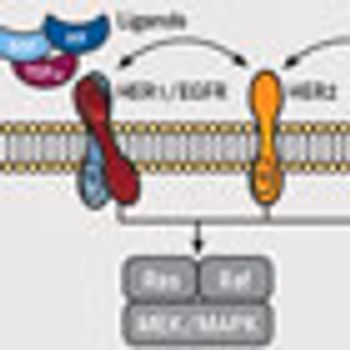
New research suggests that HER2-targeted drugs may actually have much broader applications, benefiting patients who are not designated HER2-positive by routine testing.

The American Society of Clinical Oncology kicked off its 49th Annual Meeting with leaders urging all stakeholders in cancer care to vigorously oppose cuts to vital US biomedical research funding.
The security of genetic data collected from research study participants has emerged as a concern after investigators proved they could ferret out individual identities from large databases.

Arta Monjazeb, MD, and Michael Kent, DVM, from the UC Davis Comprehensive Cancer Center, describe an early phase trial exploring the potential of translating successful treatment from dogs to humans with advanced melanoma or sarcoma.

The decision about whether to get tested for a genetic mutation that may predispose a person to certain cancers is a difficult one for many patients to make. Even more difficult for mutation carriers is deciding whether to undergo a prophylactic surgical procedure.

Patrick Borgen, MD, chair, Department of Surgery, director, Maimonides Breast Cancer Center, discusses a patient's decision to be tested for a BRCA gene.

Michael J. Morris, MD, medical oncologist, Genitourinary Oncology Service, Memorial Sloan-Kettering Cancer Center, discusses the use of radiographic progression-free survival as an endpoint in prostate cancer clinical trials.

Emanuel F. "Chip" Petricoin III, PhD, Co-Director, Center for Applied Proteomics & Molecular Medicine, Professor of Life Sciences, George Mason University, discusses the discovery of new biomarkers in breast cancer.
A high-profile case of a medical decision being based primarily on the results of a genetic test has prompted a national discussion on the benefits and risks associated with acting on the results of such a test.
Advertisement
Advertisement
Trending on OncLive
1
Ifinatamab Deruxtecan BLA Voluntarily Withdrawn in Previously Treated Extensive-Stage SCLC
2
Etentamig Improves Response and PFS vs Standard Therapies in Triple-Class Exposed Relapsed/Refractory Myeloma
3
Dr Voorhees on Eligibility Criteria for the CERVINO Trial in Multiple Myeloma
4
FDA Approves Lirafugratinib for Pretreated, Locally Advanced or Metastatic Cholangiocarcinoma
5