




Precision Medicine in Oncology®
Latest News

Advertisement
Latest Videos































































Advertisement
More News

While competition is the hallmark of the powerhouse sports teams of the Big Ten Conference, collaboration will be the key for a research initiative recently launched by cancer centers at most of the same universities.

An interview with Rakesh K. Jain, PhD, a cancer researcher focused on pathophysiology who helped establish the role of the tumor microenvironment in the treatment of cancer.
One in five African-American women with breast cancer carries an abnormality in at least one gene associated with breast cancer susceptibility.

Corey J. Langer, MD, from the University of Pennsylvania, Abramson Cancer Center, discusses integrating the irreversible pan-HER inhibitor afatinib into the treatment paradigm for patients with advanced non-small cell lung cancer.
Brian A. Van Tine, MD, PhD, Assistant Professor, Washington University School of Medicine in St. Louis, discusses identifying biomarkers in sarcomas.

An interview with Andrew Scott, MB,BS, MD, whose work has led to the successful translation of novel potential cancer therapeutics into clinical development.

Yvonne M. Saenger, MD, Assistant Professor in Medicine and Dermatology, Hematology and Medical Oncology, Mount Sinai School of Medicine, discusses the need for biomarkers for immunotherapies.
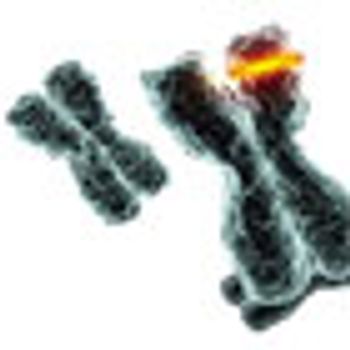
Patients with mutations of BRCA1 or BRCA2 who received tamoxifen after their initial diagnosis of breast cancer reduced their chances of developing contralateral or secondary breast cancer by more than half.
More than a century has passed since the discovery of antibodies and thanks to a number of Nobel Prize-winning scientists, we have begun to realize their potential as therapeutic tools in cancer.

A detailed analysis of previously reported data on the multikinase inhibitor cabozantinib in medullary thyroid cancer found that patients with mutations of RET and RAS experienced a significantly higher benefit than patients without those mutations.

The presence or absence of RAS mutations should dictate use of panitumumab in combination with FOLFOX chemotherapy for patients with metastatic colorectal cancer.
Patients diagnosed with cancer today are considered to be genuine partners in all major treatment decisions. Yet, how well do they understand the nature and goals of genetic testing that might be recommended as part of the management of their disease?

Lead author, Alice T. Shaw, MD, PhD, from the Massachusetts General Hospital, reviews the first published results from a randomized phase III trial investigating crizotinib in patients with ALK-positive non-small cell lung cancer.

Albert S. Baldwin, Jr, PhD, focuses on understanding the regulation and biological functions of NF-κB and its role in disease, particularly in cancer, in a laboratory he heads at the UNC Lineberger Comprehensive Cancer Center.








Advertisement
Advertisement
Trending on OncLive
1
Ifinatamab Deruxtecan BLA Voluntarily Withdrawn in Previously Treated Extensive-Stage SCLC
2
Etentamig Improves Response and PFS vs Standard Therapies in Triple-Class Exposed Relapsed/Refractory Myeloma
3
Dr Voorhees on Eligibility Criteria for the CERVINO Trial in Multiple Myeloma
4
FDA Approves Lirafugratinib for Pretreated, Locally Advanced or Metastatic Cholangiocarcinoma
5