



Precision Medicine in Oncology®
Latest News
Advertisement
Latest Videos

































































Advertisement
More News

Giorgio V. Scagliotti, MD, PhD, head, Thoracic Oncology Unit, Department of Clinical and Biological Sciences, University of Turin, San Luigi Hospital, Orbassano, Italy, discusses treating epidermal growth factor receptor- (EGFR) mutated tumors with afatinib.

Paul A. Bunn, Jr, MD, professor of medicine in medical oncology, head of the division of medical oncology, University of Colorado, discusses afatinib for patients with activating epidermal growth factor receptor (EGFR) mutation.

Carol Aghajanian, MD, from the Memorial Sloan-Kettering Cancer Center, discusses the difficulties with a gold standard clinical trial endpoint in ovarian cancer.

Tony S.K. Mok, BMSc, MD, FRCPC, professor, Department of Clinical Oncology, Chinese University of Hong Kong, Prince of Wales Hospital Hong Kong, China, discusses how to improve the strategy of developing treatments for lung cancer.

Penny Daugherty, RN, MS, OCN, Southeastern Gynecologic Oncology, explains how nurses in her practice discuss genetics and genomics with patients.

Recently, Girish M. Shah's team has been using cellular and murine models to examine various therapeutic options, including inhibitor and gene knockout approaches against the DNA damage-responsive enzyme poly(ADP-ribose) polymerase 1 (PARP-1).

Puma Biotechnology is a Los Angeles-based development stage biopharmaceutical company that has spent the last couple of years focused on the development of its lead drug candidate, neratinib (PB272).

The first patient has been enrolled in a phase III clinical program investigating treatment with olaparib for patients with BRCA-mutated ovarian cancer, marking another step in the revived development of an agent once relegated to the sidelines.

Prostate cancer has a propensity to metastasize to bone. High turnover ultimately results in a net loss of bone tissue; prostate cancer treatment contributes to the loss of bone integrity, as androgen- deprivation therapy often causes abnormally low bone density

A multisite, randomized, double-blind trial evaluating the fatigue-ameliorating properties of American ginseng in cancer patients and recent survivors has found the herb to be helpful in reducing some aspects of CRF, with the benefit strongest among patients currently in treatment.
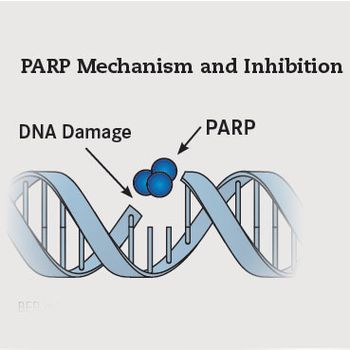
Anticancer agents that inhibit the poly (ADP-ribose) polymerase (PARP) family of enzymes have defined a new therapeutic paradigm known as synthetic lethality.

Only Time Will Tell the Far-Reaching Societal Implications of the Supreme Court's BRCA 1/2 Ruling
Matthew J. Ellis, MD, PhD, professor, Department of Medicine, Oncology Division, Breast Oncology Section, Washington University School of Medicine in St. Louis, Missouri, discusses the future of The Cancer Genome Atlas project.

Laurie Gaspar, MD, Professor and Chair Department of Radiation Oncology, Grohne Chair in Clinical Oncology, University of Colorado School of Medicine, discusses reducing neurotoxicity in small cell lung cancer patients.

Over the past several years, several new approaches to treatment have prolonged and improved quality of life for patients with metastases.








Advertisement
Advertisement
Trending on OncLive
1
Ifinatamab Deruxtecan BLA Voluntarily Withdrawn in Previously Treated Extensive-Stage SCLC
2
Etentamig Improves Response and PFS vs Standard Therapies in Triple-Class Exposed Relapsed/Refractory Myeloma
3
Dr Voorhees on Eligibility Criteria for the CERVINO Trial in Multiple Myeloma
4
FDA Approves Lirafugratinib for Pretreated, Locally Advanced or Metastatic Cholangiocarcinoma
5