

Gastrointestinal Cancer
Latest News
Advertisement
Latest Videos

















































Advertisement
More News
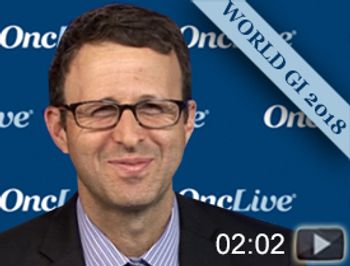
Richard S. Finn, MD, assistant professor of medicine, Department of Medicine, Division of Hematology/Oncology, Geffen School of Medicine, University of California, Los Angeles, discusses the pooled analysis of the REACH and REACH-2 studies in patients with hepatocellular carcinoma.
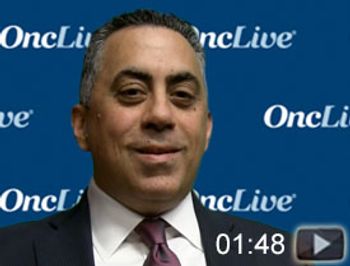
Tanios Bekaii-Saab, MD, professor of medicine, Mayo Clinic, discusses the use of immunotherapy in patients with microsatellite stable colorectal cancer.
Diane Reidy-Lagunes, MD, outlines the current state-of-the-art gastrointestinal care.
Patients younger than 65 years experienced net cancer costs that were higher for breast, colorectal, lung, and prostate cancer compared with patients who were 65 years and older.
There are pivotal developments in colorectal cancer that have shaped the National Comprehensive Cancer Network guidelines in the past several years.
Although testing for some genetic defects has been incorporated into the treatment paradigm, the clinical utility of up-front tumor sequencing that would yield wide-ranging information has not yet been established.
Tanios Bekaii-Saab, MD, discusses neoadjuvant and adjuvant strategies in treating patients with early-stage pancreatic cancer.
Gregory L. Beatty, MD, PhD, shares his insight on the challenges with sequencing immunotherapies in light of recent advancements in gastrointestinal malignancies.
Theodore H. Welling, MD, discusses the expanding role of surgery in hepatobiliary neoplasms.
Thierry Conroy, MD, medical oncologist, director, Institut de Cancerologie de Lorraine, discusses the results of an adjuvant modified FOLFIRINOX regimen (mFOLFIRINOX) in patients with pancreatic cancer.
Daniel Ahn, DO, discusses advances and challenges with targeted and immune-based therapies in the treatment of patients with gastric and gastroesophageal cancer.

Second-line ramucirumab (Cyramza) reduced the risk of death by 29% versus placebo in patients with advanced hepatocellular carcinoma and elevated alpha-fetoprotein.
A combination of 2 over-the-counter medicines can moderately reduce the risk for high-grade dysplasia or esophageal cancer in patients with Barrett’s esophagus if taken for at least 7 years.

Ramesh K. Ramanathan, MD, director, Gastrointestinal Medical Oncology Program, Mayo Clinic, discusses the treatment of patients with pancreatic cancer.
A 4-drug chemotherapy combination dramatically improved survival compared with standard gemcitabine as postoperative therapy for patients with resected pancreatic cancer.

Preoperative treatment with chemotherapy and radiation improved overall survival rates for patients with resectable or borderline resectable pancreatic cancer compared with immediate surgery.
The addition of heated chemotherapy delivered to the abdomen during surgery delivered no survival benefit to patients with peritoneal carcinomatosis.
Key opinion leaders spoke with OncLive ahead of the 2018 ASCO Annual Meeting to share the top abstracts they believe could have the greatest impact on clinical practice and patient outcomes across lymphomas, gastrointestinal cancers, genitourinary cancers, and lung cancer.
The FDA has accepted a supplemental new drug application for cabozantinib as a treatment for patients with previously-treated advanced hepatocellular carcinoma.
Chloe E. Atreya, MD, PhD, assistant clinical professor, Department of Medicine, University of California, San Francisco Helen Diller Family Comprehensive Cancer Center, discusses maintenance therapy for patients with colorectal cancer.

The FDA has extended the review period for lenvatinib as a first-line treatment for patients with unresectable hepatocellular carcinoma. The new action date for the supplemental new drug application is August 24, 2018.
Scott Kopetz, MD, PhD, FACP, associate professor, Department of Gastrointestinal Medical Oncology, Division of Cancer Medicine, The University of Texas MD Anderson Cancer Center, discusses triplet therapy for patients with BRAF-mutant colorectal cancer
Diane Simeone, MD, director, Pancreatic Cancer Center, associate director, Translational Research, NYU Langone’s Perlmutter Cancer Center, discusses the Precision Promise trial for patients with metastastic pancreatic cancer.
Diane M. Simeone, MD, discusses the molecular complexities of pancreatic cancer, some of the commonly identified mutations, and ongoing clinical trial efforts that may be game changing for the field.

Ramesh K. Ramanathan, MD, director, Gastrointestinal Medical Oncology Program, Mayo Clinic, discusses emerging therapeutic targets in patients with pancreatic cancer.
Advertisement
Advertisement
Trending on OncLive
1
Epcoritamab Plus R-CHOP Meets PFS End Point in Newly Diagnosed DLBCL
2
‘Our Impact Will Be Broad and Transformative’: Wells Messersmith, MD, Takes the Reins at CU Anschutz Cancer Center
3
FDA Approves Pirtobrutinib for Previously Untreated CLL/SLL
4
Berzosertib Plus Carboplatin Fails to Improve Responses in Pretreated mCRPC
5