


Genitourinary Cancers
Latest News

March 8th 2023
By Chris Ryan
The FDA has granted a fast track designation to the novel aryl hydrocarbon receptor antagonist IK-175 in combination with nivolumab for the treatment of patients with advanced urothelial carcinoma who have progressed on or within 3 months of receiving the last dose of checkpoint inhibitors.
Advertisement
Latest Videos































































Advertisement
More News
A new drug application has been submitted to the FDA seeking the approval of niraparib in combination with abiraterone acetate, in the form of a dual-action tablet, and prednisone, for the first-line treatment of patients with metastatic castration-resistant prostate cancer harboring BRCA mutations.

The combination of savolitinib and durvalumab induced high response rates with a manageable safety profile in patients with metastatic papillary renal cancer with MET-driven disease enrolled to the phase 2 CALYPSO trial, although the trial missed its primary end point of confirmed response rate for the overall study population.

Paul L. Nguyen, MD, discusses primary findings from the phase 2 FORMULA-509 trial in prostate cancer.
Guru P. Sonpavde, MD, discusses the methodology and key results from an analysis of the Cancer Genome Atlas in muscle-invasive bladder cancer.

Chandler Park, MD, MSc, FACP, discusses the evolution of metastatic hormone-sensitive prostate cancer treatment, shifting definitions of metastatic and nonmetastatic castration-resistant prostate cancer, the importance of antibody-drug conjugates in bladder cancer, and the future of biomarkers in renal cell carcinoma.
Brian I. Rini, MD, discusses standard and investigational treatment options for patients with RCC who are refractory to immunotherapy; the potential role of biomarkers in future targeted treatments; and the need for novel mechanisms such as HIF inhibition to meet the needs of patients who don’t respond to immunotherapy or VEGF TKIs.
Siamak Daneshmand, MD, discusses findings from the interim analysis of cohort 3 of the multicohort phase 2 THOR-2 trial.
Eleni Efstathiou, MD, PhD, discusses second interim findings from a subgroup analysis of the phase 3 MAGNITUDE trial in patients with BRCA-mutated metastatic castration-resistant prostate cancer.

Michael B. Atkins, MD, discusses the treatment-free survival outcomes from cohort A of the phase 2 HCRN GU16-260 trial in patients with advanced renal cell carcinoma.

Srikala Sridhar, MD, MSc, FRCPC, discusses long-term follow-up data from the phase 3 JAVELIN Bladder 100 in patients with advanced urothelial carcinoma.
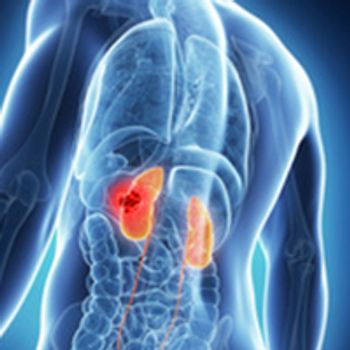
Nivolumab monotherapy, plus salvage nivolumab plus ipilimumab for progressive disease, resulted in high treatment-free survival rates in patients with previously untreated advanced clear cell renal cell carcinoma.

Arya Mariam Roy, MBBS, discusses the effect of neoadjuvant chemotherapy on overall survival in patients with sarcomatoid muscle-invasive bladder cancer.
Bradley McGregor, MD, discusses the investigation of cabozantinib plus atezolizumab in patients with non–clear cell renal cell carcinoma.

89Zr-DFO-girentuximab demonstrated sensitivity and specificity thresholds that were exceeded by 3 independent readers for PET/CT imaging of clear cell renal cell carcinoma, according to findings from the phase 3 ZIRCON study.

Aristotelis Bamias, MD, discusses key efficacy data from a final analysis of the phase 3 IMvigor130 trial in metastatic urothelial carcinoma.

Laurence Albigès, MD, PhD, discusses the main objective and trial design of the phase 2 CaboPoint study in renal cell carcinoma, as well as key efficacy and safety data reported in an interim analysis of this study.

Prateek Gulhati, MD, PhD, discusses current treatment approaches in pancreatic cancer and strategies under investigation within the space.

Pembrolizumab monotherapy led notable antitumor activity with manageable toxicity in patients with Bacillus Calmette-Guérin–unresponsive, papillary high-risk non–muscle-invasive bladder cancer
Treatment with the anti–Trop-2 antibody-drug conjugate sacituzumab govitecan elicited an objective response rate of 32% in platinum-ineligible patients with metastatic urothelial cancer following progression on an immune checkpoint inhibitor, according to the primary analysis of TROPHY-U-01 cohort 2.
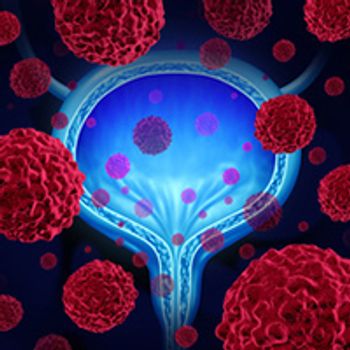
Tumor mutational burden and alterations in CDKN2A, CDKN2B, and MTAP were among several biomarkers that were predictive of response to enfortumab vedotin in patients with advanced urothelial carcinoma, according to findings from a retrospective analysis.

Transurethral resection of bladder tumor followed by gemcitabine, cisplatin, and nivolumab led to stringent clinical complete responses in patients with muscle-invasive bladder cancer.

Andrea Necchi, MD, discusses updated analysis of cohort B in the phase 2 KEYNOTE-057 trial in non-muscle invasive bladder cancer.
Treatment with darolutamide decreased the likelihood of developing metastatic disease or discontinuing treatment because of adverse effects vs treatment with apalutamide or enzalutamide in patients with non-metastatic castration-resistant prostate cancer.
Brian I. Rini, MD, FASCO, discusses the current treatment landscape for patients with relapsed/refractory renal cell carcinoma.

Michael C. Haffner, MD, PhD, explains the genomic differences between prostate adenocarcinoma of the prostate and prostatic basal cell carcinoma, an extremely rare disease.
Advertisement
Advertisement
Trending on OncLive
1
Savolitinib Plus Osimertinib NDA Submitted to FDA for MET-Driven, EGFR-Mutated NSCLC After EGFR TKI
2
FDA Grants Priority Review to Elinzanetant for Endocrine Therapy–Associated Vasomotor Symptoms in HR+ Breast Cancer
3
Calculating the Real Cost of False Positive Findings in Cancer Screening
4
China's NMPA Approves Pirtobrutinib Across CLL
5