






Genitourinary Cancers
Latest News
Advertisement
Latest Videos































































Advertisement
More News

Matthew Galsky, MD, explains how the development of novel drug classes and therapeutic combinations could address unmet needs in patients with metastatic renal cell carcinoma.

Xingming Zhang discusses efficacy, safety, and quality of life findings from a phase 2 trial investigating the combination of sintilimab and axitinib in patients with fumarate hydratase–deficient renal cell carcinoma.

Findings from the phase 3 ZIRCON trial showed that imaging with 89Zr-DFO-girentuximab could improve the identification and risk stratification of patients with renal tumors.

Matthew Galsky, MD, highlights updates in metastatic urothelial cancer treatment, as well as the evolution of PARP inhibitors and the optimal use of intensified triplet therapy in prostate cancer.
Sia Daneshmand MD, discusses preliminary results from the phase 2 SunRISe-1 trial (NCT04640623) in patients with non–muscle invasive bladder cancer unresponsive to Bacillus Calmette-Guérin.

Fred Saad, MD, FRCS, discusses prostate-specific antigen (PSA) response and time to PSA progression with the combination of abiraterone acetate and olaparib in patients with metastatic castration-resistant prostate cancer.

A high body mass index was linked with improved overall survival in patients with renal cell carcinoma undergoing radical nephrectomy.

Michael Basin, MD, discusses how the pharmacological inhibition of the molecular chaperone Hsp70 overcomes belzutifan resistance in clear cell renal cell carcinoma.
Elshad Hasanov, MD, PhD, discusses actionable immune-resistance targets in patients with renal cell carcinoma with brain metastases.

Bradley A. McGregor, MD, discusses the clinical significance of the updated COSMIC-021 data, how these findings support the continued investigation of IO/TKI combinations in non–clear cell renal cell carcinoma, and other efforts underway to better care for patients with varying histological subtypes of the disease.

The combination of toripalimab and axitinib improved progression-free survival over single-agent sunitinib when used as first-line treatment in patients with intermediate to high risk, unresectable or distant metastatic renal cell carcinoma.
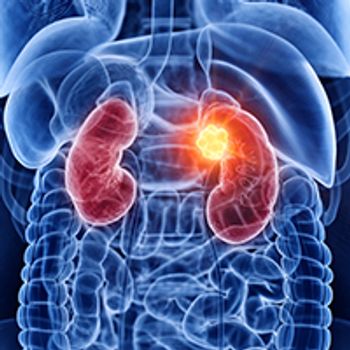
Treatment with nivolumab plus ipilimumab and a subsequent TKI was effective in patients with metastatic clear cell renal cell carcinoma.

The panel closes their discussion with a look at the standards for genetic counseling for patients with non-clear cell RCC.
The panel discusses the best approaches to treating patients with non-clear cell RCC.

Samer A. Srour, MB ChB, MS, explains the unique construction of ALLO-316, the potential for ALLO-316 to address an unmet need in patients with clear cell renal cell carcinoma, and how early data from the TRAVERSE study support the continued investigation of ALLO-316 in patients with CD70-expressing tumors.

The combination of batiraxcept and cabozantinib is safe and generated early evidence of efficacy in pretreated patients with advanced or metastatic clear cell renal cell carcinoma.
Adjuvant pembrolizumab prolonged disease-free survival and distant metastasis–free survival vs placebo in patients with clear cell renal cell carcinoma at increased risk of recurrence after nephrectomy, irrespective of UCLA Integrated Staging System risk category and disease stage.
The panel shares their preferred treatment regimens for patients with refractory renal cell carcinoma.

Hans Hammers, MD, presents a profile of a 47-year-old male with refractory renal cell carcinoma.
The allogeneic anti-CD70 CAR T-cell therapy ALLO-316 elicited signals of antitumor activity and showed a tolerable safety profile in patients with advanced or metastatic clear cell renal cell carcinoma.
Samer A. Srour, MB, ChB, MS, discusses the study design of the phase 1 TRAVERSE study, and key data on the use of ALLO-316 in patients with advanced or metastatic clear cell renal cell carcinoma.
Bradley McGregor, MD, discusses the next steps for investigating cabozantinib plus atezolizumab in patients with advanced renal cell carcinoma.

Pedro Barata, MD, MSc, and Benjamin Garmezy, MD, close their discussion with clinical pearls for community oncologists treating patients with advanced RCC.
The panel discusses recent clinical trial data in the adjuvant treatment of metastatic renal cell carcinoma.
Brian I. Rini, MD, FASCO, discusses the investigation of immunotherapy following disease progression on previous immunotherapy in patients with relapsed/refractory renal cell carcinoma.
Advertisement
Advertisement
Trending on OncLive
1
Savolitinib Plus Osimertinib NDA Submitted to FDA for MET-Driven, EGFR-Mutated NSCLC After EGFR TKI
2
FDA Grants Priority Review to Elinzanetant for Endocrine Therapy–Associated Vasomotor Symptoms in HR+ Breast Cancer
3
Calculating the Real Cost of False Positive Findings in Cancer Screening
4
China's NMPA Approves Pirtobrutinib Across CLL
5