




Genitourinary Cancers
Latest News
Advertisement
Latest Videos

























































Advertisement
More News

Lionel A. Kankeu Fonkoua, MD, discusses prevalent liver cancer clinical trial enrollment disparities.

Pedro Barata, MD, MSc, discusses the importance of staying up to date with evolving treatment approaches in kidney cancer.

Qian (Janie) Qin, MD, discusses the current RCC treatment landscape, ongoing research with belzutifan combination therapies, and considerations for investigating CAR T-cell therapy in patients with solid tumors.

Hans Hammers, MD, PhD, outlines 3 cases of patients with renal cell carcinoma, detailing how each patient’s disease presented and how clinicians proceeded with treatment.
Hans Hammers, MD, PhD, discusses ongoing and planned investigations with the use of HIF2α inhibitors and triplet therapies in patients with advanced renal cell carcinoma.
David F. McDermott, MD, discusses the ongoing, randomized, phase 1/2 LITESPARK-024 trial in patients with advanced renal cell carcinoma, highlighting the eligibility criteria for this clinical trial.

Treatment with belzutifan demonstrated a statistically significant and clinically meaningful improvement in progression-free survivalcompared with everolimus in patients with advanced renal cell carcinoma that has progressed on prior PD-1/PD-L1 and VEGF inhibitors, in sequence or in combination.

Sarah Elizabeth Yentz, MD, discusses how she decides between an immunotherapy agent plus a TKI combination vs 2-agent immunotherapy for patients with renal cell carcinoma.

Tian Zhang, MD, discusses unanswered questions regarding molecular drivers of kidney cancer that the OPTIC RCC trial aims to answer, next steps with this research, and the potential benefits of receiving systemic therapy prior to undergoing cytoreductive nephrectomy for patients with metastatic renal cell carcinoma.

Ulka Nitin Vaishampayan, MBBS, discusses factors to consider for choosing between immuno-oncology/immuno-oncology and VEGF TKI/immuno-oncology combinations for the frontline treatment of patients with renal cell carcinoma, areas of ongoing research in this disease, and treatment updates across the prostate cancer spectrum.
The safety and efficacy achieved with the combination of savolitinib and durvalumab vs standard-of-care sunitinib or durvalumab monotherapy will be evaluated in patients with MET-driven papillary renal cell carcinoma in the phase 3 SAMETA trial.

Shawna Kraft, PharmD, BCOP, discusses the incidence and mitigation of VEGF inhibitor–induced hypertension in patients with renal cell carcinoma (RCC).

Raquibul Hannan, MD, PhD, discusses the benefits of using stereotactic radiation in patients with localized RCC who are unfit for surgery, research findings indicating improved outcomes in patients who received radiation for metastatic disease, and how this radiation technique may work in concert with systemic therapy.
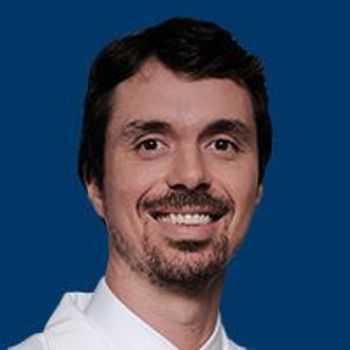
Pedro C. Barata, MD, MSc, discusses the importance of further exploring the facets of manipulating the microbiome to augment responses with immunotherapy in RCC, as well as the promise of the bifidogenic live bacterial product, CBM588.
Maxine Sun, PhD, MPH, discusses ongoing research efforts dedicated to examining the relationship between clonal hematopoiesis and cardiovascular disease in patients with renal cell carcinoma.

The FDA has granted fast track designation IVS-3001 for use as a potential therapeutic option in patients with renal cell carcinoma.
Ulka Nitin Vaishampayan, MBBS, discusses toxicities associated with various treatment options for patients with renal cell carcinoma.

Pedro Barata, MD, MSc, discusses the relationship between the gut microbiome and treatment with immunotherapy in patients with renal cell carcinoma.
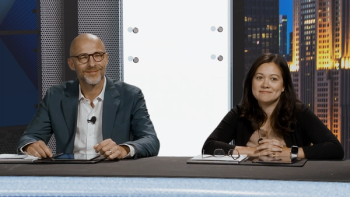
Shared insight on the evolving state of renal cell carcinoma management and hope for future growth in the treatment landscape.
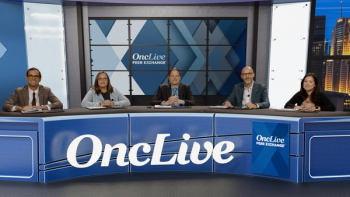
Focusing their discussion on a real-world patient scenario, expert panelists discuss treatment options in the setting of advanced non-clear cell renal cell carcinoma.
Brian I. Rini, MD, FASCO, highlights key clinical trial updates from the genitourinary cancers landscape presented at the 2023 ASCO Annual Meeting, details the implications of the CONTACT-03 data, expands on the long-term data from the phase 3 KEYNOTE-426 trial in clear cell RCC, discusses findings from the phase 3 TALAPRO-2 trial in patients with metastatic castration-resistant prostate cancer, and more.
Sabina Signoretti, MD, discusses research into the development of novel spatial biomarkers in renal cell carcinoma utilizing tissue-based in situ analyses.
Raquibul Hannan, MD, PhD, discusses the advantages of stereotactic radiation in primary or locally advanced renal cell carcinoma.
Yasser Mohamed Ali Ged, MBBS, discusses the background of launching the phase 2 ORCHID trial evaluating olaparib monotherapy in patients with metastatic renal cell carcinoma harboring BAP1 or other DNA repair gene mutations.
Tian Zhang, MD, MHS, discusses whether the use of RNA sequencing to identify biologic cluster assignment could improve first-line treatment selection in metastatic renal cell carcinoma.
Advertisement
Advertisement
Trending on OncLive
1
Savolitinib Plus Osimertinib NDA Submitted to FDA for MET-Driven, EGFR-Mutated NSCLC After EGFR TKI
2
FDA Grants Priority Review to Elinzanetant for Endocrine Therapy–Associated Vasomotor Symptoms in HR+ Breast Cancer
3
Calculating the Real Cost of False Positive Findings in Cancer Screening
4
China's NMPA Approves Pirtobrutinib Across CLL
5