




Genitourinary Cancers
Latest News
Advertisement
Latest Videos

























































Advertisement
More News

A panel of experts on bladder cancer provide an overview of the stratification, natural history, and treatment of bladder cancer.

Michael Hurwitz, MD, PhD, discusses the ongoing investigation into the use of CAR T-cell therapies in patients with solid tumors, such as kidney cancers.
Arpita Desai, MD, discusses the impact that the findings from the phase 3 CONTACT-03 trial had in patients with metastatic renal cell carcinoma.
Qian (Janie) Qin, MD, discusses upcoming areas of interest in the renal cell carcinoma armamentarium.

Renowned oncologists discuss critical factors influencing their decisions for frontline therapy in metastatic renal cell carcinoma (RCC), including risk assessment, sites of metastasis, performance status, and treatment goals.
A comprehensive discussion on VEGF-TKI-based combinations and immune checkpoint inhibitor combinations in the treatment of renal cell carcinoma, featuring key clinical trial results and treatment strategies.
Manojkumar Bupathi, MD, MS, discusses treating patients with renal cell carcinoma in community vs academic settings.

Pedro Barata, MD, MSc, discusses the biggest clinical trial updates to emerge for the treatment of patients with advanced renal cell carcinoma from the 2023 International Kidney Cancer Symposium.
Benjamin Garmezy, MD, discusses the treatment of patients with cancer in the community care setting, highlighting the need to include those from this population in enrollment to clinical trials.
Tian Zhang, MD, MHS, discusses the evolution of the use of belzutifan in renal cell carcinoma, highlighting which key oncologists have been involved in this research.
Alan Tan, MD, discusses the ongoing potential utility of circulating tumor DNA in patients with renal cell carcinoma and highlights how this approach is being used in his own practice.
Expert panelists review the management of non-clear cell histology in renal cell carcinoma, exploring treatment options, clinical trials, and the potential role of immune checkpoint inhibitors.

Brett L. Ecker, MD, discusses the evaluation of the microbiome in pancreatic cancer, highlighting remaining questions and future steps for research.

Interrupting combination treatment with axitinib and avelumab and switching to avelumab maintenance after a response at 36 weeks led to a decrease in treatment-related toxicities and delayed tumor progression in previously untreated patients with metastatic clear cell renal cell carcinoma.
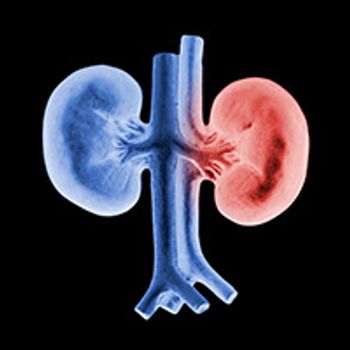
Volrustomig demonstrated efficacy when used as frontline treatment in patients with clear cell renal cell carcinoma with a toxicity profile that is consistent with dual checkpoint inhibition.
Key opinion leaders discuss the use of brain MRI and bone assessment in the staging and monitoring of patients with renal cell carcinoma.
Renowned oncologists discuss the case of a 75-year-old man with advanced renal cell carcinoma, providing insights into evaluation and frontline therapy choices.

Although not immediately practice changing, CAR T-cell therapy has the potential to become a standard of care for patients with advanced renal cell carcinoma following progression on checkpoint inhibitors and VEGF inhibitors.

Additional research exploring the association between clonal hematopoiesis and cardiovascular health could help improve outcomes for patients with kidney cancer and identify those at higher risk for experiencing cardiac events.

Further understanding of the cancer immunity cycle could drive the development of novel immune therapies for patients with renal cell carcinoma.

Decisions regarding the intensification or de-escalation of treatment, particularly with immunotherapy and TKIs, for patients with renal cell carcinoma could be aided by circulating tumor DNA.
Brian H. Ramnaraign, MD, discusses findings from a single-institution review of the incidence of immunotherapy-related toxicities in older patients with kidney cancer.
Alan Tan, MD, discusses the ongoing investigation and potential utility of circulating tumor DNA in patients with renal cell carcinoma.

Administration of the hypoxia-inducible factor–2α inhibitor belzutifan (Welireg) at the recommended phase 2 dose of 120 mg daily produced comparable toxicities and efficacy outcomes to that of a daily 200-mg dose of the agent in patients with advanced clear cell renal cell carcinoma.
Yousef Zakharia, MD, discusses the real-world treatment outcomes of first-line axitinib plus pembrolizumab in patients with advanced renal cell carcinoma based on International Metastatic RCC Database Consortium risk score.
Advertisement
Advertisement
Trending on OncLive
1
Savolitinib Plus Osimertinib NDA Submitted to FDA for MET-Driven, EGFR-Mutated NSCLC After EGFR TKI
2
FDA Grants Priority Review to Elinzanetant for Endocrine Therapy–Associated Vasomotor Symptoms in HR+ Breast Cancer
3
Calculating the Real Cost of False Positive Findings in Cancer Screening
4
China's NMPA Approves Pirtobrutinib Across CLL
5