




Genitourinary Cancers
Latest News
Advertisement
Latest Videos
































































Advertisement
More News

Dr Spiess talks about taking part in an international consortium that seeks to establish a standard treatment for penile cancer, the ways shame interferes with diagnosis and treatment, and the complicated issues of gender and sexuality involved with this disease.
Eric Jonasch, MD, discusses the investigation of belzutifan (Welireg) in clear cell renal cell carcinoma.

Among men in the United States, incidence-based mortality is growing for penile cancer even though incidence remained consistent from 2000 to 2018.

Batiraxcept will continue to be investigated in combination with cabozantinib, plus in combination with cabozantinib and nivolumab and as a single agent, in patients with advanced or metastatic clear cell renal cell carcinoma in a phase 2 study.

Tian Zhang, MD, discusses the benefits of multidisciplinary collaboration, how to select the best agents for each patient, and how treatments such as radiation in RCC and bladder-sparing chemoradiation in urothelial cancer fit into the overall treatment paradigms for these diseases.

Drs Alter and Diamond muse about the unmet needs in advanced RCC treatment.
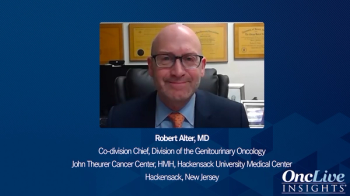
A discussion on the role of the cabozantinib and nivolumab regimen in the treatment of advanced RCC.

A panel of kidney cancer experts discuss how therapeutic strategies in the neoadjuvant and adjuvant settings are affecting outcomes and how treatment selection in the first line has shifted approaches in the second and later lines of therapy.
Robert Alter, MD, presents the patient profile of a 56-year-old man with clear cell renal cell carcinoma presenting with hip and leg pain.
Dr Lee highlights treatment developments in non–clear cell renal cell carcinoma, emphasizes the need for precise classification of the histologic subsets of this disease, and discusses the investigation of cabozantinib plus nivolumab across stratified cohorts of non–clear cell renal cell carcinoma.
Elan Diamond, MD, describes when and how often community oncologists refer patients with suspected advanced renal cell carcinoma to his practice.
New treatment strategies with immunotherapeutic agents are challenging standards of care and prolonging survival in first and later lines of metastatic urothelial carcinoma, metastatic renal cell carcinoma, and metastatic castration-resistant prostate cancer.
Mehmet A. Bilen, MD, and a panel of renal cell carcinoma experts discuss the preferred treatment options for patients with intermediate-risk or high-risk advanced renal cell carcinoma and the clinical features that may influence their decisions.
Oncologists review the IO/IO combination regimens available for treatment of advanced RCC and discuss patient selection for treatment with nivolumab and ipilimumab.
Dr Elan Diamond presents the patient profile of a 70-year-old man with stage IV clear cell renal cell carcinoma.
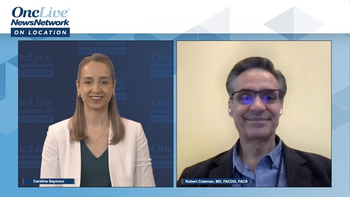
OncLive® will be LIVE with OncLive® News Network: On Location at the 2022 ASCO Annual Meeting. Each day, we will broadcast a series of interviews with top thought leaders, to learn their thoughts and reactions to data presented across oncology during the conference.
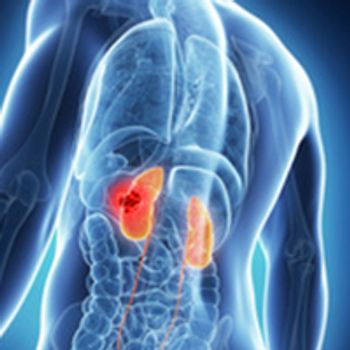
Patients with advanced renal cell carcinoma who received lenvatinib plus pembrolizumab experienced a longer time to progression on next line of therapy compared with those who received sunitinib.

Adjuvant everolimus significantly improved recurrence-free survival when compared with placebo in patients with very high-risk renal cell carcinoma.
Experts discuss how they sequence I/O–TKI treatments for advanced renal cell carcinoma.
Elan Diamond, MD, explains toxicities commonly seen with I/O–TKI combination regimens, how to manage them, and how to discuss toxicities with patients with advanced renal cell carcinoma.
For the 10th consecutive year, OncLive® is honored to recognize oncology leaders whose innovations have contributed to immeasurable improvements in outcomes for countless patients.

Chung-Han Lee, MD, PhD, explains the historical barriers to treatment developments in non-clear cell renal cell carcinoma; highlights the efficacy of cabozantinib plus nivolumab in patients with unclassified, translocation, papillary, and fumarate hydratase–deficient non-clear cell renal cell carcinoma; and elaborates on the need for increased molecular classification of the histologic subsets of non-clear cell renal cell carcinoma.

Ulka Nitin Vaishampayan, MBBS, discusses the rationale of the phase 3 PROBE trial in advanced renal cell carcinoma.
Sia Daneshmand MD, discusses emerging treatments in bladder cancer.
A review of the first-line I/O-TKI combination regimens available for advanced RCC and selecting the right patients and dose for treatment with lenvatinib and pembrolizumab.
Advertisement
Advertisement
Trending on OncLive
1
Savolitinib Plus Osimertinib NDA Submitted to FDA for MET-Driven, EGFR-Mutated NSCLC After EGFR TKI
2
FDA Grants Priority Review to Elinzanetant for Endocrine Therapy–Associated Vasomotor Symptoms in HR+ Breast Cancer
3
Calculating the Real Cost of False Positive Findings in Cancer Screening
4
China's NMPA Approves Pirtobrutinib Across CLL
5