




Genitourinary Cancers
Latest News
Advertisement
Latest Videos



































































Advertisement
More News

Dr Barata comments on sequencing therapies in the second line and beyond in patients with advanced RCC.

Moshe Ornstein, MD, MA, discusses unmet needs in metastatic renal cell carcinoma.

Mark T. Fleming, MD, discusses the phase 3 KEYNOTE-426 trial in advanced or metastatic renal cell carcinoma.

Dr Pal walks us through research presented at the 2022 Genitourinary Cancers Symposium, including data from the TIVO-3 trial (NCT02627963) and findings from the NeoAvAx trial (NCT03341845) exploring avelumab plus axitinib for patients with high-risk, nonmetastatic clear-cell renal cell carcinoma.
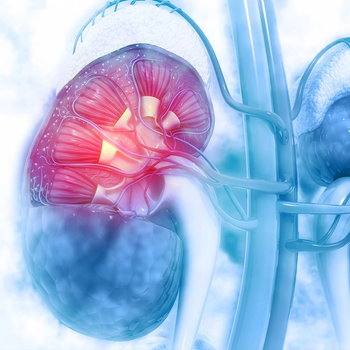
Neoadjuvant axitinib facilitated partial nephrectomy in patients with clear cell renal cell carcinoma and complex masses with an imperative indication for nephron-sparing surgery but no viable pathway to receive the procedure.

Philippe E. Spiess, MD, MS, FACS, shares key updates in the management of patients with penile cancer.

Ulka Nitin Vaishampayan, MBBS, discusses the design of the phase 3 PROBE trial in advanced renal cell carcinoma.

The combination of cabozantinib plus nivolumab demonstrated promising objective response rates in patients with non–clear cell renal cell carcinoma with prominent papillary features.
Drs Zhang and Ornstein discuss regimens for advanced clear-cell RCC in the second-line setting and beyond, focusing on the METEOR, CABOSEQ,TIVO-3 CHeckMate 025, and AXIS trials.
Dr Ornstein describes how the choice of neoadjuvant therapy can impact subsequent treatment selection in advanced RCC.
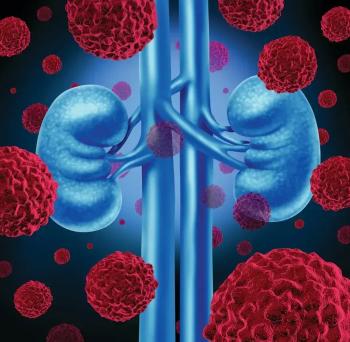
The investigational RNA interference therapy, ARO-HIF2, reduced levels of hypoxia inducible factor-2 alpha expression and had acceptable tolerability when used in patients with clear cell renal cell carcinoma, according to data from the phase 1b AROHIF21001 trial.

Drs Sumeet Bhatia and Eric Jonasch highlight unmet needs in advanced renal cell carcinoma and share clinical pearls.

A discussion on the use of cabozantinib-nivolumab for the treatment of advanced renal cell carcinoma.
Dr Shawnta Anakwah presents the patient profile of a 72-year-old man with advanced renal cell carcinoma presenting with hematuria.
Pedro Barata, MD, MSc, provides a brief overview of ongoing trials in the neoadjuvant setting in patients with RCC.
Dr Bilen reviews some ongoing trials looking into monotherapy and combination therapies in the adjuvant setting in RCC.
Key opinion leaders discuss the common adverse events seen with IO/IO combination regimens and how to treat patients with brain metastases.
A review of the first-line IO/IO combination regimens available for advanced RCC.
David Braun, MD, touches on how the choice of adjuvant therapy can impact subsequent treatment selection in advanced RCC.
Dr Zhang discusses recently approved adjuvant systemic therapy for patients with RCC who have a high risk of recurrence after nephrectomy.

The IL-2 variant immunotherapy nemvaleukin alfa elicited responses and demonstrated safety as a single agent and in combination with pembrolizumab in patients with advanced renal cell carcinoma.

Looking toward the future management of renal cell carcinoma, experts consider treatment strategies for bone metastasis, brain metastasis, and VHL disease.
A brief review of the clinical rationale behind therapeutic regimens used for patients with non-clear cell carcinoma.

Ulka Nitin Vaishampayan, MBBS, discusses the intent of the PROBE trial, as well as updates regarding the KEYNOTE-564 trial and novel agents in kidney cancer treatment.
Mehmet A. Bilen, MD, explains how triplet regiments might impact treatment selection for first line and beyond.
Advertisement
Advertisement
Trending on OncLive
1
Savolitinib Plus Osimertinib NDA Submitted to FDA for MET-Driven, EGFR-Mutated NSCLC After EGFR TKI
2
FDA Grants Priority Review to Elinzanetant for Endocrine Therapy–Associated Vasomotor Symptoms in HR+ Breast Cancer
3
Calculating the Real Cost of False Positive Findings in Cancer Screening
4
China's NMPA Approves Pirtobrutinib Across CLL
5