




Genitourinary Cancers
Latest News
Advertisement
Latest Videos

































































Advertisement
More News

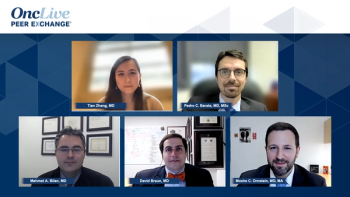
Focusing on immunotherapy in the setting of intermediate- and poor-risk renal cell carcinoma, panelists review toxicity management and duration of response.
Experts review a clinical scenario of intermediate- and poor-risk renal cell carcinoma that is managed with ipilimumab-nivolumab and nivolumab maintenance.
Mehmet A. Bilen, MD, discusses the CLEAR trial that looked at lenvatinib with pembrolizumab as first-line therapy for RCC.
Tian Zhang, MD, provides an overview of renal cell carcinoma (RCC).

Primo Nery Lara Jr, MD, provides an overview of the treatment landscape for patients with metastatic renal cell carcinoma.

Roberto Iacovelli, MD, PhD, discusses the potential next steps of the phase 2 ARIES trial in urothelial cancer.

Allarity Therapeutics, Inc. has filed a formal request with the FDA to hold a Type C meeting where they can discuss possible clinical paths to support the approval of dovitinib in renal cell carcinoma, as well as its DRP-Dovitinib companion diagnostic.

Sumeet Bhatia, MD, presents the patient profile of a 47-year-old male patient with advanced renal cell carcinoma.
Two key opinion leaders review data from a phase 3 clinical trial assessing the use of lenvatinib plus pembrolizumab for the treatment of advanced renal cell carcinoma.

Rana R. McKay, MD, discusses findings from a real-world study on genomic alterations of metastases in renal cell carcinoma, the rationale of the phase 3 COSMIC-313 trial in patients with previously untreated advanced or metastatic RCC, plus findings from the phase 1/2 COMRADE trial in patients with metastatic castration-resistant prostate cancer.
Two oncologists describe common adverse events seen with I/O–TKI combination treatment regimens for advanced renal cell carcinoma and when they choose to stop the therapy.
Dr Eric Jonasch discusses why he chose to treat his patient’s advanced renal cell carcinoma with lenvatinib-pembrolizumab and how he modifies the dosage throughout treatment.

Toni Choueiri, MD, discusses the design of the phase 3 KEYNOTE-564 trial in renal cell carcinoma.

A clinical algorithm-based approach that was developed to improve fractional polynomial model selection utilized additional criteria based on face validity, predictive accuracy, and expert opinion, which improved the plausibility of survival outcomes in patients with renal cell carcinoma.
Sumeet Bhatia, MD, explains the factors he considers in choosing a treatment for advanced renal cell carcinoma and the role biomarkers have in the process.
Eric Jonasch, MD, presents a real world advanced renal cell carcinoma patient profile and reviews the available first-line IO-TKI combination treatment regimens.

A real-world analysis showed that patients with advanced renal cell carcinoma in the United States who received the combination of axitinib and pembrolizumab derived similar efficacy with the regimen as those who had received it in randomized clinical trials.

The FDA approvals of immunotherapy-based combinations as frontline therapy led to a substantial increase in their use in patients with metastatic renal cell carcinoma in the community setting, leading to a greater use of TKI monotherapy as second- and third-line therapies.

The combination of nivolumab and ipilimumab led to superior quality of life compared with sunitinib in the frontline setting of patients with advanced renal cell carcinoma, according to results of a 5-year analysis from the CheckMate 214 trial.
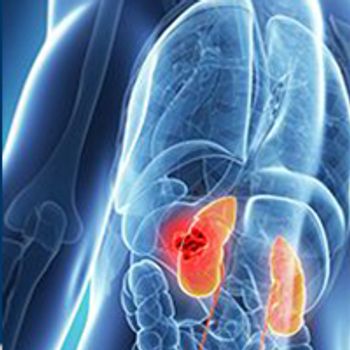
The combinations of nivolumab plus ipilimumab and pembrolizumab plus axitinib demonstrated comparable activity and safety as frontline treatment in patients with metastatic renal cell carcinoma and a performance status of 2 or greater, according to findings from a retrospective study.

OncLive® speaks with Drs. Toni Choueiri and Peter Van Veldhuizen on the latest studies in renal cell carcinoma that were presented during the 2022 Genitourinary Cancers Symposium.

The utilization of mitotane in the adjuvant setting did not produce significant benefit for patients with adrenocortical carcinoma at low or intermediate risk of recurrence.
Atezolizumab with or without radiotherapy did not demonstrate efficacy in patients with advanced squamous cell carcinoma of the penis.
Adjuvant pembrolizumab continued to demonstrate improved disease-free survival placebo in patients with renal cell carcinoma who are at high risk of recurrence.

The addition of the PD-L1 inhibitor avelumab to the TKI axitinib generated promising efficacy as a neoadjuvant therapy in patients with high-risk, non-metastatic clear-cell renal cell carcinoma.
Advertisement
Advertisement
Trending on OncLive
1
Savolitinib Plus Osimertinib NDA Submitted to FDA for MET-Driven, EGFR-Mutated NSCLC After EGFR TKI
2
FDA Grants Priority Review to Elinzanetant for Endocrine Therapy–Associated Vasomotor Symptoms in HR+ Breast Cancer
3
Calculating the Real Cost of False Positive Findings in Cancer Screening
4
China's NMPA Approves Pirtobrutinib Across CLL
5