

Hematologic Oncology
Latest News

Advertisement
Latest Videos














































Advertisement
More News
The combination of clofarabine, cyclophosphamide, and etoposide reached an overall response rate of 41% in a small study of children and adolescents with relapsed/refractory acute myeloid leukemia.
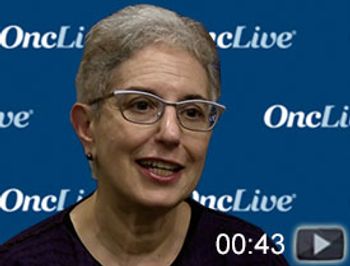
Jane N. Winter, MD, professor of medicine, Feinberg School of Medicine, Northwestern University, discusses checkpoint inhibitors for Hodgkin lymphoma.
Higher-dose, once-weekly carfilzomib (Kyprolis) demonstrated superior efficacy for patients with relapsed/refractory multiple myeloma compared with a lower-dose, twice-weekly regimen.
Reem Karmali, MD, discusses ongoing key trials of CAR T-cell therapy, the chronic safety concerns with the treatment, and what combinations have the most potential.
Reem Karmali, MD, assistant professor of medicine (hematology and oncology), Feinberg School of Medicine, Northwestern University, discusses the toxicities associated with the use of chimeric antigen receptor (CAR) T-cell therapies.
Andre Goy, MD, discusses the recent success with CAR T-cell therapy, and what is on the horizon for this therapeutic option across hematologic malignancies.

Maintenance rituximab (Rituxan) following autologous stem-cell transplantation improved survival in younger patients with mantle cell lymphoma, according to the LyMa trial.

The FDA has approved the CD19-directed CAR T-cell therapy axicabtagene ciloleucel as a treatment for adults with relapsed or refractory non-Hodgkin lymphoma.
David G. Maloney, MD, PhD, member of the Clinical Research Division, Fred Hutchinson Cancer Research Center, Washington, discusses excitement with CAR T-cell therapy.
Bijal D. Shah, MD, medical oncologist, Moffitt Cancer Center, discusses autologous stem cell transplant (ASCT) in mantle cell lymphoma (MCL).
Guy Young, MD, director, Hemostasis and Thrombosis Program, attending physician, Hematology, Oncology and Blood and Marrow Transplantation, Children’s Hospital Los Angeles, USC, discusses using anticoagulants in children with cancer.
Farrukh Awan, MD, discusses novel agents and combinations in CLL, as well as the critical importance of FISH and IGHV testing for patient selection in this population.
Jonathan Brammer, MD, discusses exciting therapeutic developments for patients with T-cell lymphoma.
Christian Winther Eskelund, MD, Copenhagen University Hospital, Rigshospitalet, discusses outcomes for patients with TP53-mutated mantle cell lymphoma (MCL).
Treatment with copanlisib led to a median progression-free survival of 11.2 months and objective response rate of 59.2% in patients with relapsed/refractory indolent lymphoma.
William G. Wierda, MD, PhD, medical director of the Leukemia Center at The University of Texas MD Anderson Cancer Center, discusses the need for newer therapies in the treatment of chronic lymphocytic leukemia.
Thomas W. LeBlanc, MD, MA, medical oncologist, palliative care physician, Duke Cancer Institute, gives advice on incorporating palliative care in the treatment of hematologic malignancies.
The FDA has granted Fast Track designation to gilteritinib for adult patients with FLT3 mutation-positive relapsed/refractory acute myeloid leukemia (AML).
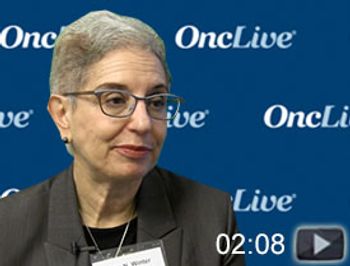
Jane N. Winter, MD, professor of medicine, Division of Hematology/Oncology, Northwestern University, discusses the promise of chimeric antigen receptor (CAR) T-cell therapy in hematologic malignancies.
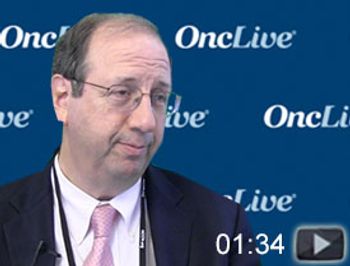
Richard M. Stone, MD, director of the Adult Leukemia Program, Dana-Farber Cancer Institute, and professor of medicine, Harvard Medical School, discusses monitoring minimal residual disease in acute myeloid leukemia.
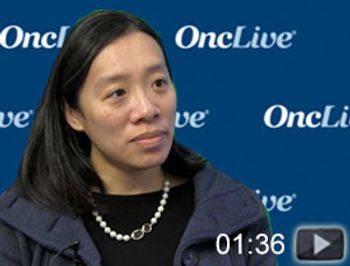
Sandy Wong, MD, assistant professor, Division of Hematology/Oncology, UCSF School of Medicine, discusses monoclonal antibodies in plasma cell neoplasms.
The National Comprehensive Cancer Network guidelines for the management of polycythemia vera and essential thrombocythemia have been updated to create a more uniform system of management for healthcare providers to follow in clinical practice.
Natalie S. Callander, MD, professor of medicine at the Division of Hematology/Oncology, University of Wisconsin Carbone Cancer Center, discusses treatment considerations in relapsed and refractory multiple myeloma.

Multivariate analysis of the Nordic MCL2 and MCL3 trials showed that the presence of TP53 mutations predicted worse overall survival in younger patients with mantle cell lymphoma.
Defined composition CAR T cells directed against CD19 have potent anti-tumor activity in B cell malignancies, including acute lymphocytic leukemia.
Advertisement
Advertisement
Trending on OncLive
1
FDA Accepts NDA for Daraxonrasib in Previously Treated Metastatic Pancreatic Cancer
2
Dr Pant on the Potential Significance of Daraxonrasib for PDAC Management
3
Teclistamab Plus Talquetamab Yields Significant Survival Benefits in Earlier-Line R/R Myeloma
4
European Commission Approves Camizestrant Plus CDK4/6 Inhibition for Emergent ESR1-Mutated Advanced Breast Cancer
5