





Hematologic Oncology
Latest News
Advertisement
Latest Videos






















































Advertisement
More News
Although it is not considered to be a standard of care for patients with indolent non-Hodgkin lymphoma, very low dose radiation therapy was found to have efficacy in the palliative setting and to allow for retreatment to the same field when needed.
The combination of ceralasertib and acalabrutinib showed preliminary clinical activity with acceptable tolerability in patients with high-risk, relapsed/refractory chronic lymphocytic leukemia.
Considerations for novel treatment approaches with approved agents in combination or the frontline setting of chronic graft-vs-host disease.
Shared insight on how best to select ibrutinib, belumosudil, or ruxolitinib for patients with steroid-refractory chronic graft-vs-host disease.
Dr Jabbour discusses updates from the 2021 ASH Annual Meeting and Exposition in chronic myeloid leukemia, including findings from the phase 3 ASCEMBL trial evaluating asciminib vs bosutinib and data with ponatinib from a post-hoc analysis of the phase 2 OPTIC trial.

Patients with relapsed/refractory acute lymphoblastic leukemia who underwent matched sibling donor transplants had a significantly higher overall survival at 2 years compared with those who underwent haploidentical stem cell transplant.
Itolizumab decreased levels of cell surface CD6 and increased soluble CD6 in serum in patients with acute graft-vs-host-disease.
Usman Ali Akbar, MD, discusses the systematic review of the efficacy of monoclonal antibodies in adult patients with relapsed/refractory acute lymphoblastic leukemia.

Muhammad Bilal Abid, MD, MRCP, discusses the impact of adaptive lymphodepletion in patients with relapsed/refractory B-cell non-Hodgkin’s lymphoma who received CAR T-cell therapy.

Saurabh Dahiya, MBBS, discusses real-world data observed from a long-term follow-up of axicabtagene ciloleucel in large B-cell lymphoma.
Myeloablative transplantation with a total body irradiation regimen followed by a graft-versus-host disease prophylaxis regimen led to a low occurrence of GVHD in adult and pediatric patients with hematologic malignancies.
Topical ruxolitinib has shown improved reduction of body surface area of cutaneous chronic graft-vs-host disease vs standard moisturizer vehicle cream, according to interim study results from a poster presented at the 2022 Transplantation & Cellular Therapy Meetings.
CAR T-cell Therapy Demonstrates Efficacy Without Increased Risk of CRS or ICANS in CNS-Involved LBCL
The CAR T-cell therapies axicabtagene ciloleucel, tisagenlecleucel, and lisocabtagene maraleucel evoked responses without increased risk of cytokine release syndrome or immune effector cell–associated neurotoxicity syndrome in patients with primary or secondary central nervous system large B-cell lymphoma.

Axicabtagene ciloleucel continued to elicit high response rates and durable activity in patients with relapsed/refractory follicular lymphoma and marginal zone lymphoma, according to updated findings from the phase 2 ZUMA-5 trial.
Mazyar Shadman, MD, MPH, discusses the efficacy of MB-106, a CD20-targeted CAR T-cell therapy in relapsed/refractory B-cell non-Hodgkin lymphoma and chronic lymphocytic leukemia.
Closing out his summation of ruxolitinib in chronic GVHD, Yi-Bin Chen, MD, considers how real-world use compares with the REACH3 trial results.
Comprehensive insight on the design and results of REACH3, which analyzed ruxolitinib as second-line therapy for chronic graft-vs-host disease.

In a 16 to 0 vote, with 1 abstention, the FDA’s Oncologic Drugs Advisory Committee voted in support of basing future approvals for PI3K inhibitors on randomized data instead of single-arm clinical trials.

The FDA has granted a fast track designation to the CAR T-cell therapy ADI-001 for the treatment of patients with relapsed/refractory B-cell non-Hodgkin lymphoma.
The pending biologics license application and supplemental new drug application seeking the approval of the combination of ublituximab and umbralisib in adult patients with chronic lymphocytic leukemia (CLL) and small lymphocytic lymphoma has been voluntarily withdrawn by TG Therapeutics, Inc.
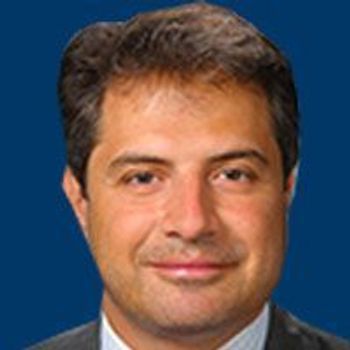
Elias J. Jabbour, MD, and Matthew S. Davids, MD, MMSc, review data on asciminib and ponatinib in the post–second generation TKI setting for chronic myeloid leukemia that were presented at the 2021 ASH Meeting and Exposition.

Dan Pollyea, MD, MS, discusses the current role of maintenance therapy in patients with acute myeloid leukemia who are unfit for intensive chemotherapy.

Hetty Carraway, MD, discusses important considerations for the future of acute myeloid leukemia regarding mutations and next-generation sequencing.
Gustavo Rivero, MD, discusses evolving therapies for patients with acute myeloid leukemia with monocytic differentiation.

The FDA has placed a partial clinical hold on the open-label, dose-escalating phase 1/2 TakeAim Lymphoma study investigating the safety and efficacy of emavusertib in patients with relapsed or refractory B-cell malignancies.
Advertisement
Advertisement
Trending on OncLive
1
FDA Approves Zidesamtinib in Pretreated ROS1+ NSCLC
2
Ivonescimab Plus Chemotherapy Sustains OS Benefit Across Western and Asian Patients in Pretreated EGFR-Mutated NSCLC
3
Sacituzumab Govitecan Yields Responses in Platinum-Resistant Ovarian Cancer
4
How Are Treatment Intensification and Sequencing Reshaping Care in Prostate Cancer and RCC
5