


Hematologic Oncology
Latest News
Advertisement
Latest Videos



















































Advertisement
More News
Experts discuss lack of consensus in diagnosis of ITP and challenges physicians face.
ITP experts share considerations in the treatment of pregnant patients with ITP.
Aaron T. Gerds, MD, MS, discusses the use of TKIs, targeted agents, JAK inhibitors, and cellular therapy in hematologic malignancies.
An overview of the general toxicities patients may experience while undergoing therapy for chronic myeloid leukemia.

A brief review of asciminib’s toxicity profile and how to best manage adverse events in patients with chronic myeloid leukemia.
Michael Wang, MD, discusses the evolution of ibrutinib in the treatment landscape of mantle cell lymphoma.
Following the ASH 2021 annual meeting, expert hematologist/oncologists discuss updates in chronic lymphocytic leukemia.
Ola Landgren, MD, PhD, and Joshua Richter, MD, review belantamab mafodotin–based combination regimens currently being evaluated in relapsed/refractory multiple myeloma, as well as the newly diagnosed setting, as presented at the recent ASH 2021 meeting.
Panelists use an illustrative clinical case to comprehensively discuss the selection and sequencing of therapies for patients with follicular lymphoma.
A review of the role of PI3K inhibitors in the treatment of follicular lymphoma, and how they have been used to improve patient outcomes.
We had the pleasure of speaking with faculty from an OncLive® Institutional Perspectives in Cancer webinar on hematologic malignancies, hosted in partnership with Cleveland Clinic, to discuss current practice patterns and emerging therapies in chronic myeloid leukemia, chronic lymphocytic leukemia, myelofibrosis, and acute lymphoblastic leukemia.
Andrew M. Evens, DO, MSc, discusses the design of a retrospective analysis evaluating in relapsed/refractory classic Hodgkin lymphoma.
Dr Maziarz provides an overview of adverse events with CAR T-cell therapies and approaches to managing toxicities.
Panelists discuss data with CAR T-cell therapies in treatment of relapsed and refractory DLBCL.
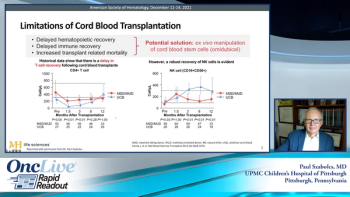
Expert hematologist/oncologist Paul Szabolcs, MD, reviews positive data from a clinical trial comparing hematopoietic stem cell transplantation and omidubicel with standard cord blood transplantation.
Drs Bussel, Piatek and Kessler discuss treatment of older patients with ITP.

Dr Bussel discusses the use of fostamatinib in patients who have progressed on TPO agents.
Treatment with rituximab prior to COVID-19 vaccination nearly halved the number of patients with B-cell non-Hodgkin lymphoma who developed blocking antibodies following COVID-19 vaccination compared with healthy controls.
Experts share their personal experience with asciminib as later-line therapy for patients with chronic myeloid leukemia.
Shared insight on asciminib’s role in chronic myeloid leukemia in light of available clinical data.
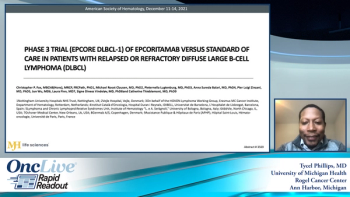
Tycel Phillips, MD, discusses a phase 1/2 trial combining subcutaneous epcoritamab with rituximab and lenalidomide in patients with relapsed or refractory follicular lymphoma, as presented at the 63rd ASH Annual Meeting in 2021.
Shared insight on updates in the chronic myeloid leukemia treatment landscape following the ASH 2021 annual meeting.

The FDA has announced that they are investigating umbralisib (Ukoniq), an oral inhibitor of PI3K-delta and CK1-epsilon that is approved to treat patients with marginal zone lymphoma and follicular lymphoma, after initial data from the phase 3 UNITY-CLL trial revealed a potential increased risk of death in those who received the agent.
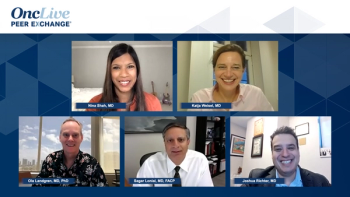
Experts in hematology-oncology review the case of a 59-year-old woman with relapsed/refractory multiple myeloma and discuss their thoughts on the given treatment approach.
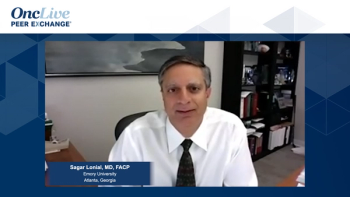
Sagar Lonial, MD; Joshua Richter, MD; and Ola Landgren, MD, PhD, comment on the selection of the appropriate treatment regimen at first relapse, including CD38-based, non-CD38–based and non-PI–based treatment regimens for multiple myeloma, and discuss their approach to assessing treatment response.
Advertisement
Advertisement
Trending on OncLive
1
FDA Approves Zidesamtinib in Pretreated ROS1+ NSCLC
2
Ivonescimab Plus Chemotherapy Sustains OS Benefit Across Western and Asian Patients in Pretreated EGFR-Mutated NSCLC
3
Sacituzumab Govitecan Yields Responses in Platinum-Resistant Ovarian Cancer
4
How Are Treatment Intensification and Sequencing Reshaping Care in Prostate Cancer and RCC
5