


Hematologic Oncology
Latest News

Advertisement
Latest Videos











































Advertisement
More News
Axicabtagene ciloleucel led to a 60% improvement in event-free survival compared with standard-of-care chemotherapy as second-line treatment for patients with relapsed/refractory large B-cell lymphoma.
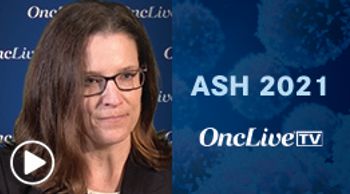
Noelle V. Frey, MD, MSCE, discusses the results of a study evaluating the utility of co-administered CART22-65s and huCART19 in relapsed/refractory acute lymphoblastic leukemia that were presented at the 2021 ASH Annual Meeting & Exposition.
Frederick Locke, MD, discusses the results of the phase 3 ZUMA-7 trial in patients with large B-cell lymphoma that were presented at the 2021 ASH Annual Meeting & Exposition.
OncLive® speaks with Dr. Nina Shah on some practice-changing multiple myeloma abstracts, and Dr. Jacqueline Barrientos on the latest in chronic lymphocytic leukemia.

Axicabtagene ciloleucel, an autologous anti-CD19 CAR T-cell therapy, resulted in clinically meaningful improvement in quality of life at day 100 compared with standard of care as a second-line treatment of patients with relapsed/refractory large B-cell lymphoma.
The addition of eryaspase to chemotherapy demonstrated biological efficacy and tolerability in patients with acute lymphoblastic leukemia who are at risk of developing hypersensitivity reactions to Escherichia coli–derived pegylated asparaginase.

Asciminib demonstrated a consistent improvement in major molecular response rate and depth of response vs bosutinib in patients with chronic-phase chronic myeloid leukemia without any new or worsening adverse effects.
Ibrutinib plus rituximab and mini-CHOP failed to demonstrate a statistically significant improvement in overall survival at 2 years but led to an improvement in progression-free survival, quality of life, and function in elderly patients with diffuse large B-cell lymphoma.
Ponatinib demonstrated high response rates in patients with TKI-resistant, chronic-phase chronic myeloid leukemia, irrespective of T315I mutation status at baseline, according to findings from the phase 2 OPTIC trial.
OncLive speaks with Dr. Loretta Nastoupil on some exciting non-Hodgkin lymphoma studies and Dr. Michael Pulsipher on some intriguing pediatric cancer research.
Mortality rates in patients with acute myeloid leukemia, acute lymphoblastic leukemia, and myelodysplastic syndrome who were diagnosed with COVID-19 were higher compared with non-cancer populations who were infected with the virus.

Treatment with ibrutinib plus loncastuximab tesirine-lpyl resulted in high objective and complete response rates and an acceptable safety profile in patients with relapsed/refractory diffuse large B-cell lymphoma, according to findings from an interim analysis of the phase 1/2 LOTIS-3 trial (NCT03684694) that were presented at the 2021 ASH Annual Meeting and Exposition.

An observational single-center study suggests that mRNA-1273 SARS CoV-2 vaccination induces a strong antibody response in patients with acute myeloid leukemia and myelodysplastic syndrome, according to observational results presented during the 2021 ASH Annual Meeting.
The addition of subcutaneous daratumumab to standard-of-care bortezomib, cyclophosphamide, and dexamethasone (D-VCd) continued to elicit stronger hematologic and organ responses vs VCd alone in patients with newly diagnosed light chain amyloidosis.
Parsaclisib demonstrated early and long-lasting responses in patients with BTK-naïve, relapsed/refractory marginal zone lymphoma, according to findings from the phase 2 CITADEL-204 trial.
Manali Kamdar, MD, discusses the results of the phase 3 TRANSFORM trial in relapsed/refractory large B-cell lymphoma (LBCL) that were presented during the 2021 ASH Annual Meeting & Exposition.
Orca-T significantly improved graft-vs-host disease–free relapse-free survival and time to engraftment, significantly reduced acute and chronic GVHD, and showed a trend toward improved overall survival vs standard of care in patients with serious hematologic malignancies
Dr. Coombs discusses research that will be presented at the upcoming 2021 ASH Annual Meeting and Exposition in chronic lymphocytic leukemia, including that with covalent and noncovalent BTK inhibitors, COVID-19 vaccinations, and time-limited combinations.
Not only is the 2021 ASH Annual Meeting bursting with more than 5000 abstracts unveiling pivotal data across a range of hematologic malignancies and disorders, but the conference will be held as a hybrid format after going fully virtual in 2020.

Steven L. Spitalnik, MD, discusses the goals for the Hemanext® blood storage system in patients with hematologic malignancies.
Richard R. Furman, MD, leads the discussion on clinical implications from head-to-head trials of BTK inhibitors in the relapsed setting for patients with CLL.
Nitin Jain, MD, and Richard R. Furman, MD, review available treatment options for the treatment of CLL and discuss the safety and tolerability of these therapies.

Tycel Jovelle Phillips, MD, and Alexey Danilov, MD, share insights on common signs and symptoms of marginal zone lymphoma and approaching initial therapy.

Dr Tycel Jovelle Phillips reviews key ongoing trials in relapsed/refractory follicular lymphoma.
The FDA has granted priority review to the supplemental biologics license application for luspatercept-aamt for the treatment of anemia in adults with non–transfusion dependent β-thalassemia.
Advertisement
Advertisement
Trending on OncLive
1
FDA Approves Zidesamtinib in Pretreated ROS1+ NSCLC
2
Ivonescimab Plus Chemotherapy Sustains OS Benefit Across Western and Asian Patients in Pretreated EGFR-Mutated NSCLC
3
Sacituzumab Govitecan Yields Responses in Platinum-Resistant Ovarian Cancer
4
How Are Treatment Intensification and Sequencing Reshaping Care in Prostate Cancer and RCC
5