
Hematologic Oncology
Latest News
Advertisement
Latest Videos



















































Advertisement
More News
The first-in-class small molecule HIF-PHI inhibitor roxadustat demonstrated promising efficacy with favorable tolerability when used in the treatment of chemotherapy-induced anemia in patients with non-myeloid malignancies, meeting the primary end point of the phase 2 WHITNEY trial.

The FDA has granted priority review to a new drug application seeking the approval of asciminib for the treatment of patients with chronic myeloid leukemia.
Fixed-duration treatment with mosunetuzumab elicited encouraging responses with acceptable safety when used in patients with multiply relapsed follicular lymphoma.

A new era for patients with newly diagnosed Philadelphia chromosomepositive acute lymphoblastic leukemia may be on the horizon as investigative efforts aimed away from chemotherapy-based regimens prove efficacious.
Ibrahim Aldoss, MD, and James K. McCloskey, MD, share thoughts on how to effectively sequence available treatment modalities for acute lymphocytic leukemia in various patient populations.
Drs Aldoss and McKloskey describe treatments that can be used in the salvage setting of acute lymphocytic leukemia, including CAR T-cell therapy.
Key opinion leaders look forward to upcoming improvements in the frontline management of chronic lymphocytic leukemia.
Experts reflect on core decisions inherent in selecting frontline therapy for patients with CLL, specifically regarding the use of BTK inhibitors, BCL2 inhibitors, anti-CD20 agents, and chemoimmunotherapy.
The FDA has granted a priority review designation to a supplemental biologics license application seeking the approval of abatacept for the prevention of moderate to severe acute graft-versus-host disease in patients aged 6 years and older who are receiving unrelated donor hematopoietic stem cell transplantation.
A panel of experts in lymphoma reflect on major data that came out of the ASCO 2021 Virtual Meeting.
Key opinion leaders in lymphoma take a look at challenges in treating B-cell lymphoma and where they see the things moving in the future.
David Rizzieri, MD, discusses treatment approaches for after relapse on CAR T cell therapy or for patients who are ineligible for CAR T therapy.

The ability to reflect and boldly choose a professional identity should be discussed, encouraged, and nurtured in every individual.
Peter G. Miller, MD, PhD, discusses the characteristics and risks associated with clonal hematopoiesis and risk-stratification efforts for patients with cancer who are at risk of developing therapy-related secondary malignancies from clonal hematopoiesis.
Updated outcomes from the ongoing phase 1/2 GO40554 trial show that mosunetuzumab monotherapy demonstrated promising efficacy and a tolerable safety for elderly/unfit patients with previously untreated first-line diffuse large B-cell lymphoma.
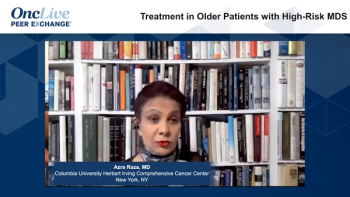
Azra Raza, MD, discusses considerations for use of hypomethylating agents in older patients with high-risk myelodysplastic syndrome.
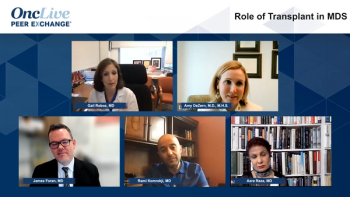
The panel of experts comment on the role of transplant in patients with myelodysplastic syndrome.
Mikkael A. Sekeres, MD, discusses his approach to treatment in patients with high-risk MDS incorporating efficacious clinical trial data.
Experts in the treatment of MDS discuss the clinical implications and treatment selection for patients with high-risk MDS.
The Role of Venetoclax for Treatment of AML
ByHarry P. Erba, MD, PhD, Duke University School of Medicine,Courtney DiNardo, MD, The University of Texas MD Anderson Cancer Center ,Mark Levis, MD, PhD, Johns Hopkins University School of Medicine ,Daniel Pollyea, MD, MS, University of Colorado Denver,Vinod Pullarkat, MD, City of Hope Medical Center
Renowned experts in hematology-oncology provide insight into the practical implications of treating acute myeloid leukemia with the current standard-of-care regimen using venetoclax.
Key opinion leader in the management of acute myeloid leukemia, Harry Erba, MD PhD, builds a conversation on the use of venetoclax as a part of combination therapy in patients with IDH mutations.

Alexey V. Danilov, MD, discusses the safety and efficacy achieved with the novel combination comprised of zandelisib and zanubrutinib in patients with relapsed/refractory B-cell malignancies.
Ibrahim Aldoss, MD and James K. McCloskey, MD describe treatment modalities that can be utilized in treating a pediatric or AYA patient with relapsed / refractory ALL.
Insights on how to approach an acute lymphocytic leukemia patient who is MRD positive after induction therapy.
Patricia Lugar, MD, MS, shares treatment algorithm and supportive care recommendations for a 75-year-old man with systemic mastocytosis.
Advertisement
Advertisement
Trending on OncLive
1
FDA Approves Zidesamtinib in Pretreated ROS1+ NSCLC
2
Ivonescimab Plus Chemotherapy Sustains OS Benefit Across Western and Asian Patients in Pretreated EGFR-Mutated NSCLC
3
Sacituzumab Govitecan Yields Responses in Platinum-Resistant Ovarian Cancer
4
How Are Treatment Intensification and Sequencing Reshaping Care in Prostate Cancer and RCC
5