


Hematologic Oncology
Latest News
Advertisement
Latest Videos






















































Advertisement
More News

The FDA has granted a breakthrough therapy designation to the combination of venetoclax plus azacitidine for use in the treatment of adult patients with previously untreated, intermediate-, high-, and very high–risk myelodysplastic syndromes based on the revised International Prognostic Scoring System.

The investigational therapy ficlatuzumab in combination with cytarabine demonstrated encouraging clinical efficacy with favorable tolerability when used as a treatment in patients with high-risk acute myeloid leukemia.
Tycel Jovelle Phillips, MD, of the University of Michigan, comments on his preferences for treating patients with relapsed/refractory diffuse large B-cell lymphoma (DLBCL) and shares his expectations for sequencing with newer, novel approaches emerging in the field.
Belumosudil induced clinically meaningful, durable responses in patients with chronic graft-versus-host-disease, irrespective of previous treatment received, severity of disease, and number of organs involved.
Recommendations for mitigating and managing common treatment-related adverse events associated with loncastuximab tesirine based on safety data from LOTIS-2 and variables that may impact patient candidacy.

Expert panelists review important disease-related and patient-related factors when considering bone marrow transplant in patients with primary myelofibrosis.
Dr. Jabbour discusses the optimal use of ponatinib in chronic myeloid leukemia and data from the 2021 ASCO Annual Meeting with the combination of blinatumomab and ponatinib in Ph-positive acute lymphoblastic leukemia.

Ruxolitinib continued to result in a significant improvement in overall response rate compared with best available therapy in patients with steroid-refractory/dependent chronic graft-vs-host disease, regardless of the individual organs involved at baseline.
David Rizzieri, MD, discusses new data from the ASCO 2021 Virtual Meeting regarding CNS lymphoma and treatment approaches in this setting.
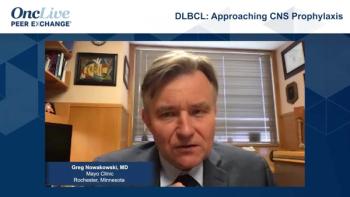
A panel of experts explain how they approach CNS prophylaxis in DLBCL.

Ehab L. Atallah, MD, discusses the clinical implications of the phase 3 QUAZAR AML-001 trial in acute myeloid leukemia.
This article discusses the current treatment landscape and therapeutic strategies for mantle cell lymphoma, the role of Bruton tyrosine kinase inhibitor therapies in MCL, and insights on new regimens and ongoing clinical trials from leading experts in hematologic malignancies.

The FDA has approved belumosudil for the treatment of adult and pediatric patients 12 years and older with chronic graft-versus-host disease following failure of at least 2 prior lines of systemic therapy.
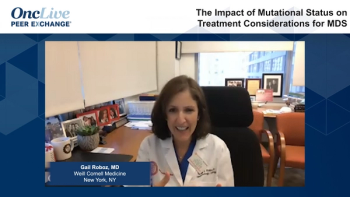
James Foran, MD; Azra Raza, MD; and Gail Roboz, MD, discuss how mutation status in myelodysplastic syndrome may impact treatment considerations.

Daniel Pollyea, MD, MS, discusses the current management of patients with higher-risk myelodysplastic syndrome, the data noted so far with pevonedistat in this paradigm, and other therapies positioned to improve outcomes for this patient population.

Cellular medicine could represent the next frontier in the treatment of patients with cancer and many other diseases with a high unmet need.
David Sallman, MD, discusses the role of hypomethylating agents in the treatment of patients with higher-risk myelodysplastic syndrome, the promise of pevonedistat in this population, the hunt for biomarkers of response to treatment, and remaining areas of unmet need to address with future efforts.

The FDA has lifted a partial clinical hold that was placed on a first-in-human, phase 1b trial evaluating RVU120 in patients with relapsed/refractory acute myeloid leukemia and high-risk myelodysplastic syndrome.

Despite the failure of several strategies to improve the outcomes of patients with newly diagnosed diffuse large B-cell lymphoma, there appears to be substantial and growing progress in the treatment of relapsed disease.

The combination of eprenetapopt and azacitidine demonstrated a promising safety profile as well as encouraging clinical activity in a high-risk population of patients with TP53-mutated myelodysplastic syndrome and acute myeloid leukemia.

Potential implications for treating patients with relapsed/refractory diffuse large B-cell lymphoma (DLBCL) with loncastuximab tesirine, an antibody-drug conjugate, based on early results demonstrated by the LOTIS-2 study.

A historical overview of treatment advances for relapsed/refractory diffuse large B-cell lymphoma (DLBCL) and the rationale for treating appropriate patients with an approved antibody-drug conjugate therapy.
Pankit Vachhani, MD, guides a discussion on the FDA approval of fedratinib and reviews how it has affected the therapeutic landscape for patients with primary myelofibrosis.
MPN expert Srdan Verstovsek, MD, PhD, shares insights into the role of ruxolitinib for the treatment of myelofibrosis.

David Sallman, MD, discusses unmet needs in the treatment of patients with higher-risk myelodysplastic syndromes.
Advertisement
Advertisement
Trending on OncLive
1
FDA Approves Zidesamtinib in Pretreated ROS1+ NSCLC
2
Ivonescimab Plus Chemotherapy Sustains OS Benefit Across Western and Asian Patients in Pretreated EGFR-Mutated NSCLC
3
How Are Treatment Intensification and Sequencing Reshaping Care in Prostate Cancer and RCC
4
Sacituzumab Govitecan Yields Responses in Platinum-Resistant Ovarian Cancer
5