



Hematologic Oncology
Latest News
Advertisement
Latest Videos

















































Advertisement
More News

TG-1701 demonstrated encouraging clinical and pharmacodynamic activity at all dose levels in patients with B-cell malignancies.
Two cases of cytokine release syndrome occurred during the first cycle of step-up dosing; however, both were considered non-severe and were treated without the need of tocilizumab, admission to the ICU or use of vasopressors.
Patients with relapsed/refractory diffuse large B-cell lymphoma treated with a novel combination of polatuzumab vetodin, rituximab and lenalidomide contributed to an improved overall response and complete response, with 82% remaining in remission at the study’s cutoff date.
A single infusion of brexucabtagene autoleucel, a CAR T-cell therapy, demonstrated robust and durable responses in heavily pretreated patients with relapsed/refractory B-cell acute lymphoblastic leukemia.
The efficacy demonstrated with combination of ponatinib and blinatumomab represent a potentially promising chemotherapy-free, hematopoietic stem cell transplant–sparing treatment for patients with Philadelphia chromosome–positive acute lymphocytic leukemia.
Matthew Lunning, DO, discusses the efficacy of axicabtagene ciloleucel in patients with relapsed/refractory indolent non-Hodgkin lymphoma.
Loncastuximab tesirine-lpyl (Zynlonta) exhibited significant clinical activity, including impressive response rates with tolerable safety, as a single agent in adult patients with relapsed/refractory large B-cell lymphoma that failed prior established therapies.

The European Commission has approved venetoclax for use in combination with azacitidine and decitabine in the treatment of adult patients with newly diagnosed acute myeloid leukemia who are not candidates to receive intensive chemotherapy.
Stephanie J. Lee, MD, MPH, discusses the results of the phase 3 REACH3 trial in chronic graft-vs-host disease.

YoungNa Lee-Kim, MD, shares advice on how to advance as an oncology fellow.

The FDA has announced that it will need more time to review the biologics license application for narsoplimab as a potential therapeutic option in patients with hematopoietic stem cell transplant–associated thrombotic microangiopathy.

Hematology/oncology programs can make it easier and more rewarding for would-be mothers to participate in fellowship.

The integration of the anti-CD30 antibody-drug conjugate brentuximab vedotin into the frontline treatment of pediatric patients with high-risk Hodgkin lymphoma resulted in favorable clinical outcomes with promising tolerability and a reduction in radiation exposure, according to data from a phase 2 HLHR130 trial.
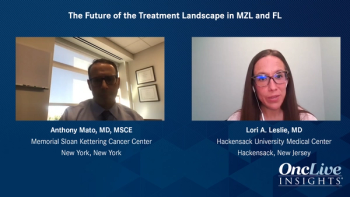
Key opinion leaders in hematology-oncology consider the future treatment landscape for marginal zone and follicular lymphomas and reflect on the role of chemotherapy and targeted agents as induction or maintenance.

Experts in the management of lymphoma discuss how umbralisib fits into sequencing algorithms and highlight how treatment decisions are particularly complex in MZL compared to FL.
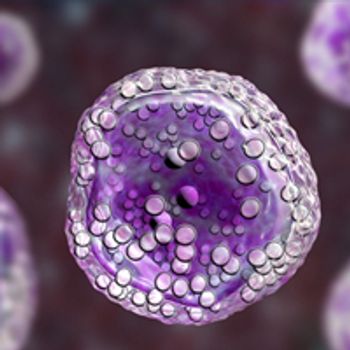
An off-the-shelf, allogeneic CD30-CAR Epstein Barr virus–specific T-cell therapy has demonstrated favorable safety and encouraging clinical activity, even when given at lower dose levels, in patients with relapsed/refractory CD30-positive lymphoma.
Paolo F. Caimi, MD, discusses the FDA approval of loncastuximab tesirine-lpyl in relapsed/refractory large B-cell lymphoma.
The safety, tolerability, pharmacokinetics, and preliminary antitumor activity of the novel agent XB002 is set to be examined in an upcoming phase 1 clinical trial that is expected to begin the second quarter of 2021.
Lori A. Leslie, MD, and Anthony Mato, MD, MSCE, comment on the potential safety and efficacy of the PI3K inhibitor umbralisib in combination with a CD20 antibody in marginal zone and follicular lymphoma.
Key opinion leaders in hematology-oncology discuss the recent UNITY-NHL trial and the FDA’s accelerated approval of umbralisib in relapsed/refractory marginal zone lymphoma and follicular lymphoma.
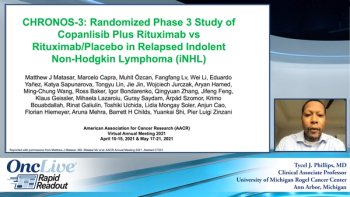
Tycel J. Phillips, MD, presents slides from the American Association for Cancer Research (AACR) Virtual Annual Meeting 2021 of results from the phase 3 CHRONOS-3 study of copanlisib plus rituximab versus placebo plus rituximab in patients with relapsed indolent non-Hodgkin lymphoma (iNHL).
Omar Alkharabsheh, MD, discusses future research directions for the treatment of patients with myeloproliferative neoplasms.
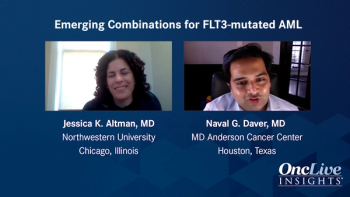
Jessica K. Altman, MD, and Naval G. Daver, MD, review novel combinations under investigation for the treatment of FLT3-mutated acute myeloid leukemia.
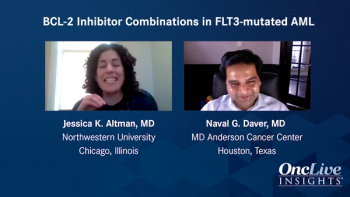
A discussion on the use of venetoclax combinations with FLT3 inhibitors, especially in older patients with FLT3-mutated acute myeloid leukemia.
Michael R. Grunwald, MD, FACP, discusses the established and potential utility of tisagenlecleucel in patients with acute lymphoblastic leukemia.
Advertisement
Advertisement
Trending on OncLive
1
FDA Approves Zidesamtinib in Pretreated ROS1+ NSCLC
2
Ivonescimab Plus Chemotherapy Sustains OS Benefit Across Western and Asian Patients in Pretreated EGFR-Mutated NSCLC
3
How Are Treatment Intensification and Sequencing Reshaping Care in Prostate Cancer and RCC
4
NMPA Accepts Toripalimab Plus Chemotherapy Application for Expanded Stage II-III NSCLC Use
5