

Hematologic Oncology
Latest News
Advertisement
Latest Videos



















































Advertisement
More News
A panel of experts explain the differences among the multiple trial designs, patient populations, and CAR T constructs used for treatment of non-Hodgkin lymphoma.

Krina K. Patel, MD, MSc, discusses the use of CAR T-cell therapy in multiple myeloma, potential target antigens beyond BCMA, the rich research landscape, and the role of quadruplets and radiation therapy.
This article discusses the current treatment landscape and therapeutic strategies for Waldenström macroglobulinemia, the role of Bruton tyrosine kinase inhibitor therapies in WM, and insights on new regimens and ongoing clinical trials from leading experts in hematologic malignancies.

Duvelisib monotherapy demonstrated encouraging efficacy for patients with relapsed/refractory peripheral T-cell lymphoma.
The panel of experts comment on the optimal timing of hypomethylating agents and transplant in patients with high-risk myelodysplastic syndrome.

Zandelisib plus rituximab is being evaluated as a potentially chemotherapy-free treatment strategy vs standard chemoimmunotherapy in patients with indolent non-Hodgkin lymphoma in first relapse in the ongoing, phase 3 COASTAL trial.
The panel of experts highlight the risk factors and considerations for use of hypomethylating agents in patients with myelodysplastic syndrome versus acute myeloid leukemia.

Joshua F. Zeidner, MD, discusses the risk of transformation to acute myeloid leukemia in higher-risk myelodysplastic syndromes.
Zanubrutinib demonstrated clinical activity and tolerability in previously treated patients with B-cell malignancies who were intolerant to therapy with ibrutinib and/or acalabrutinib, according to results of the phase 2 BGB-3111-215 trial.
Expert hematologist-oncologists share insights into clinical trials studying how to best combine or sequence FLT3 and IDH inhibitors in patients with both mutations.
A panel of key opinion leaders in acute myeloid leukemia reflects on the importance of considering the toxicity profiles of IDH inhibitors and emphasizes the challenges of diagnosing differentiation syndrome.
Mikkael A. Sekeres, MD, explores prognostic and predictive factors inherent to high-risk MDS, including age and molecular abnormalities.
Yazan Madanat, MD, discusses available MDS risk assessment tools and provides insight into his preferred clinical assessment methods.

The combination of loncastuximab tesirine-lpyl and ibrutinib displayed encouraging antitumor activity with a manageable safety profile in patients with relapsed/refractory diffuse large B-cell lymphoma and mantle cell lymphoma.

Alison J. Moskowitz, MD, discusses recent developments made in the Hodgkin lymphoma paradigm, shared advice for optimal stratification, and spotlighted potential emerging prognostic markers that might further help to guide treatment decisions.
An overview of the treatment implications of testing for minimal residual disease in pediatric and AYA patients with ALL.
Drs Aldoss and McCloskey share their thoughts on treating patients with ALL at community centers versus at tertiary, academic medical centers.
Shared insight on clinical trial data for frontline targeted agents—specifically ibrutinib, acalabrutinib, and venetoclax—in chronic lymphocytic leukemia.
Considering a patient’s age, as well as their deletion 17p and IgHV status, experts from around the world share their approach to the frontline management of CLL.
Experts in lymphoma explain when and for which patients CAR T therapies are recommended in R/R DLBCL.
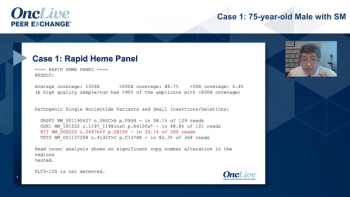
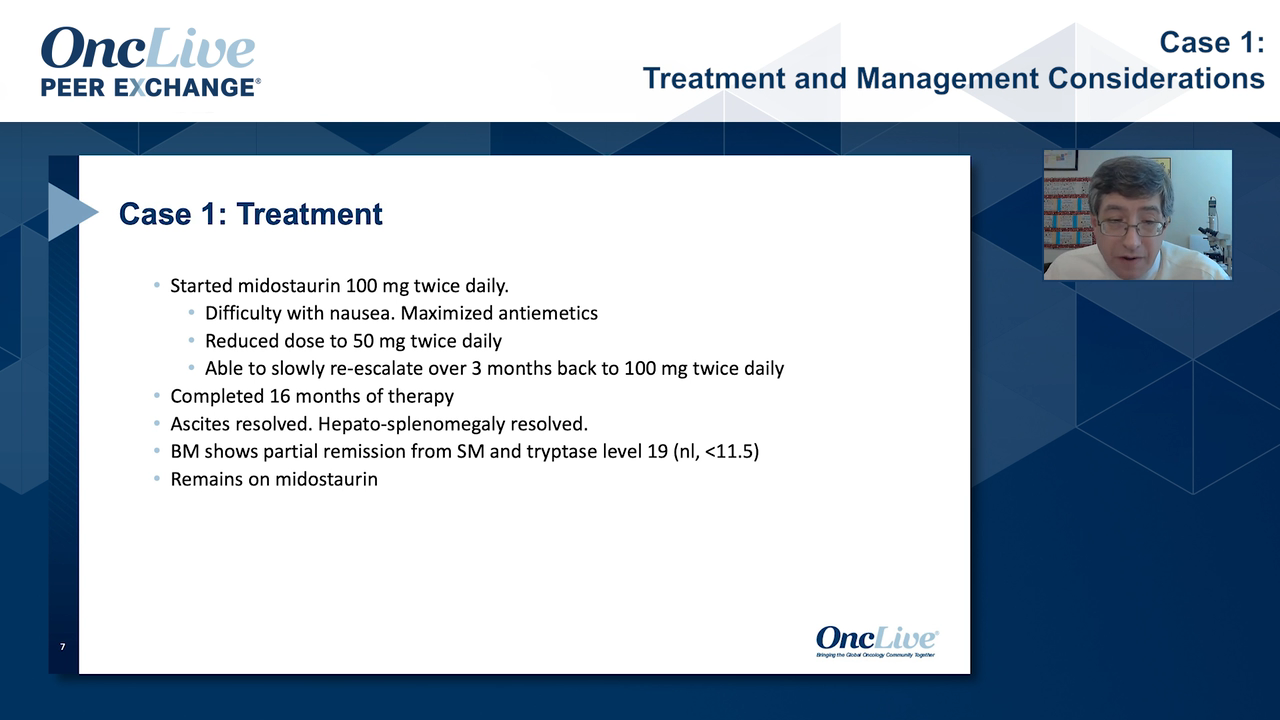
Dan DeAngelo, MD, PhD, presents the case of a 75-year-old man with systemic mastocytosis and reviews WHO diagnostic criteria.
A panel of experts review the FDA approvals of loncastuximab tesirine and selinexor for the treatment of DLBCL in patients who have received at least 2 prior therapies.
Prithviraj Bose, MD, and Patricia Lugar, MD, MS, discuss the considerations and testing options for hereditary alpha tryptasemia in patients with systemic mastocytosis.

The FDA has placed a partial clinical hold on clinical trials examining the combination of eprenetapopt and azacitidine in patients with myeloid malignancies.
The panel of experts reflect on the use of lenalidomide in patients with myelodysplastic syndrome who are transfusion dependent.
Advertisement
Advertisement
Trending on OncLive
1
FDA Approves Zidesamtinib in Pretreated ROS1+ NSCLC
2
Ivonescimab Plus Chemotherapy Sustains OS Benefit Across Western and Asian Patients in Pretreated EGFR-Mutated NSCLC
3
How Are Treatment Intensification and Sequencing Reshaping Care in Prostate Cancer and RCC
4
Sacituzumab Govitecan Yields Responses in Platinum-Resistant Ovarian Cancer
5