




Hematologic Oncology
Latest News
Advertisement
Latest Videos






















































Advertisement
More News

Jorge E. Cortes, MD, discusses emerging therapies in chronic myeloid leukemia.

In recent years, significant advances have been made regarding the treatment of patients with chronic graft-vs-host disease, with investigators developing an understanding of the pathophysiology of the disease, as well as how to integrate novel treatment modalities.
Experts in hematology/oncology comment on challenges in treating patients with myelofibrosis.
Srdan Verstovsek, MD, PhD, and Aaron Gerds, MD, MS, review key updates to NCCN guidelines for primary myelofibrosis and discuss treatment options for the disease.

The European Commission has granted an expanded approval to ravulizumab-cwvz to include children with a body weight of at least 10 kg, as well as adolescents, with paroxysmal nocturnal hemoglobinuria.

Alex Herrera, MD, discusses the utility of CAR T cells in patients with hematologic cancers.
Yazan Madanat, MD, and Mikkael A. Sekeres, MD, highlight unmet needs in the treatment of patients with high-risk MDS.

Experts in the treatment of MDS explore clinically meaningful treatment endpoints, including complete responses, bone marrow complete responses, and overall survival outcomes in MDS.

The combination of pevonedistat plus azacitidine as a frontline treatment for patients with higher-risk myelodysplastic syndromes, chronic myelomonocytic leukemia, and low-blast acute myeloid leukemia did not achieve predefined statistical significance for the primary end point of event-free survival in the phase 3 PANTHER trial.
Vinod Pullarkat, MD, leads a detailed discussion on evolving treatment approaches using MRD pretransplant, and panelists consider recent therapeutic advances for the post-transplant setting.
A panel of specialists in hematology oncology review the 5-year follow-up data on the use of CPX-351 for adults and pediatric patients with acute myeloid leukemia.

The FDA has approved zanubrutinib for the treatment of adult patients with Waldenström macroglobulinemia.

When George P. Canellos, MD, first joined the field of oncology in the 1960s, many of his peers thought he was making huge mistake.

Guru Subramanian Guru Murthy, MD, MS, discusses the potential benefits of treatment de-escalation in Philadelphia chromosome–positive B-cell acute lymphoblastic leukemia.

Dr. Sekeres discusses the current unmet needs of patients with higher-risk myelodysplastic syndromes receiving hypomethylating agents, the potential utility of novel combinations in development, and the incorporation of other end points beyond overall survival in clinical trials.
Co-occurring focal 22q11.22 deletions and IKZF1 alterations were associated with inferior outcomes vs IKZF1 alterations alone in pediatric patients with B-cell acute lymphoblastic leukemia.
Aaron Gerds, MD, MS, provides insight on determining low- vs high-risk primary myelofibrosis, the role of molecular status on treatment, and his approach toward symptom burden assessment.
Srdan Verstovsek, MD, PhD, describes the classic signs and symptoms of primary myelofibrosis (PMF), along with goals of therapy.

Susan M. O’Brien, MD always knew medicine was the field for her. Growing up in a house full of bankers and finance-oriented family members couldn’t deter her from her chosen path.
Considerations for the future treatment landscape of relapsed/refractory CLL, in light of emerging practices and clinical trial data.
Experts detail optimal sequencing strategies when patients with relapsed/refractory CLL move on to the next line of therapy.
An in-depth analysis of current therapeutic options in relapsed/refractory chronic lymphocytic leukemia.
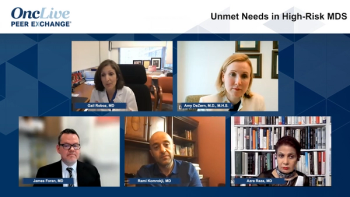
The panel of experts highlight promising clinical trials for the treatment of myelodysplastic syndrome.
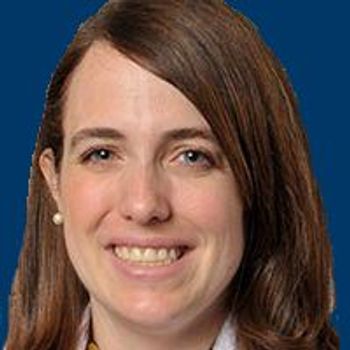
Ibrutinib demonstrated encouraging clinical responses in patients with variant-type, high-risk hairy cell leukemia.
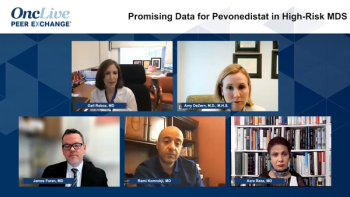
Amy DeZern, MD, MHS leads a discussion surrounding the mechanism of action and clinical trial data on the use of magrolimab and pevonedistat in patients with high-risk myelodysplastic syndrome.
Advertisement
Advertisement
Trending on OncLive
1
FDA Approves Zidesamtinib in Pretreated ROS1+ NSCLC
2
Ivonescimab Plus Chemotherapy Sustains OS Benefit Across Western and Asian Patients in Pretreated EGFR-Mutated NSCLC
3
Sacituzumab Govitecan Yields Responses in Platinum-Resistant Ovarian Cancer
4
How Are Treatment Intensification and Sequencing Reshaping Care in Prostate Cancer and RCC
5